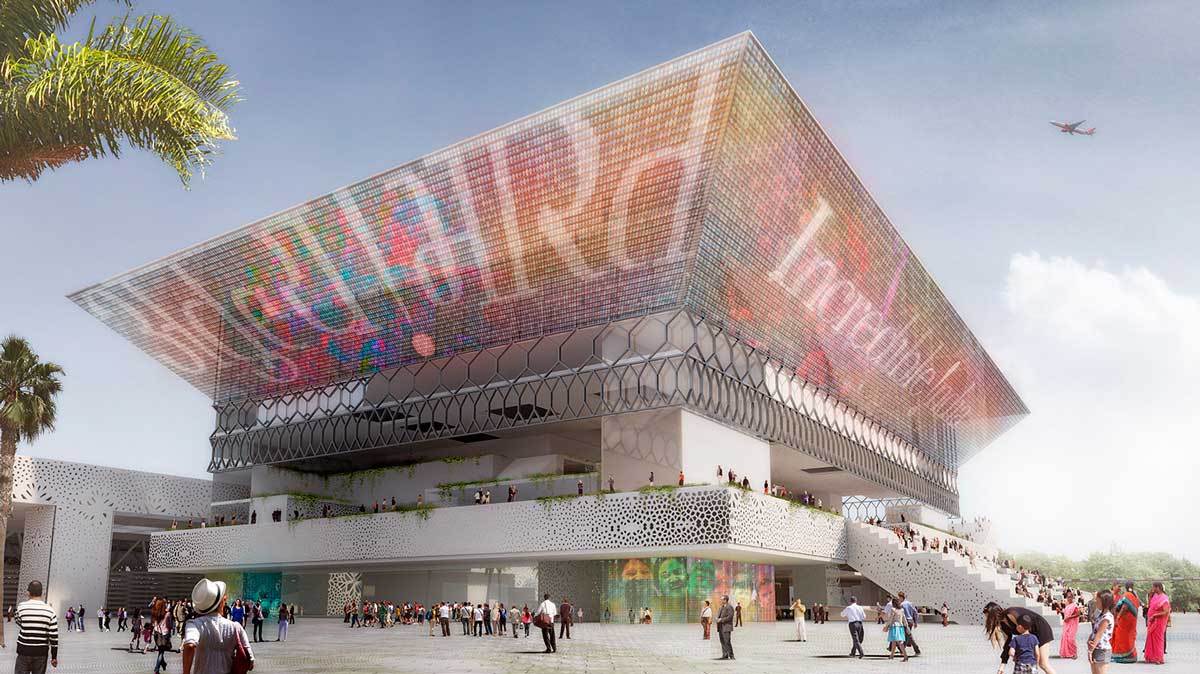
Dwarka comes up with mega convention space, Yashobhoomi
ECONOMY & POLICY

Dwarka comes up with mega convention space, Yashobhoomi

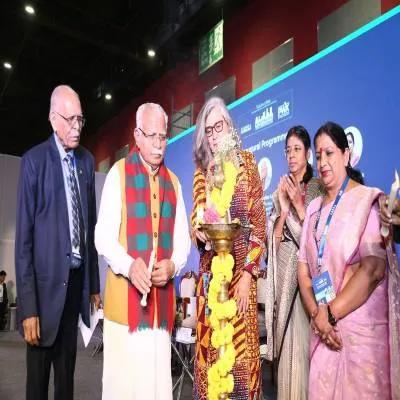
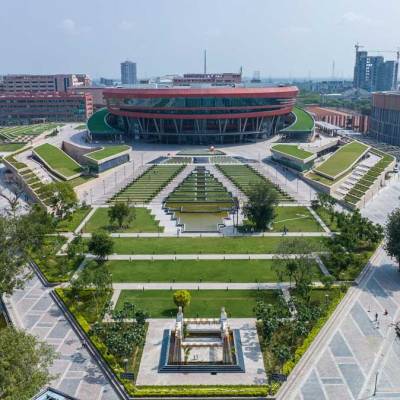
In a highly anticipated event that was scheduled for September 17, 2023, following the recent launch of Bharat Mandapam, it was announced that Prime Minister Narendra Modi would initiate Phase 1 of the India International Convention and Expo Centre (IICC) named Yashobhoomi in Dwarka, New Delhi.

It was revealed that Yashobhoomi, spanning across an enormous project area of over 8.9 lakh square metres, with a total built-up area exceeding 1.8 lakh square metres, was poised to become one of the world's largest MICE (Meetings, Incentives, Conferences, and Exhibitions) facilities. The project, with an estimated cost of approximately Rs 54 billion, was reported to boast a Convention Centre and multiple exhibition halls, in addition to various other top-notch amenities.

It was further mentioned that Yashobhoomi would feature one of the world's largest Exhibition halls, covering an area exceeding 1.07 lakh square meters. These halls were planned to serve as venues for exhibitions, trade fairs, and business events, and they would be connected to a grand foyer with a distinctive copper ceiling that would filter in natural light through skylights. The foyer was expected to house various support facilities, including media rooms, VVIP lounges, cloakrooms, visitor information centers, and ticketing services.

The heart of Yashobhoomi, it was revealed, was its Convention Center, which spanned over 73 thousand square meters. This center was said to comprise 15 convention rooms, including the Main auditorium, the Grand ballroom, and 13 meeting rooms, with a combined capacity of accommodating 11,000 delegates. The Convention Center was reported to feature the country's largest LED media facade, and its plenary hall was designed to seat up to 6,000 guests. This hall was said to showcase an innovative automated seating system that enabled flexible floor configurations. The Grand Ballroom was intended to host around 2,500 guests, with an additional open area for 500 attendees. The 13 meeting rooms, spread across eight floors, were planned to cater to a variety of meeting scales.

It was also noted that Yashobhoomi demonstrated a strong commitment to sustainability, boasting a state-of-the-art wastewater treatment system with 100 percent reuse, rainwater harvesting, and Platinum certification from CII's Indian Green Building Council (IGBC). The facility was reported to be equipped with high-tech security measures to ensure visitor safety. Additionally, an underground car parking facility was expected to accommodate over 3,000 cars and feature more than 100.

Also read: 
India and Russia to launch Eastern Maritime Corrido
Rosatom, Gazprom Neft agree to northern sea route

In a highly anticipated event that was scheduled for September 17, 2023, following the recent launch of Bharat Mandapam, it was announced that Prime Minister Narendra Modi would initiate Phase 1 of the India International Convention and Expo Centre (IICC) named Yashobhoomi in Dwarka, New Delhi. It was revealed that Yashobhoomi, spanning across an enormous project area of over 8.9 lakh square metres, with a total built-up area exceeding 1.8 lakh square metres, was poised to become one of the world's largest MICE (Meetings, Incentives, Conferences, and Exhibitions) facilities. The project, with an estimated cost of approximately Rs 54 billion, was reported to boast a Convention Centre and multiple exhibition halls, in addition to various other top-notch amenities. It was further mentioned that Yashobhoomi would feature one of the world's largest Exhibition halls, covering an area exceeding 1.07 lakh square meters. These halls were planned to serve as venues for exhibitions, trade fairs, and business events, and they would be connected to a grand foyer with a distinctive copper ceiling that would filter in natural light through skylights. The foyer was expected to house various support facilities, including media rooms, VVIP lounges, cloakrooms, visitor information centers, and ticketing services. The heart of Yashobhoomi, it was revealed, was its Convention Center, which spanned over 73 thousand square meters. This center was said to comprise 15 convention rooms, including the Main auditorium, the Grand ballroom, and 13 meeting rooms, with a combined capacity of accommodating 11,000 delegates. The Convention Center was reported to feature the country's largest LED media facade, and its plenary hall was designed to seat up to 6,000 guests. This hall was said to showcase an innovative automated seating system that enabled flexible floor configurations. The Grand Ballroom was intended to host around 2,500 guests, with an additional open area for 500 attendees. The 13 meeting rooms, spread across eight floors, were planned to cater to a variety of meeting scales. It was also noted that Yashobhoomi demonstrated a strong commitment to sustainability, boasting a state-of-the-art wastewater treatment system with 100 percent reuse, rainwater harvesting, and Platinum certification from CII's Indian Green Building Council (IGBC). The facility was reported to be equipped with high-tech security measures to ensure visitor safety. Additionally, an underground car parking facility was expected to accommodate over 3,000 cars and feature more than 100. Also read:  India and Russia to launch Eastern Maritime CorridoRosatom, Gazprom Neft agree to northern sea route

Next Story
Real Estate

AI: The New Recruit

From getting ideas to evaluating designs, presenting concepts to clients and tracking projects, artificial intelligence (AI) is helping architects work better and faster.“AI allows architects to spend more time doing what only they can do: think critically, synthesise complexity and design with intent,” says Dikshu C Kukreja, Managing Principal, CP Kukreja Architects. “Every minute reclaimed from repetitive processes can be invested in creativity, contextual understanding, interdisciplinary collaboration and innovation – the qualities that define meaningful architecture.”To read the ..

Next Story
Real Estate

Redevelopment 2.0

In 2017, Mumbai identified 160,000 ageing buildings due for structural audit. Close to half of these were in the Western Suburbs. Redeveloping the oldest and structurally weakest of these would help unlock new housing, much needed given the city’s growing population density and constant developed area of 437.7 sq km. At 30,600 people per sq km in 2024, Mumbai’s density was almost thrice that of Gurugram, and 60 per cent higher than Bengaluru’s.Essentially, Mumbai’s realty market has demand. It has capital. It has realty development potential.Fast forward to 2026. Mumbai has 1,094 regis..

Next Story
Technology

Cost intelligence will become a strategic contributor to project success

As India's construction industry accelerates its digital transformation, integrated platforms, AI and connected data are becoming essential to improving cost certainty, project efficiency and sustainability. Ravi Kumar, Sales Director – India, RIB Software India, shares how digital workflows are reshaping project planning, commercial management and decision-making across the construction value chain.India's construction sector is embracing digital technologies at an unprecedented pace. From your perspective, what are the biggest shifts driving this transformation and how is RIB Software enab..

Advertisement

Subscribe to Our Newsletter

Get daily newsletters around different themes from Construction world.

STAY CONNECTED

Advertisement

Advertisement

Advertisement