Evermore Beachfront Promenade To Create Cultural And Leisure District
ECONOMY & POLICY

Evermore Beachfront Promenade To Create Cultural And Leisure District

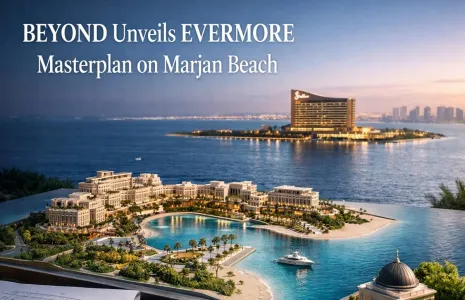
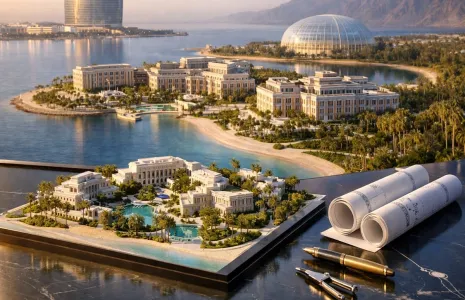
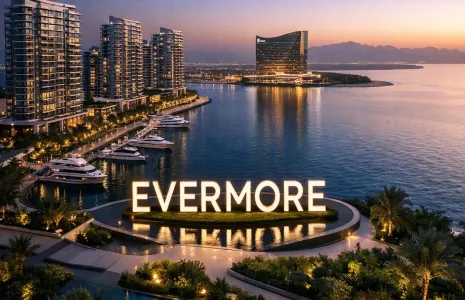
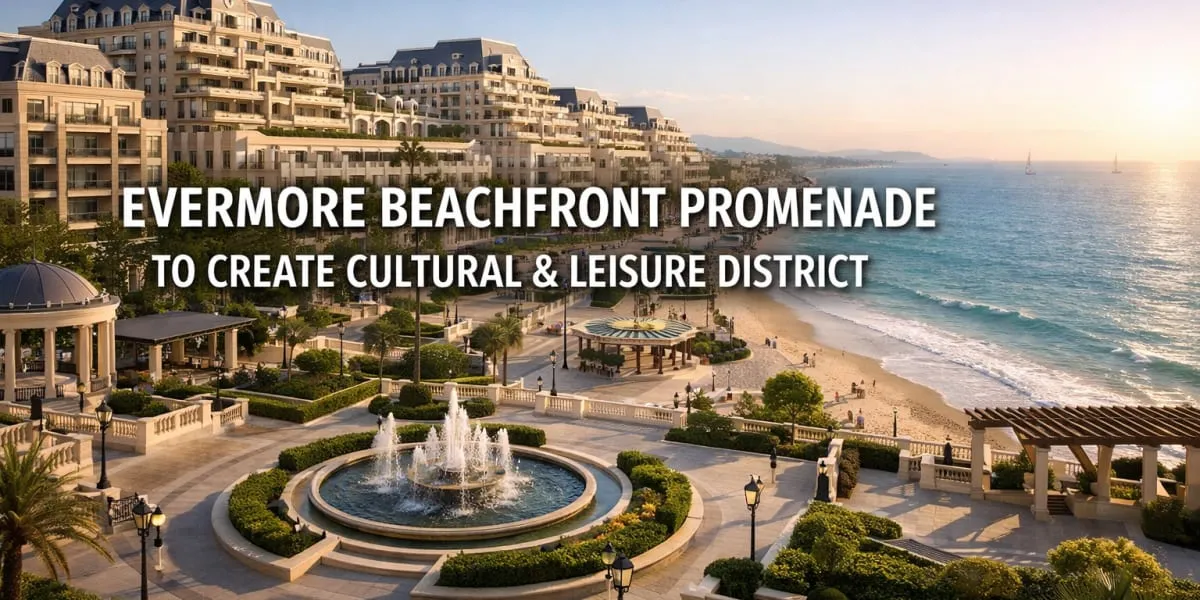
The EVERMORE development will form a continuous beachfront promenade and a self-sustained cultural and leisure district, integrating public realm and built form. The design draws on French classical architecture and reimagines proportion, symmetry and spatial order through a contemporary lens. Cascading buildings are arranged to maximise sea and landscape views while creating varied urban rooms and promenades. Public spaces are intended to accommodate festivals, leisure and everyday social life along the shore.

Landscape interventions include planted terraces, shaded pathways and pedestrian bridges that together aim to ensure comfort, privacy and seamless connectivity across the site. Careful massing and orientation are intended to extend daylight and views into interior spaces while preserving the promenade as a primary public artery. Building setbacks and landscape buffers are described as mediators between private facilities and the public realm. Planting palettes and shading devices are chosen to respond to local climate and to reduce heat.

The project is presented as a long term contribution to the Ras Al Khaimah Vision 2030 and to the emirate's wider urban and economic narrative. Design strategies are intended to enable the development to endure across generations by responding to climatic, social and cultural patterns and by offering flexible spaces for evolving uses. Emphasis is placed on walkability, accessibility and a mix of cultural and leisure offerings to support sustained public engagement. Flexibility in floor plates and circulation is designed to allow adaptation to changing cultural programmes.

Stakeholder engagement and phased delivery are indicated as measures to secure integration with existing urban fabric and infrastructure. The scheme is framed as supporting tourism, quality of life and local employment without specifying financial allocations or timelines. Contact details were provided by the project public relations team for further enquiries. Phased infrastructure upgrades are set to coordinate with municipal services and transport improvements.

The EVERMORE development will form a continuous beachfront promenade and a self-sustained cultural and leisure district, integrating public realm and built form. The design draws on French classical architecture and reimagines proportion, symmetry and spatial order through a contemporary lens. Cascading buildings are arranged to maximise sea and landscape views while creating varied urban rooms and promenades. Public spaces are intended to accommodate festivals, leisure and everyday social life along the shore. Landscape interventions include planted terraces, shaded pathways and pedestrian bridges that together aim to ensure comfort, privacy and seamless connectivity across the site. Careful massing and orientation are intended to extend daylight and views into interior spaces while preserving the promenade as a primary public artery. Building setbacks and landscape buffers are described as mediators between private facilities and the public realm. Planting palettes and shading devices are chosen to respond to local climate and to reduce heat. The project is presented as a long term contribution to the Ras Al Khaimah Vision 2030 and to the emirate's wider urban and economic narrative. Design strategies are intended to enable the development to endure across generations by responding to climatic, social and cultural patterns and by offering flexible spaces for evolving uses. Emphasis is placed on walkability, accessibility and a mix of cultural and leisure offerings to support sustained public engagement. Flexibility in floor plates and circulation is designed to allow adaptation to changing cultural programmes. Stakeholder engagement and phased delivery are indicated as measures to secure integration with existing urban fabric and infrastructure. The scheme is framed as supporting tourism, quality of life and local employment without specifying financial allocations or timelines. Contact details were provided by the project public relations team for further enquiries. Phased infrastructure upgrades are set to coordinate with municipal services and transport improvements.

Related Stories

Gold Stories

Next Story
Infrastructure Urban

KONE Opens India's First Digital Experience Centre in Pune

KONE, a global elevator and escalator manufacturer, has inaugurated its first Digital Experience Centre (DEC) in India, located in Pune. The facility aims to showcase how artificial intelligence (AI), connectivity and data-driven technologies can enhance customer experiences and improve building operations.The centre was inaugurated by Jussi Herlin, Executive Vice Chair, KONE Corporation; Philippe Delorme, President and CEO, KONE; and Nandan Nilekani, Co-founder and Chairman of the Board, Infosys.Designed as an interactive customer environment, the facility demonstrates digital solutions cover..

Next Story
Infrastructure Urban

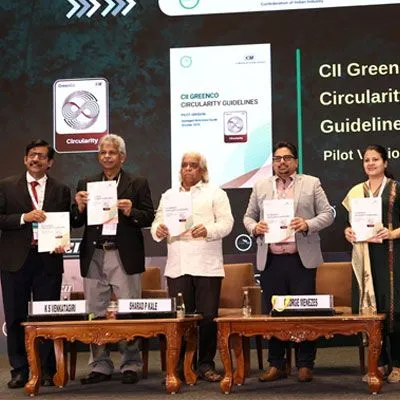
CII GreenCo Launches Circularity Guidelines for Indian Industry

The Confederation of Indian Industry (CII) GreenCo Council has launched the CII GreenCo Circularity Guidelines – Pilot Version at the 17th CII GreenCo Waste & Resource Management Summit 2026 in Chennai. The initiative aims to strengthen resource efficiency, waste reduction and circular economy practices across Indian manufacturing and process industries.The guidelines introduce a structured framework with circularity indices covering raw materials, consumables, packaging and other resource inputs. These indicators will help industries assess existing practices, identify opportunities to ..

Next Story
Infrastructure Energy

Global Electronics Association Launches IPC-1783-CO2E Standard

The Global Electronics Association has introduced IPC-1783-CO2E, a new international standard aimed at improving consistency, transparency and comparability in product carbon footprint reporting across the electronics manufacturing industry.The standard, titled International Standard for Data Collection and Reporting of CO2 Equivalent (CO2e) Emissions for the Electronics Manufacturing Supply Chain, provides industry-specific guidance for collecting, estimating and reporting carbon emissions data.With increasing regulatory requirements and customer expectations, electronics manufacturers face c..

Advertisement

Subscribe to Our Newsletter

Get daily newsletters around different themes from Construction world.

STAY CONNECTED

Advertisement

SPECIAL OFFER
QR Code