+
India, Portugal Agree Working Group On AI-Led Governance
ECONOMY & POLICY

India, Portugal Agree Working Group On AI-Led Governance

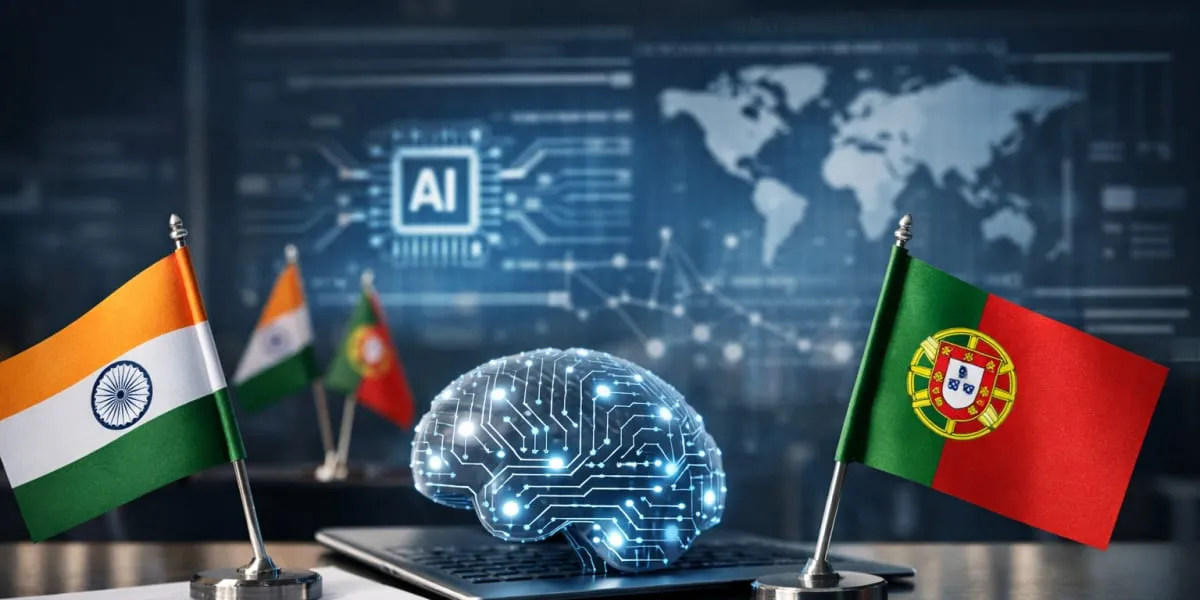
India and Portugal agreed to establish a joint working mechanism on administrative reforms and digital governance to deploy artificial intelligence in public services. The understanding was reached in New Delhi during talks between Union Minister of State Dr Jitendra Singh and Portugal’s Minister for State Reform Gonçalo Matias, who had been attending the AI Impact Summit 2026. Both sides signalled intent to move from dialogue to structured cooperation.

Dr Jitendra Singh proposed a working group to identify priority areas including digital pension systems, grievance redressal platforms and AI-enabled document processing, and suggested training exchanges and technical sharing. He recommended starting with specific, scalable models that offer mutual benefit. Portugal welcomed the idea while outlining its own reform trajectory.

India has pursued administrative simplification over the past decade, scrapping nearly 2,000 obsolete rules, removing mandatory attestation by gazetted officers and eliminating interview-based recruitment for certain categories. The government has introduced single-page digital forms in place of multi-coloured, multi-copy paperwork and has digitised pension processing end-to-end. It has expanded biometric and facial authentication for life certificates, covering millions of beneficiaries annually.

The grievance redressal mechanism operates on a hybrid model that combines AI-led sorting with human oversight and has achieved close to 95 per cent disposal rates, with final decisions subject to human ratification. Portugal described its approach as simplification first and digitalisation next, revising core codes on public procurement, construction and licensing before embedding AI. Its aim is to accelerate document processing while retaining mandatory human approval of final decisions.

Portugal said it is investing public funds to help small and medium enterprises adopt AI after recent climate events damaged industrial units in its central region, aiming to rebuild stronger technological infrastructure by year end. On the multilateral front, India has introduced anti-corruption initiatives in the G20 that emphasise women-centric corruption risks and seek consensus on handling economic fugitives. The two sides agreed to expand cooperation in trade, technology and education and to expedite the next meeting under the existing memorandum of understanding on public administration and governance reforms.

India and Portugal agreed to establish a joint working mechanism on administrative reforms and digital governance to deploy artificial intelligence in public services. The understanding was reached in New Delhi during talks between Union Minister of State Dr Jitendra Singh and Portugal’s Minister for State Reform Gonçalo Matias, who had been attending the AI Impact Summit 2026. Both sides signalled intent to move from dialogue to structured cooperation. Dr Jitendra Singh proposed a working group to identify priority areas including digital pension systems, grievance redressal platforms and AI-enabled document processing, and suggested training exchanges and technical sharing. He recommended starting with specific, scalable models that offer mutual benefit. Portugal welcomed the idea while outlining its own reform trajectory. India has pursued administrative simplification over the past decade, scrapping nearly 2,000 obsolete rules, removing mandatory attestation by gazetted officers and eliminating interview-based recruitment for certain categories. The government has introduced single-page digital forms in place of multi-coloured, multi-copy paperwork and has digitised pension processing end-to-end. It has expanded biometric and facial authentication for life certificates, covering millions of beneficiaries annually. The grievance redressal mechanism operates on a hybrid model that combines AI-led sorting with human oversight and has achieved close to 95 per cent disposal rates, with final decisions subject to human ratification. Portugal described its approach as simplification first and digitalisation next, revising core codes on public procurement, construction and licensing before embedding AI. Its aim is to accelerate document processing while retaining mandatory human approval of final decisions. Portugal said it is investing public funds to help small and medium enterprises adopt AI after recent climate events damaged industrial units in its central region, aiming to rebuild stronger technological infrastructure by year end. On the multilateral front, India has introduced anti-corruption initiatives in the G20 that emphasise women-centric corruption risks and seek consensus on handling economic fugitives. The two sides agreed to expand cooperation in trade, technology and education and to expedite the next meeting under the existing memorandum of understanding on public administration and governance reforms.

Next Story
Infrastructure Urban

Telecom Underpins India's AI Revolution, MoS Says

At the India AI Impact Summit, the Minister of State for Communications and Rural Development said that telecom infrastructure constitutes the foundational layer of the country's artificial intelligence ecosystem and described connectivity as a form of sovereignty. He argued that inclusive digital connectivity is central to India's technological leadership and the empowerment of citizens. The address framed telecom as essential not merely for communication but for enabling AI-driven opportunities across sectors. He noted that broadband subscribers rose from 60 million (60 mn) in 2014 to one bi..

Next Story
Infrastructure Urban

India and Ireland Deepen Digital and Telecom Cooperation

India and Ireland held a bilateral meeting in New Delhi in which the Union Minister for Communications, Jyotiraditya Scindia, led the Indian delegation and Jack Chambers led the Irish delegation. The meeting at Sanchar Bhawan sought to deepen cooperation in telecommunications, digital infrastructure, emerging technologies and regulatory collaboration. Senior officials from the Department of Telecommunications and Ireland's Commission for Communications Regulation attended to chart a roadmap for future networks. Both sides noted complementarities between India's scale and rapid deployment capab..

Next Story
Infrastructure Urban

Amit Shah Chairs Manthan Meeting To Boost Cooperatives

Amit Shah chaired a Manthan meeting in Gandhinagar with the cooperation ministers of all states and union territories under the theme Sahkar se Samriddhi. He inaugurated and laid foundations for projects related to ethanol, energy, organic potash, warehouses and protein powder plants worth Rs 2,650 million (mn). Several ministers and senior officials attended the event. The meeting was convened to advance the cooperative sector as a vehicle to make India a fully developed nation by 2047 and to create systems in which one point four billion (bn) people can live with dignity. The minister noted ..

Advertisement

Subscribe to Our Newsletter

Get daily newsletters around different themes from Construction world.

STAY CONNECTED

Advertisement

Advertisement

Advertisement

Open In App