Gandhinagar Launches PM eBus Sewa For Green Urban Mobility
ECONOMY & POLICY

Gandhinagar Launches PM eBus Sewa For Green Urban Mobility

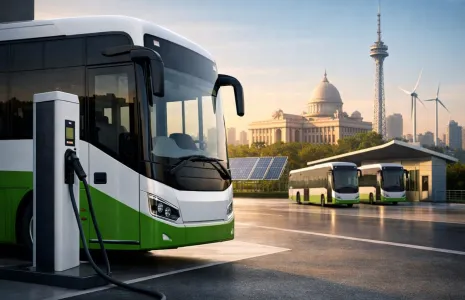
Gandhinagar has launched the PM eBus Sewa scheme, marking a new phase in the city's transition to sustainable urban mobility. The centrally sponsored programme was launched under the leadership of Prime Minister Narendra Modi and carries an estimated outlay of Rs 576.13 billion (Rs 57,613 crore), including a Central Government contribution of Rs 200 billion (Rs 20,000 crore). Implemented through a public-private partnership, the initiative plans to deploy 10,000 electric buses and has allocated 100 electric midi buses to Gandhinagar.

The project is being overseen by Gandhinagar Greenline Transport Service Limited, a special purpose vehicle established by the Gandhinagar Municipal Corporation, and the first phase placed 40 fully air-conditioned electric buses on regular routes. Each nine-metre-long midi bus has seating for 25 passengers and standing space for 13 and is fitted with hydraulic ramps to enhance accessibility. Four seats have been reserved for women and four for senior citizens, and the fleet is equipped with Electronic Ticketing Machines (ETMs) for cashless payments.

A dedicated depot and charging infrastructure has been developed at Sargasan at an estimated cost of Rs 170 million (Rs 17 crore), featuring charging stations, maintenance facilities and an operational control system. The service will operate on 18 planned routes connecting nodes including the Secretariat, Gandhinagar Railway Station, Mahatma Mandir, GIFT City and IIT Gandhinagar, with schedules aligned to commuter demand. Fares have been fixed by distance, ranging from Rs five to Rs 30, and travel on all routes will be free for the first 15 days.

After the free period, children below five years will continue to travel free and the municipal corporation said it remains committed to safe, clean and comfortable public transport. The launch is presented as a milestone in Gandhinagar's Smart City agenda and as part of efforts to reduce urban pollution and modernise public transport. Authorities expect the scheme to improve last-mile connectivity and encourage sustainable mobility among residents.

Gandhinagar has launched the PM eBus Sewa scheme, marking a new phase in the city's transition to sustainable urban mobility. The centrally sponsored programme was launched under the leadership of Prime Minister Narendra Modi and carries an estimated outlay of Rs 576.13 billion (Rs 57,613 crore), including a Central Government contribution of Rs 200 billion (Rs 20,000 crore). Implemented through a public-private partnership, the initiative plans to deploy 10,000 electric buses and has allocated 100 electric midi buses to Gandhinagar. The project is being overseen by Gandhinagar Greenline Transport Service Limited, a special purpose vehicle established by the Gandhinagar Municipal Corporation, and the first phase placed 40 fully air-conditioned electric buses on regular routes. Each nine-metre-long midi bus has seating for 25 passengers and standing space for 13 and is fitted with hydraulic ramps to enhance accessibility. Four seats have been reserved for women and four for senior citizens, and the fleet is equipped with Electronic Ticketing Machines (ETMs) for cashless payments. A dedicated depot and charging infrastructure has been developed at Sargasan at an estimated cost of Rs 170 million (Rs 17 crore), featuring charging stations, maintenance facilities and an operational control system. The service will operate on 18 planned routes connecting nodes including the Secretariat, Gandhinagar Railway Station, Mahatma Mandir, GIFT City and IIT Gandhinagar, with schedules aligned to commuter demand. Fares have been fixed by distance, ranging from Rs five to Rs 30, and travel on all routes will be free for the first 15 days. After the free period, children below five years will continue to travel free and the municipal corporation said it remains committed to safe, clean and comfortable public transport. The launch is presented as a milestone in Gandhinagar's Smart City agenda and as part of efforts to reduce urban pollution and modernise public transport. Authorities expect the scheme to improve last-mile connectivity and encourage sustainable mobility among residents.

Related Stories

Gold Stories

Next Story
Infrastructure Urban

KONE Opens India's First Digital Experience Centre in Pune

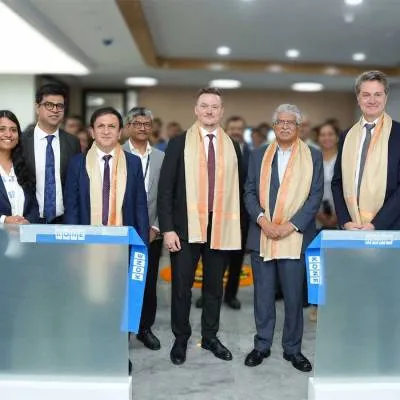
KONE, a global elevator and escalator manufacturer, has inaugurated its first Digital Experience Centre (DEC) in India, located in Pune. The facility aims to showcase how artificial intelligence (AI), connectivity and data-driven technologies can enhance customer experiences and improve building operations.The centre was inaugurated by Jussi Herlin, Executive Vice Chair, KONE Corporation; Philippe Delorme, President and CEO, KONE; and Nandan Nilekani, Co-founder and Chairman of the Board, Infosys.Designed as an interactive customer environment, the facility demonstrates digital solutions cover..

Next Story
Infrastructure Urban

CII GreenCo Launches Circularity Guidelines for Indian Industry

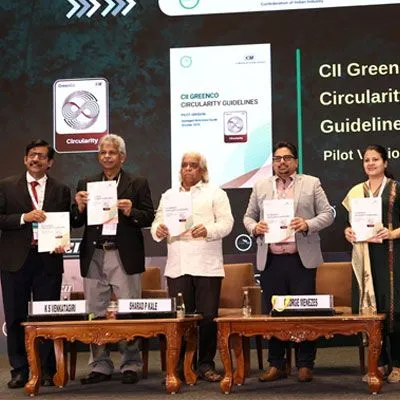
The Confederation of Indian Industry (CII) GreenCo Council has launched the CII GreenCo Circularity Guidelines – Pilot Version at the 17th CII GreenCo Waste & Resource Management Summit 2026 in Chennai. The initiative aims to strengthen resource efficiency, waste reduction and circular economy practices across Indian manufacturing and process industries.The guidelines introduce a structured framework with circularity indices covering raw materials, consumables, packaging and other resource inputs. These indicators will help industries assess existing practices, identify opportunities to ..

Next Story
Infrastructure Energy

Global Electronics Association Launches IPC-1783-CO2E Standard

The Global Electronics Association has introduced IPC-1783-CO2E, a new international standard aimed at improving consistency, transparency and comparability in product carbon footprint reporting across the electronics manufacturing industry.The standard, titled International Standard for Data Collection and Reporting of CO2 Equivalent (CO2e) Emissions for the Electronics Manufacturing Supply Chain, provides industry-specific guidance for collecting, estimating and reporting carbon emissions data.With increasing regulatory requirements and customer expectations, electronics manufacturers face c..

Advertisement

Subscribe to Our Newsletter

Get daily newsletters around different themes from Construction world.

STAY CONNECTED

Advertisement

SPECIAL OFFER
QR Code