Gandhinagar Launches PM eBus Sewa For Sustainable Urban Mobility
ECONOMY & POLICY

Gandhinagar Launches PM eBus Sewa For Sustainable Urban Mobility

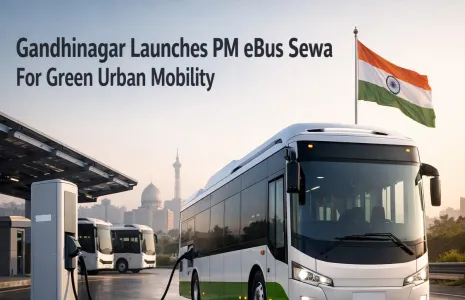
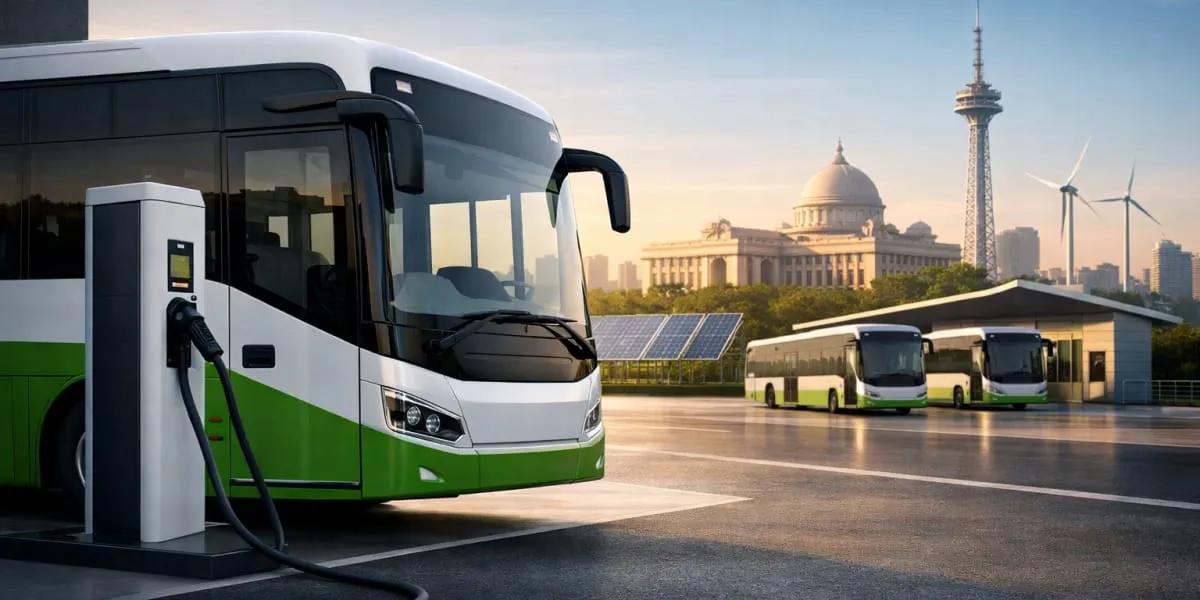
Gandhinagar has taken a significant step towards Smart City status with the launch of the PM eBus Sewa scheme, introducing modern, clean and environmentally friendly public transport in the state capital. The centrally sponsored programme carries an estimated outlay of Rs 576,130 mn, including a Central Government contribution of Rs 200,000 mn, and is implemented under a Public-Private Partnership (PPP) model. The initiative seeks to deploy 10,000 electric buses nationally and allocates 100 electric midi buses to Gandhinagar.

The project is being delivered by Gandhinagar Greenline Transport Service Limited (GGTSL), a special purpose entity established by the Gandhinagar Municipal Corporation (GMC), and the first phase has introduced 40 fully air-conditioned electric buses on regular routes. Each nine-metre-long midi bus provides seating for 25 passengers and standing space for 13 and includes hydraulic ramps to facilitate access for persons with disabilities. Four seats are reserved for women and four for senior citizens.

As part of the Digital India initiative, all buses are fitted with Electronic Ticketing Machines enabling cashless payments through QR codes, UPI and other digital methods, and operations will run on 18 scientifically planned routes connecting key locations across and around the city. To support uninterrupted service, a depot and charging infrastructure has been developed at Sargasan at an estimated cost of Rs 170 mn, including advanced charging stations, maintenance facilities and an integrated operational control system. The service will offer free travel on all routes for the first 15 days from commencement and thereafter children below five years will continue to travel free.

Fares have been fixed according to travel distance and range from Rs five to Rs 30 to keep public transport affordable for all sections of society. The GMC stated it remains committed to providing citizens with safe, clean, comfortable and eco-friendly public transportation and described the launch as the beginning of a new chapter in sustainable urban mobility. The introduction of PM eBus Sewa is positioned to reinforce Gandhinagar's vision of becoming a Smart City.

Gandhinagar has taken a significant step towards Smart City status with the launch of the PM eBus Sewa scheme, introducing modern, clean and environmentally friendly public transport in the state capital. The centrally sponsored programme carries an estimated outlay of Rs 576,130 mn, including a Central Government contribution of Rs 200,000 mn, and is implemented under a Public-Private Partnership (PPP) model. The initiative seeks to deploy 10,000 electric buses nationally and allocates 100 electric midi buses to Gandhinagar. The project is being delivered by Gandhinagar Greenline Transport Service Limited (GGTSL), a special purpose entity established by the Gandhinagar Municipal Corporation (GMC), and the first phase has introduced 40 fully air-conditioned electric buses on regular routes. Each nine-metre-long midi bus provides seating for 25 passengers and standing space for 13 and includes hydraulic ramps to facilitate access for persons with disabilities. Four seats are reserved for women and four for senior citizens. As part of the Digital India initiative, all buses are fitted with Electronic Ticketing Machines enabling cashless payments through QR codes, UPI and other digital methods, and operations will run on 18 scientifically planned routes connecting key locations across and around the city. To support uninterrupted service, a depot and charging infrastructure has been developed at Sargasan at an estimated cost of Rs 170 mn, including advanced charging stations, maintenance facilities and an integrated operational control system. The service will offer free travel on all routes for the first 15 days from commencement and thereafter children below five years will continue to travel free. Fares have been fixed according to travel distance and range from Rs five to Rs 30 to keep public transport affordable for all sections of society. The GMC stated it remains committed to providing citizens with safe, clean, comfortable and eco-friendly public transportation and described the launch as the beginning of a new chapter in sustainable urban mobility. The introduction of PM eBus Sewa is positioned to reinforce Gandhinagar's vision of becoming a Smart City.

Next Story
Building Material

Saint-Gobain, CEPT partner on sustainable construction

Saint-Gobain and CEPT University have entered into a strategic partnership to establish a Tech Commons Centre aimed at advancing research, innovation and skill development in sustainable and energy-efficient construction.The centre will serve as a platform for building science research, prototyping, industry collaboration and knowledge exchange, bringing together Saint-Gobain's expertise in sustainable construction and CEPT's capabilities in education and research. The collaboration will focus on sustainability, energy efficiency, climate resilience and wellbeing in the built environment.Accor..

Next Story
Building Material

Aludecor launches Stonic ACP surface series

Aludecor Lamination has launched its Stonic aluminium composite panel (ACP) surface series and the second phase of its 'Test Nahi Toh Trust Nahi' campaign as part of its 24th Foundation Day celebrations.Inspired by the natural craquelure patterns found in aged stone, the Stonic series is available in seven finishes and has been developed using the company's Spray Fusion technology. The ACP range is designed for use in façades, feature walls, entranceways, soffits, balcony fascia, ceilings and other commercial, residential and hospitality applications.The company also introduced 'The Fikar-Fre..

Next Story
Real Estate

NABARD, MAHAPREIT partner on rural green infrastructure

NABARD has signed a memorandum of understanding (MoU) with Mahatma Phule Renewable Energy and Infrastructure Technology (MAHAPREIT) to finance and promote green, climate-resilient infrastructure in rural India, with an initial focus on Maharashtra.The partnership will combine NABARD's expertise in rural development and climate finance with MAHAPREIT's experience in renewable energy and sustainable infrastructure. The collaboration will identify, develop and finance projects aimed at strengthening village infrastructure, Panchayati Raj Institutions and other community assets.Priority areas incl..

Advertisement

Subscribe to Our Newsletter

Get daily newsletters around different themes from Construction world.

STAY CONNECTED

Advertisement

Advertisement

Advertisement