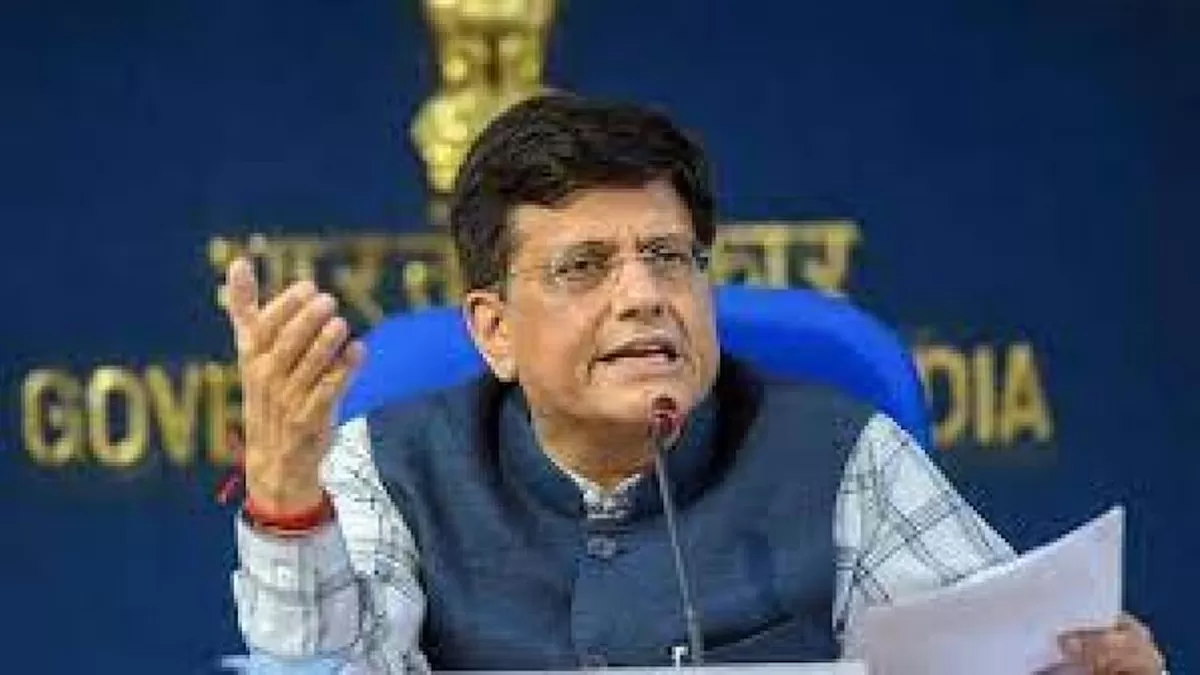
Govt Eases Corporate Compliance for Firms and Start-Ups
ECONOMY & POLICY

Govt Eases Corporate Compliance for Firms and Start-Ups

The Government of India has introduced a series of reforms in 2024–25 to simplify corporate compliance, reduce costs, and improve ease of doing business for companies, including Micro, Small, and Medium Enterprises (MSMEs) and start-ups.

Key Measures Introduced
  • Direct overseas listing: Indian public companies can now directly list securities in approved foreign jurisdictions, broadening investor access and providing alternative capital sources.
  • Director KYC updates: Amendments allow additional opportunities to update mobile numbers and email addresses in the official KYC database.
  • Faceless adjudication: Penalty proceedings have shifted to an online, video-conference-based process, removing the need for physical hearings.
  • Faster cross-border mergers: Mergers of foreign-incorporated holding companies with wholly owned Indian subsidiaries now require only Central Government approval, replacing National Company Law Tribunal (NCLT) clearance.
  • Expanded C-PACE operations: The Centre for Processing Accelerated Corporate Exit now handles voluntary company closures and Limited Liability Partnership (LLP) strike-offs.
Streamlined Business Registration
  • The integrated SPICe+ and AGILE PRO-S web form offers eleven services for starting a business, from name reservation to tax and social security registrations.
  • Zero incorporation fees now apply to companies with authorised capital up to Rs 1.5 million or up to 20 members with no share capital.
  • A Central Registration Centre (CRC) processes company and LLP incorporation, while the LLP incorporation form FiLLiP is now linked to the tax system for PAN/TAN allotment.
  • A Central Processing Centre (CPC) launched in February 2024 enables faster, centralised processing of electronic forms under the Companies Act.

Boost for Start-Ups
  • The start-up recognition process is fully digital via the Startup India portal and National Single Window System, with self-certification and simplified documentation.
  • A recognition handbook, online tutorials, and state-level workshops support entrepreneurs.
The Ministry of Corporate Affairs continues to amend the Companies Act, LLP Act, and associated rules based on stakeholder feedback and Company Law Committee recommendations.

The Government of India has introduced a series of reforms in 2024–25 to simplify corporate compliance, reduce costs, and improve ease of doing business for companies, including Micro, Small, and Medium Enterprises (MSMEs) and start-ups.Key Measures IntroducedDirect overseas listing: Indian public companies can now directly list securities in approved foreign jurisdictions, broadening investor access and providing alternative capital sources.Director KYC updates: Amendments allow additional opportunities to update mobile numbers and email addresses in the official KYC database.Faceless adjudication: Penalty proceedings have shifted to an online, video-conference-based process, removing the need for physical hearings.Faster cross-border mergers: Mergers of foreign-incorporated holding companies with wholly owned Indian subsidiaries now require only Central Government approval, replacing National Company Law Tribunal (NCLT) clearance.Expanded C-PACE operations: The Centre for Processing Accelerated Corporate Exit now handles voluntary company closures and Limited Liability Partnership (LLP) strike-offs.Streamlined Business RegistrationThe integrated SPICe+ and AGILE PRO-S web form offers eleven services for starting a business, from name reservation to tax and social security registrations.Zero incorporation fees now apply to companies with authorised capital up to Rs 1.5 million or up to 20 members with no share capital.A Central Registration Centre (CRC) processes company and LLP incorporation, while the LLP incorporation form FiLLiP is now linked to the tax system for PAN/TAN allotment.A Central Processing Centre (CPC) launched in February 2024 enables faster, centralised processing of electronic forms under the Companies Act.Boost for Start-UpsThe start-up recognition process is fully digital via the Startup India portal and National Single Window System, with self-certification and simplified documentation.A recognition handbook, online tutorials, and state-level workshops support entrepreneurs.The Ministry of Corporate Affairs continues to amend the Companies Act, LLP Act, and associated rules based on stakeholder feedback and Company Law Committee recommendations.

Next Story
Infrastructure Energy

Mizoram To Build Rs 139 Billion Pumped Storage Power Plant

Mizoram Chief Minister Lalduhoma on Friday announced plans to construct a 2,400 MW pumped storage hydroelectric power plant in Hnahthial district, marking a major step towards achieving energy self-sufficiency in the state. Addressing the Mizo Students’ Union general conference in Hnahthial town, the Chief Minister said the plant would be developed across the Darzo Nallah, a tributary of the Tuipui river. Once operational, the project is expected to play a pivotal role in meeting Mizoram’s rising electricity demand and reducing dependence on imported power. Officials from the State Power..

Next Story
Infrastructure Energy

Centre Plans Nationwide Opening Of Power Retail Market

India is preparing to open up its retail electricity market to private companies nationwide, effectively ending the long-standing monopoly of state-run power distributors in most regions, according to a draft bill released by the Union Power Ministry on Friday. The move will enable major private sector players — including Adani Enterprises, Tata Power, Torrent Power, and CESC — to expand their presence across the country’s electricity distribution landscape. A similar reform attempt in 2022 had faced strong opposition from state-run distribution companies (discoms), which currently dom..

Next Story
Infrastructure Energy

CEA Sets 100 GW Nuclear Target For India By 2047

In a landmark step marking its 52nd Foundation Day, the Central Electricity Authority (CEA) unveiled an ambitious roadmap to develop 100 gigawatts (GW) of nuclear power capacity by 2047, aligning with India’s long-term Net-Zero commitment and energy security objectives. The event, held at the Central Water Commission auditorium in New Delhi’s R.K. Puram, was attended by Pankaj Agarwal, Secretary, Ministry of Power, who served as the Chief Guest. The roadmap sets out a detailed plan to expand India’s nuclear capacity from its current level of approximately 8,180 MW as of early 2025, outl..

Advertisement

Subscribe to Our Newsletter

Get daily newsletters around different themes from Construction world.

STAY CONNECTED

Advertisement

Advertisement

Advertisement

Talk to us?