



+
Goyal: India's $3.5 Trillion Economy by 2047
ECONOMY & POLICY

Goyal: India's $3.5 Trillion Economy by 2047

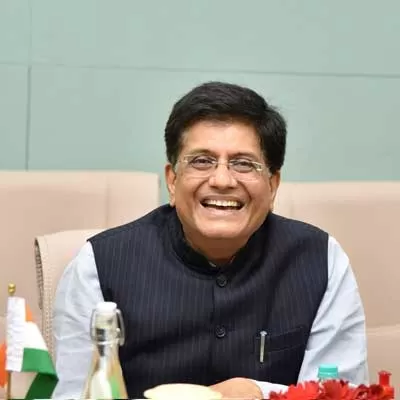
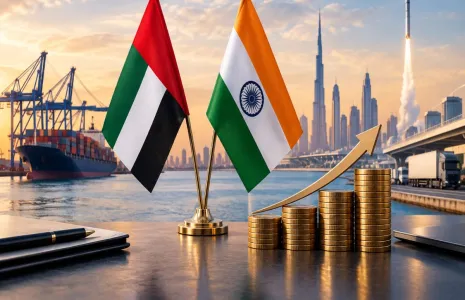
Piyush Goyal, Union Minister of Commerce and Industry, affirms India's determined path to achieve a fully developed $3.5 trillion economy by the year 2047. This ambitious vision underscores the nation's commitment to sustained economic growth and development over the next few decades.

Goyal's statement reflects the government's confidence in India's economic potential and its ability to emerge as a major player on the global stage. The targeted $3.5 trillion milestone signifies a comprehensive approach towards economic advancement, encompassing various sectors and fostering innovation and resilience.

As India positions itself for significant economic expansion, Goyal's assertion emphasizes the importance of strategic policies, investments, and international collaborations to drive sustained growth. The goal of becoming a $3.5 trillion economy aligns with the broader global narrative of nations aspiring to achieve economic prosperity while addressing challenges related to sustainability and inclusivity.

Goyal's projection not only sets a clear economic trajectory for India but also underscores the nation's commitment to contributing meaningfully to the global economic landscape. Achieving this milestone by 2047 would mark a transformative journey for India, positioning it as a key player in the evolving dynamics of the world economy.

Piyush Goyal, Union Minister of Commerce and Industry, affirms India's determined path to achieve a fully developed $3.5 trillion economy by the year 2047. This ambitious vision underscores the nation's commitment to sustained economic growth and development over the next few decades. Goyal's statement reflects the government's confidence in India's economic potential and its ability to emerge as a major player on the global stage. The targeted $3.5 trillion milestone signifies a comprehensive approach towards economic advancement, encompassing various sectors and fostering innovation and resilience. As India positions itself for significant economic expansion, Goyal's assertion emphasizes the importance of strategic policies, investments, and international collaborations to drive sustained growth. The goal of becoming a $3.5 trillion economy aligns with the broader global narrative of nations aspiring to achieve economic prosperity while addressing challenges related to sustainability and inclusivity. Goyal's projection not only sets a clear economic trajectory for India but also underscores the nation's commitment to contributing meaningfully to the global economic landscape. Achieving this milestone by 2047 would mark a transformative journey for India, positioning it as a key player in the evolving dynamics of the world economy.

Related Stories

Gold Stories
Next Story
Infrastructure Urban

Infrastructure Opportunity Outlook by IMPACCT.Info

India’s infrastructure pipeline is witnessing dynamic activity across stages — from immediate bidding to future planning. IMPACCT segments these into three categories: Immediate, 3–6 Month, and Future Opportunities, enabling businesses to identify, prepare, and participate in high-value tenders and projects across sectors.To read full article Click Here ..

Next Story
Real Estate

Glass, Reframed!

Glass façades, quintessential aesthetic building envelopes globally, have been widely adopted in India as well. But when the focus is high-performance building systems that deliver energy efficiency, comfort and architectural identity, glass isn’t the only preference. Combination solutions, involving glass and some other material, improve façade outcomes. Some combinations come at comparable prices, some at a higher price. Here is a selection of performance-oriented solutions...To read the full story Click Here ..

Next Story
Infrastructure Urban

Beyond Building Faster

India’s cities are expanding at an unprecedented pace, bringing new infrastructure and development opportunities while also intensifying challenges around mobility, public spaces, liveability and supporting infrastructure. The question, therefore, is not simply whether India can build faster, but whether it can build cities that work better.At a CW webinar, Are We Designing Better Cities – or Just Building Faster?, moderator Ar. Samir Shaikh, Founding Principal, AR&UD Studio, brought together perspectives from design, development, master planning and technology...To read the full artic..

Advertisement

Subscribe to Our Newsletter

Get daily newsletters around different themes from Construction world.

STAY CONNECTED

Advertisement

SPECIAL OFFER
QR Code