Hindustan Zinc’s Social Investment Grows 112% Since 2015
ECONOMY & POLICY

Hindustan Zinc’s Social Investment Grows 112% Since 2015

Hindustan Zinc, the world’s largest integrated zinc producer, has made a significant mark in the realm of social impact by investing over Rs 1,750 crore since 2016. Through a wide range of interventions across education, healthcare, livelihoods, water and sanitation, women’s empowerment, and sports, the company has emerged as a key catalyst in Rajasthan’s socio-economic development.

With its community development programmes spanning more than 2,300 villages and impacting over 23 lakh individuals, Hindustan Zinc continues to play a pivotal role in fostering an inclusive, empowered, and resilient society.

From early education and nutrition to gender empowerment, Hindustan Zinc’s efforts are multifaceted. The company has set up nearly 2,500 Nand Ghars—modern Anganwadis that provide nutrition, digital education, and healthcare services for rural children along with skill development for women. These centres, established under the vision of Anil Agarwal, Chairman – Vedanta, have benefitted more than 3.5 lakh children and mothers in FY 25.

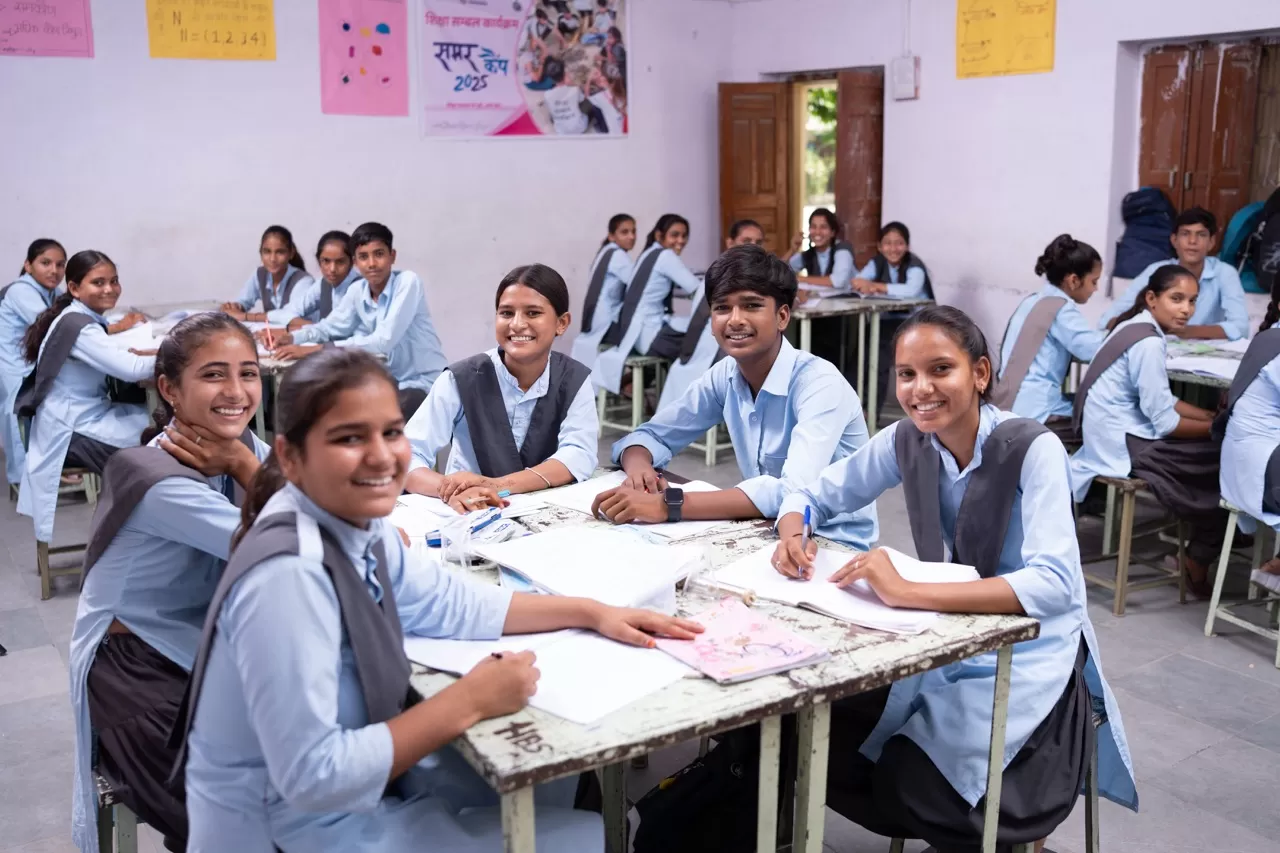
Flagship education initiatives such as Shiksha Sambal and Unchi Udaan have transformed the learning journeys of 35,000+ students, while the Jeevan Tarang programme continues to uplift nearly 2600 differently-abled individuals through skill training and inclusion.

In healthcare, the company has pioneered access through mobile oncology vans, healthcare-on-wheels, and during the COVID-19 crisis, it rapidly deployed field hospitals and oxygen plants to serve local communities. Its sanitation efforts include commissioning Udaipur’s first 60 MLD sewage treatment plant and installing safe drinking water systems in over 50 villages.

Under the Samadhan programme, over 35,000 farmer families have received agri-based livelihood support, while five Farmer Producer Organisations (FPOs) recorded a combined turnover of nearly ₹5 crore in FY25. In sports, the Zinc Football Academy, an AIFF 3-star rated residential centre, is nurturing over 650 budding athletes through formal coaching and community outreach.

Hindustan Zinc’s deep commitment to social welfare is evident in its grassroots programmes. Sakhi one of the flagship initiatives of the company has empowered over 26,000 women through more than 2,150 self-help groups, microfinancing and sustainable livelihood opportunities. In just the past two years, the company’s Uthori campaign has sensitised over 2.3 lakh individuals across 130 villages, tackling issues like child marriage, domestic violence, menstrual hygiene and many other societal taboos. Infrastructure, environment, and cultural heritage continue to receive dedicated support—enhancing quality of life and strengthening community resilience.

With unwavering care for the people of Rajasthan, Hindustan Zinc’s vision is to make the state a national hub for inclusive and sustainable development. By blending industrial excellence with social purpose, the company is not just creating value for stakeholders—but building a legacy for the people it serves.

Hindustan Zinc, the world’s largest integrated zinc producer, has made a significant mark in the realm of social impact by investing over Rs 1,750 crore since 2016. Through a wide range of interventions across education, healthcare, livelihoods, water and sanitation, women’s empowerment, and sports, the company has emerged as a key catalyst in Rajasthan’s socio-economic development.With its community development programmes spanning more than 2,300 villages and impacting over 23 lakh individuals, Hindustan Zinc continues to play a pivotal role in fostering an inclusive, empowered, and resilient society.From early education and nutrition to gender empowerment, Hindustan Zinc’s efforts are multifaceted. The company has set up nearly 2,500 Nand Ghars—modern Anganwadis that provide nutrition, digital education, and healthcare services for rural children along with skill development for women. These centres, established under the vision of Anil Agarwal, Chairman – Vedanta, have benefitted more than 3.5 lakh children and mothers in FY 25.Flagship education initiatives such as Shiksha Sambal and Unchi Udaan have transformed the learning journeys of 35,000+ students, while the Jeevan Tarang programme continues to uplift nearly 2600 differently-abled individuals through skill training and inclusion.In healthcare, the company has pioneered access through mobile oncology vans, healthcare-on-wheels, and during the COVID-19 crisis, it rapidly deployed field hospitals and oxygen plants to serve local communities. Its sanitation efforts include commissioning Udaipur’s first 60 MLD sewage treatment plant and installing safe drinking water systems in over 50 villages.Under the Samadhan programme, over 35,000 farmer families have received agri-based livelihood support, while five Farmer Producer Organisations (FPOs) recorded a combined turnover of nearly ₹5 crore in FY25. In sports, the Zinc Football Academy, an AIFF 3-star rated residential centre, is nurturing over 650 budding athletes through formal coaching and community outreach.Hindustan Zinc’s deep commitment to social welfare is evident in its grassroots programmes. Sakhi one of the flagship initiatives of the company has empowered over 26,000 women through more than 2,150 self-help groups, microfinancing and sustainable livelihood opportunities. In just the past two years, the company’s Uthori campaign has sensitised over 2.3 lakh individuals across 130 villages, tackling issues like child marriage, domestic violence, menstrual hygiene and many other societal taboos. Infrastructure, environment, and cultural heritage continue to receive dedicated support—enhancing quality of life and strengthening community resilience.With unwavering care for the people of Rajasthan, Hindustan Zinc’s vision is to make the state a national hub for inclusive and sustainable development. By blending industrial excellence with social purpose, the company is not just creating value for stakeholders—but building a legacy for the people it serves.

Related Stories

Gold Stories

Next Story
Infrastructure Urban

EMO Energy and e-Sprinto to Deploy 8,000 Electric Scooters

EMO Energy has announced a partnership with electric two-wheeler maker e-Sprinto to deploy 8,000 electric scooters across India this financial year. The rollout will include both low-speed and high-speed models and will be phased across several cities. The scooters will be aimed at quick-commerce and last-mile delivery operations where uptime and energy efficiency are prioritised. EMO Energy said the scooters will use its patented ZenPac liquid-cooled battery platform with active thermal management, battery intelligence and energy optimisation to improve reliability and performance. ZenPac con..

Next Story
Infrastructure Energy

Octillion Opens Third EV Battery Plant in India

Octillion Power Systems has opened its third manufacturing facility in Halol, Gujarat, adding production capacity as demand for electric vehicle battery systems grows across passenger, commercial and public transport segments. The facility covers more than 13,000 square metres and was converted from an empty structure into an operational battery manufacturing plant in less than eight months. At full capacity the Gujarat plant will manufacture more than 48,000 battery systems annually, representing over three GWh of energy storage capacity. With the addition of the Halol facility Octillion's co..

Next Story
Real Estate

Land Reforms Could Unlock Urban Affordable Housing

Former cabinet secretary and NITI Aayog member Rajeev Gauba said India’s urban housing shortage could be tackled by unlocking 10 million (mn) vacant homes and using excess unutilised land held by public sector undertakings (PSUs). He said land availability lay at the heart of the problem and estimated that land accounted for as much as 50 to 70 per cent of total project cost. He urged states to waive land?use change fees and exempt stamp duty on land and transactions linked to affordable housing. He noted that urban population was projected to rise from 500 million to nearly 900 million by 2..

Advertisement

Subscribe to Our Newsletter

Get daily newsletters around different themes from Construction world.

STAY CONNECTED

Advertisement