+
JBIC Reviews Progress At Dholera, India’s Emerging Semicon City
ECONOMY & POLICY

JBIC Reviews Progress At Dholera, India’s Emerging Semicon City

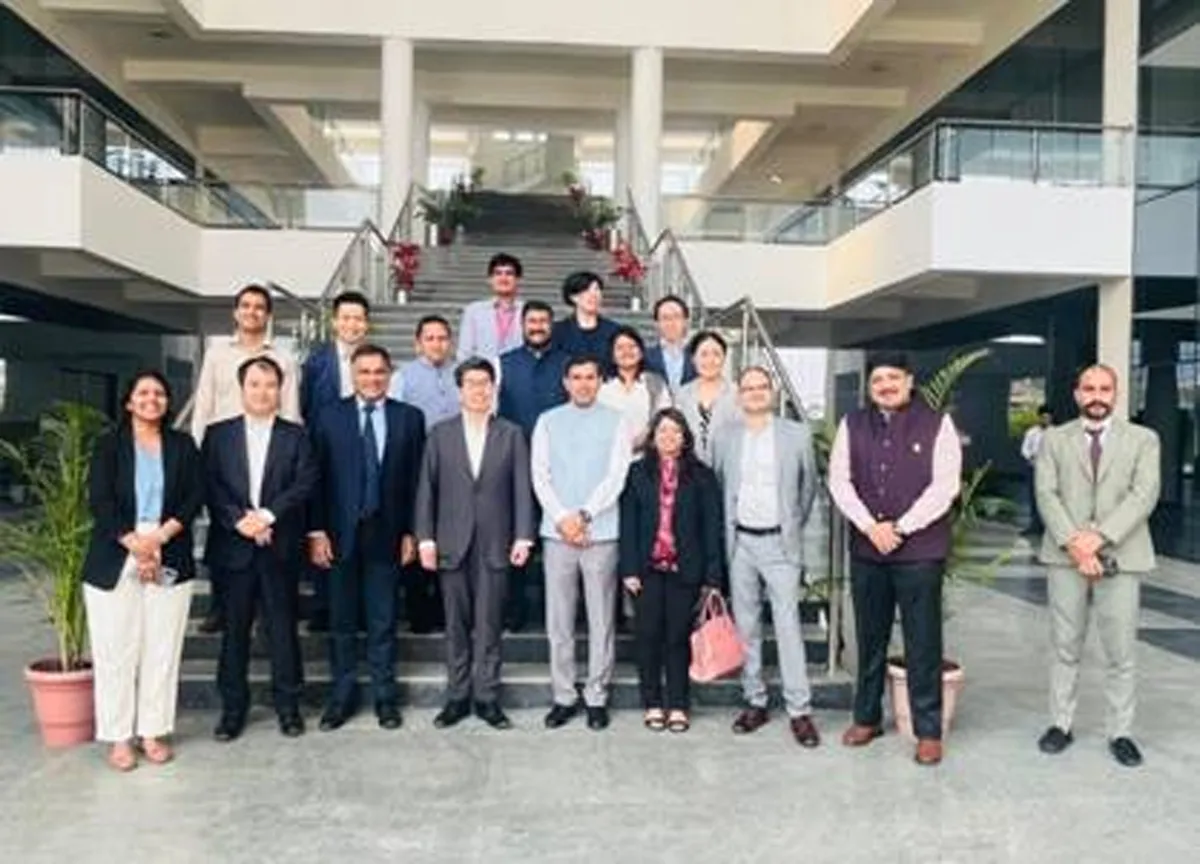
The Governor of the Japan Bank for International Cooperation (JBIC), Nobumitsu Hayashi, led a delegation to the National Industrial Corridor Development Corporation’s (NICDC) flagship industrial park — the Dholera Special Investment Region (Dholera SIR) in Gujarat — to review progress on India’s first and rapidly developing Semicon City. The visit comes amid unprecedented momentum in India’s semiconductor sector, with Dholera emerging as the country’s most ambitious greenfield smart industrial city.

During the visit, Hayashi commended the world-class planning, infrastructure readiness and strong governance framework of Dholera SIR. He expressed confidence in India’s semiconductor growth trajectory and noted the rapid progress of the Tata Electronics Semiconductor Fabrication Facility. He said Dholera’s integrated systems, scalable utilities and future-ready infrastructure make it a globally competitive destination for advanced electronics and semiconductor investments.

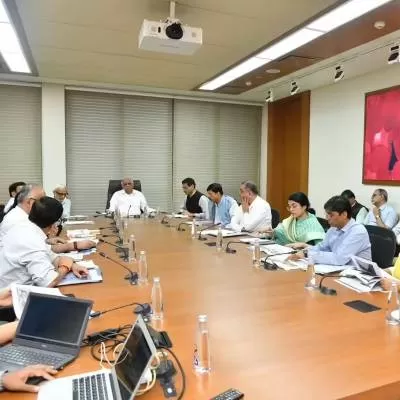
The visit began at the ABCD Building, Dholera’s administrative and command centre, where the delegation reviewed the city’s integrated planning model, digital governance systems and centralised utility-management framework. The team also visited key installations such as the Integrated Command and Control Centre, the Experience Centre and Torrent Power’s 400 kV substation, showcasing the region’s strong utility backbone.

At the Tata Electronics Semiconductor Fabrication Facility, the delegation met Tata Group leaders and reviewed the 163-acre greenfield plant being developed with an investment of Rs 910 billion in partnership with Taiwan’s Powerchip Semiconductor Manufacturing Corporation (PSMC). India’s first commercial semiconductor fabrication unit, the facility will begin production in 2027, manufacturing 50,000 wafers per month across 110 nm to 28 nm nodes and creating over 20,000 high-skilled jobs. Hayashi said the project would further strengthen India–Japan technological cooperation and contribute to global semiconductor supply chains.

NICDC CEO and Managing Director Rajat Kumar Saini briefed the delegation on Dholera’s features, joined by Dholera Industrial City Development Limited (DICDL) Managing Director Kuldeep Arya and senior officials from both organisations.

Japanese companies continue expanding operations across NICDC industrial cities, signalling strong confidence in India’s manufacturing ecosystem. The Toyota Group remains a key investor, with commitments across NICDC nodes covering over 116 acres and exceeding Rs 17 billion. NX Logistics India Pvt Ltd has expanded from its 12.86-acre Shendra (AURIC) facility to a new unit in Dholera, raising its total investment to Rs 860 million and creating 400 jobs. Other Japanese firms — including Nippon Express, Nagata, Sango and Fuji Silvertech — are also scaling operations in logistics, components and industrial infrastructure.

Dholera Industrial City has become a prime destination for strategic international engagement in semiconductors, advanced manufacturing and smart industrial ecosystems. Recently, Japan’s Ambassador to India and Bhutan, Ono Keiichi, led a 70-member delegation representing sectors such as electronics, machinery, logistics and financial services. Earlier, Iwate Prefecture’s Vice Governor, Jun Sasaki, and representatives from JICA also visited Dholera to explore opportunities in industrial development and high-technology manufacturing.

Over the past year, Dholera has hosted delegations from JBIC, the Japan Chamber of Commerce, JETRO, JICA, major Japanese corporations and global investors. These engagements, coupled with ongoing discussions on semiconductor, electronics system design and manufacturing (ESDM) and advanced manufacturing projects, underline Dholera’s growing importance in India–Japan industrial cooperation under the National Industrial Corridor Development Programme.

Dholera is also evolving into a complete smart industrial city supported by expanding social infrastructure. Key facilities under development include a 200-bed multispeciality hospital, an integrated school, a guest house, a corporate hotel, an international tent city, a multi-cuisine food court and a fire station. Private developers are also progressing with residential and commercial projects, including a mixed-use complex in the Activation Area with apartments, retail units and office spaces.

With rapid infrastructure development, a robust pipeline of global investors and India’s most advanced semiconductor manufacturing ecosystem, Dholera is emerging as a major driver of India’s industrial transformation and a preferred hub for next-generation industries. The visit by JBIC Governor Hayashi reflects growing international confidence in Dholera’s capabilities and its rising role in global and India–Japan semiconductor value chains.

The Governor of the Japan Bank for International Cooperation (JBIC), Nobumitsu Hayashi, led a delegation to the National Industrial Corridor Development Corporation’s (NICDC) flagship industrial park — the Dholera Special Investment Region (Dholera SIR) in Gujarat — to review progress on India’s first and rapidly developing Semicon City. The visit comes amid unprecedented momentum in India’s semiconductor sector, with Dholera emerging as the country’s most ambitious greenfield smart industrial city. During the visit, Hayashi commended the world-class planning, infrastructure readiness and strong governance framework of Dholera SIR. He expressed confidence in India’s semiconductor growth trajectory and noted the rapid progress of the Tata Electronics Semiconductor Fabrication Facility. He said Dholera’s integrated systems, scalable utilities and future-ready infrastructure make it a globally competitive destination for advanced electronics and semiconductor investments. The visit began at the ABCD Building, Dholera’s administrative and command centre, where the delegation reviewed the city’s integrated planning model, digital governance systems and centralised utility-management framework. The team also visited key installations such as the Integrated Command and Control Centre, the Experience Centre and Torrent Power’s 400 kV substation, showcasing the region’s strong utility backbone. At the Tata Electronics Semiconductor Fabrication Facility, the delegation met Tata Group leaders and reviewed the 163-acre greenfield plant being developed with an investment of Rs 910 billion in partnership with Taiwan’s Powerchip Semiconductor Manufacturing Corporation (PSMC). India’s first commercial semiconductor fabrication unit, the facility will begin production in 2027, manufacturing 50,000 wafers per month across 110 nm to 28 nm nodes and creating over 20,000 high-skilled jobs. Hayashi said the project would further strengthen India–Japan technological cooperation and contribute to global semiconductor supply chains. NICDC CEO and Managing Director Rajat Kumar Saini briefed the delegation on Dholera’s features, joined by Dholera Industrial City Development Limited (DICDL) Managing Director Kuldeep Arya and senior officials from both organisations. Japanese companies continue expanding operations across NICDC industrial cities, signalling strong confidence in India’s manufacturing ecosystem. The Toyota Group remains a key investor, with commitments across NICDC nodes covering over 116 acres and exceeding Rs 17 billion. NX Logistics India Pvt Ltd has expanded from its 12.86-acre Shendra (AURIC) facility to a new unit in Dholera, raising its total investment to Rs 860 million and creating 400 jobs. Other Japanese firms — including Nippon Express, Nagata, Sango and Fuji Silvertech — are also scaling operations in logistics, components and industrial infrastructure. Dholera Industrial City has become a prime destination for strategic international engagement in semiconductors, advanced manufacturing and smart industrial ecosystems. Recently, Japan’s Ambassador to India and Bhutan, Ono Keiichi, led a 70-member delegation representing sectors such as electronics, machinery, logistics and financial services. Earlier, Iwate Prefecture’s Vice Governor, Jun Sasaki, and representatives from JICA also visited Dholera to explore opportunities in industrial development and high-technology manufacturing. Over the past year, Dholera has hosted delegations from JBIC, the Japan Chamber of Commerce, JETRO, JICA, major Japanese corporations and global investors. These engagements, coupled with ongoing discussions on semiconductor, electronics system design and manufacturing (ESDM) and advanced manufacturing projects, underline Dholera’s growing importance in India–Japan industrial cooperation under the National Industrial Corridor Development Programme. Dholera is also evolving into a complete smart industrial city supported by expanding social infrastructure. Key facilities under development include a 200-bed multispeciality hospital, an integrated school, a guest house, a corporate hotel, an international tent city, a multi-cuisine food court and a fire station. Private developers are also progressing with residential and commercial projects, including a mixed-use complex in the Activation Area with apartments, retail units and office spaces. With rapid infrastructure development, a robust pipeline of global investors and India’s most advanced semiconductor manufacturing ecosystem, Dholera is emerging as a major driver of India’s industrial transformation and a preferred hub for next-generation industries. The visit by JBIC Governor Hayashi reflects growing international confidence in Dholera’s capabilities and its rising role in global and India–Japan semiconductor value chains.

Next Story
Infrastructure Transport

MMRDA Installs 325-Tonne Steel Spans on Mumbai Metro Line 4

The Mumbai Metropolitan Region Development Authority (MMRDA) has achieved a key construction milestone on Metro Line 4 with the successful installation of three large steel spans at Bhandup West during overnight operations.The spans, together weighing 325 metric tonnes, were launched using eight heavy-duty cranes and 12 multi-axle vehicles. The operation required precise engineering and meticulous planning to minimise disruption in the densely populated suburban area.Due to effective inter-agency coordination, the work—originally scheduled across four nights—was completed within just two n..

Next Story
Infrastructure Transport

CMRL Targets March 2027 Opening for Vadapalani–Panagal Park

Chennai Metro Rail Limited (CMRL) is progressing as scheduled to open the Vadapalani–Panagal Park section of Phase II’s Corridor 4 by March 2027. The 3.5 km underground stretch is part of the 26.1 km Corridor 4 connecting Lighthouse with Poonamallee Bypass.Construction activities are advancing steadily, with tunnelling works between Vadapalani and Panagal Park already completed. Track-laying operations are expected to commence shortly. At Panagal Park station, structural works have reached the concourse and platform levels, while excavation continues at the lowest level.CMRL is also consid..

Next Story
Infrastructure Transport

Maha-Metro Invites Pune Metro Civil Maintenance Bids

Maharashtra Metro Rail Corporation Limited (Maha-Metro) has invited bids for the annual civil maintenance contract of the Pune Metro Rail Project. The tender, bearing ID and number P1-O&M-20/2025, is scheduled to close on 23 February 2026, with a pre-bid meeting slated for 10 February 2026. The earnest money deposit (EMD) for the contract is Rs 3,50,500, and the duration of the contract is one year.The scope of work includes annual civil maintenance of 28 elevated and underground stations, 28.079 km of elevated viaduct including steel bridges, 12.15 km of tunnels, and two depots under the ..

Advertisement

Subscribe to Our Newsletter

Get daily newsletters around different themes from Construction world.

STAY CONNECTED

Advertisement

Advertisement

Advertisement

Open In App