

Lucknow To Get Modern Integrated Bus Terminal
ECONOMY & POLICY

Lucknow To Get Modern Integrated Bus Terminal

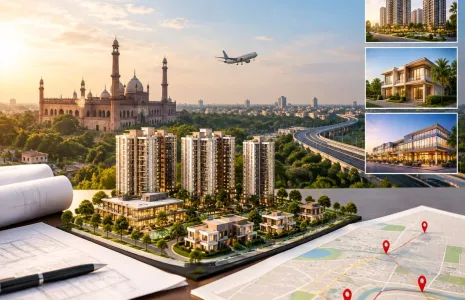
The Uttar Pradesh cabinet has approved the development of an Integrated City Bus Terminal and Commercial Zone at the P4 Parking site in Vrindavan Yojna, Lucknow. The project promises to deliver a state-of-the-art facility aimed at improving public transport, easing congestion, and enhancing commuter convenience.

Spread over 28,56,728 square feet (7.06 acres), the terminal will be developed on a design, build, finance, operate, and transfer (DBFOT) basis through a public-private partnership (PPP) model. The land, acquired from the Awas Vikas Parishad for Rs 1.5 billion, will be leased to a private developer for 60 years.

Estimated to cost Rs 3.8 billion (excluding land), the project allocates Rs 1.05 billion for the terminal and Rs 2.75 billion for commercial and utility spaces. Facilities will include air-conditioned waiting halls, passenger lounges, reservation counters, kiosks, toilets, medical aid room, creche, cloak and parcel rooms, ATM, and security booths.

The terminal will support operations of Lucknow’s existing fleet of 141 electric and 52 CNG buses, with provision for 150 more electric buses, strengthening green urban mobility.

As per the PPP terms, the private developer will design the terminal, obtain all clearances, finance and construct the project within 36 months for the terminal and 60 months for the commercial zones. The developer will manage and maintain the complex for 60 years before transferring it back to the state government.

Principal Secretary of Urban Development Amrit Abhijat called the initiative a “landmark decision” for boosting Lucknow’s transport infrastructure.

The Uttar Pradesh cabinet has approved the development of an Integrated City Bus Terminal and Commercial Zone at the P4 Parking site in Vrindavan Yojna, Lucknow. The project promises to deliver a state-of-the-art facility aimed at improving public transport, easing congestion, and enhancing commuter convenience.Spread over 28,56,728 square feet (7.06 acres), the terminal will be developed on a design, build, finance, operate, and transfer (DBFOT) basis through a public-private partnership (PPP) model. The land, acquired from the Awas Vikas Parishad for Rs 1.5 billion, will be leased to a private developer for 60 years.Estimated to cost Rs 3.8 billion (excluding land), the project allocates Rs 1.05 billion for the terminal and Rs 2.75 billion for commercial and utility spaces. Facilities will include air-conditioned waiting halls, passenger lounges, reservation counters, kiosks, toilets, medical aid room, creche, cloak and parcel rooms, ATM, and security booths.The terminal will support operations of Lucknow’s existing fleet of 141 electric and 52 CNG buses, with provision for 150 more electric buses, strengthening green urban mobility.As per the PPP terms, the private developer will design the terminal, obtain all clearances, finance and construct the project within 36 months for the terminal and 60 months for the commercial zones. The developer will manage and maintain the complex for 60 years before transferring it back to the state government.Principal Secretary of Urban Development Amrit Abhijat called the initiative a “landmark decision” for boosting Lucknow’s transport infrastructure.

Next Story
Infrastructure Urban

TOTO Crosses 70 Million WASHLET Sales as India Fuels Growth

TOTO has announced that global shipments of its WASHLET range have surpassed 70 million units, marking a major milestone in the brand’s more than four decades of innovation in bathroom hygiene and wellness. Headquartered in Japan, the company supplies WASHLET products across residential and public restroom applications in over 100 countries, with rising demand across the Americas, Europe and Asia.The milestone reflects a global shift toward higher standards of hygiene, comfort and wellness. While overall demand continues to grow worldwide, India has emerged as one of TOTO’s fastest-growing..

Next Story
Infrastructure Urban

Hindustan Zinc, Silox India Boost Low-Carbon Manufacturing Push

Hindustan Zinc Limited and Silox India have strengthened their long-standing partnership with the adoption of Hindustan Zinc’s low-carbon zinc brand, EcoZen, across Silox India’s manufacturing operations. The move marks a key step in advancing low-carbon manufacturing practices and underlines the role of upstream material producers in enabling downstream decarbonisation across India’s industrial value chains.EcoZen is Asia’s first low-carbon zinc produced entirely using renewable energy and carries a verified carbon footprint of less than one tonne of CO₂ per tonne of zinc—around 7..

Next Story
Infrastructure Urban

JK Tyre Earns EcoVadis Silver, Ranks Among Global Sustainability Leaders

JK Tyre & Industries has secured a Silver Rating from EcoVadis, placing the company among the top-performing organisations globally on sustainability parameters. With this recognition, JK Tyre ranks in the 93rd percentile worldwide, positioning it within the top 7 per cent of companies assessed across industries for environmental, social and governance (ESG) practices.EcoVadis evaluates companies on four core pillars—Environment, Labour & Human Rights, Ethics, and Sustainable Procurement—offering a comprehensive assessment of sustainability performance. JK Tyre’s Silver rating re..

Advertisement

Subscribe to Our Newsletter

Get daily newsletters around different themes from Construction world.

STAY CONNECTED

Advertisement

Advertisement

Advertisement

Advertisement

Open In App