


Noida to Set Up 100 Auto Stands to Ease Traffic
ECONOMY & POLICY

Noida to Set Up 100 Auto Stands to Ease Traffic

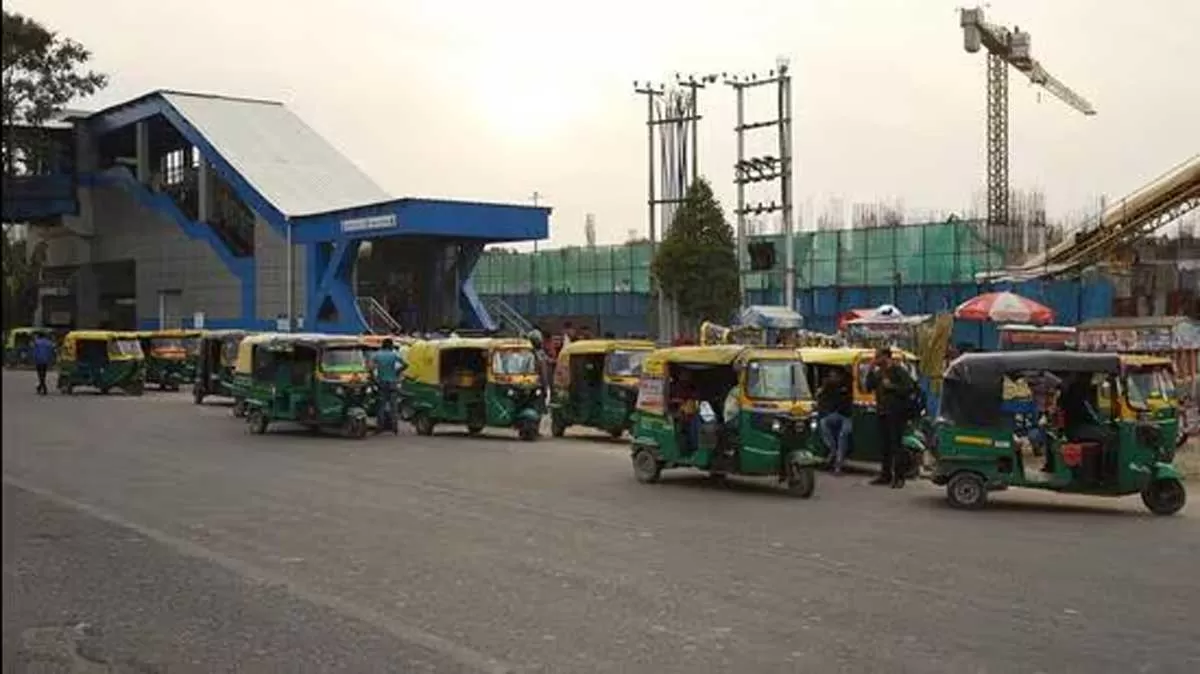
The Noida transport department will establish around 100 designated auto-rickshaw stands across the district to ease congestion and enhance last-mile public transport access, officials announced on Monday. The initiative is aimed at reducing unauthorised parking and streamlining movement near metro stations and other key transit points.
A meeting involving transport stakeholders and traffic police is scheduled for 26 July to finalise pick-up and drop-off zones along high-demand routes. “Once the locations are confirmed, signage and other necessary infrastructure will be installed,” said Siyaram Verma, Assistant Regional Transport Officer, Noida.
The proposal follows ongoing consultations with the traffic police and the Noida CNG Auto Drivers’ Union, which has long advocated for formal auto stands. “These designated stands will benefit both commuters and drivers—ensuring availability and preventing penalties for illegal parking,” said Union President Omprakash Gurjar.
The union has submitted a list of busy sites including Sector 37, Botanical Garden, Sector 51, Sector 52, Model Town, and Surajpur. Currently, thousands of auto-rickshaws operate around congested metro stations such as Botanical Garden, Golf Course, City Centre, and Sector 52, often contributing to traffic snarls in the absence of structured stands.
According to official data, Noida has around 18,000 registered auto-rickshaws, mostly serving short-distance routes from metro and bus stations to residential and commercial areas. Between January and June 2025, traffic police issued 1.1 million fines, with 25,000 issued to auto drivers for various violations. During the same period, 737 auto-rickshaws were seized.
The new plan is expected to regulate auto operations, reduce traffic violations, and enhance commuter experience across the city. 

The Noida transport department will establish around 100 designated auto-rickshaw stands across the district to ease congestion and enhance last-mile public transport access, officials announced on Monday. The initiative is aimed at reducing unauthorised parking and streamlining movement near metro stations and other key transit points.A meeting involving transport stakeholders and traffic police is scheduled for 26 July to finalise pick-up and drop-off zones along high-demand routes. “Once the locations are confirmed, signage and other necessary infrastructure will be installed,” said Siyaram Verma, Assistant Regional Transport Officer, Noida.The proposal follows ongoing consultations with the traffic police and the Noida CNG Auto Drivers’ Union, which has long advocated for formal auto stands. “These designated stands will benefit both commuters and drivers—ensuring availability and preventing penalties for illegal parking,” said Union President Omprakash Gurjar.The union has submitted a list of busy sites including Sector 37, Botanical Garden, Sector 51, Sector 52, Model Town, and Surajpur. Currently, thousands of auto-rickshaws operate around congested metro stations such as Botanical Garden, Golf Course, City Centre, and Sector 52, often contributing to traffic snarls in the absence of structured stands.According to official data, Noida has around 18,000 registered auto-rickshaws, mostly serving short-distance routes from metro and bus stations to residential and commercial areas. Between January and June 2025, traffic police issued 1.1 million fines, with 25,000 issued to auto drivers for various violations. During the same period, 737 auto-rickshaws were seized.The new plan is expected to regulate auto operations, reduce traffic violations, and enhance commuter experience across the city. 

Next Story
Infrastructure Transport

MMRDA advances 250 m on Orange Gate–Marine Drive tunnel

The Mumbai Metropolitan Region Development Authority (MMRDA) has completed 250 m of underground tunnelling for the Orange Gate–Marine Drive Urban Road Tunnel using India’s largest slurry shield tunnel boring machine (TBM) deployed for an urban road project.The project involves twin tunnels extending over 7 km beneath critical transport corridors, including Central Railway, Western Railway and Metro Line 3. The work requires high-precision engineering to navigate densely developed urban infrastructure.Once completed, the tunnel is expected to reduce travel time between Orange Gate and Marin..

Next Story
Infrastructure Urban

Hindustan Zinc Pays Rs 188.46 Billion in FY26

Hindustan Zinc contributed Rs 188.46 billion to the public exchequer in FY 2025-26, according to its 9th Tax Transparency Report. The contribution, equivalent to 46 per cent of the company’s revenue, included direct and indirect taxes, government royalties, dividends to the Government of India, withholding taxes and other statutory levies.The company’s five-year cumulative contribution to the exchequer stood at Rs 915.72 billion. In FY26, Hindustan Zinc reported revenue of Rs 408.44 billion, EBITDA of Rs 221.62 billion and profit after tax of Rs 138.32 billion. It also achieved its highest..

Next Story
Infrastructure Urban

World of Concrete India 2026 Opens in Mumbai

Informa Markets in India will host the 12th edition of World of Concrete India 2026 from 3–5 June 2026 at the Bombay Exhibition Centre, Mumbai. The specialised B2B exhibition will bring together manufacturers, suppliers, contractors, developers, architects, consultants, infrastructure companies, project leaders and government stakeholders.The event is expected to feature over 350 brands and more than 18,000 trade professionals. It will cover concrete and cement, dry mortar, precast technologies, formwork, construction chemicals, industrial and commercial flooring, scaffolding, safety solutio..

Advertisement

Subscribe to Our Newsletter

Get daily newsletters around different themes from Construction world.

STAY CONNECTED

Advertisement

Advertisement

Advertisement