OMCs Face Rs. 5.3 bn Daily Loss as Fuel Prices Stay Unchanged
ECONOMY & POLICY

OMCs Face Rs. 5.3 bn Daily Loss as Fuel Prices Stay Unchanged

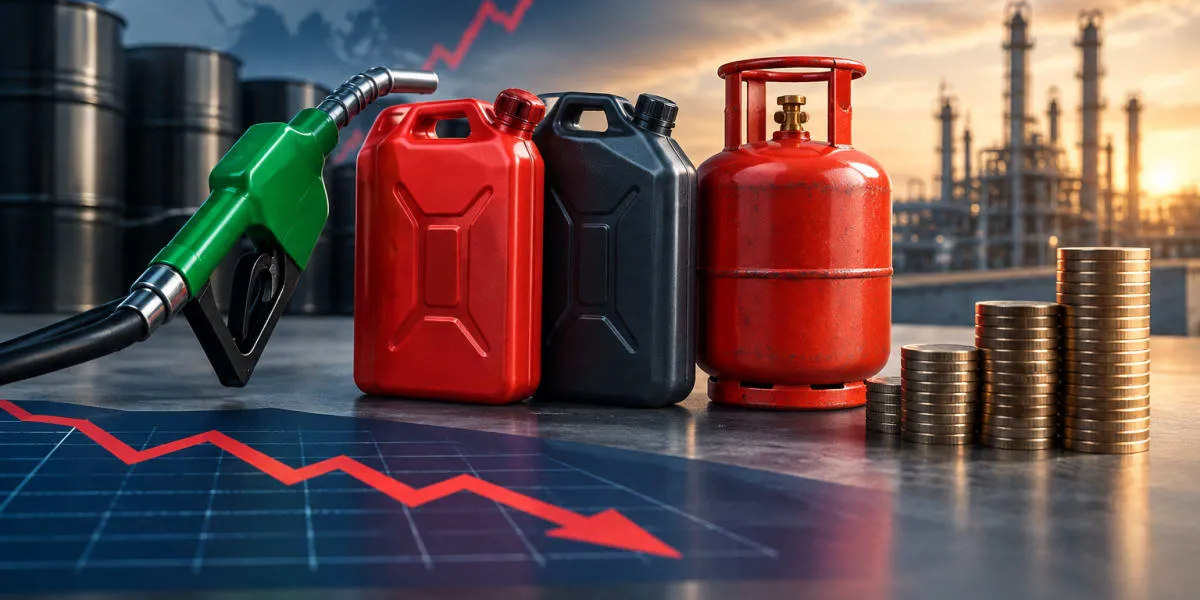
Oil marketing companies (OMCs) are estimated to be losing around Rs. 5.3 bn a day as higher crude oil and LPG prices widen losses on petrol, diesel and domestic LPG, rating agency ICRA said. Domestic retail prices have remained unchanged despite the sharp increase in international energy prices.

ICRA estimated OMC marketing margins at negative Rs. 8 per litre for petrol and negative Rs. 9 per litre for diesel. Under-recoveries on domestic LPG were estimated at around Rs. 300 per cylinder in September 2026, while the cumulative negative LPG buffer rose to Rs. 619.4 bn as of June 30, 2026.

The Indian crude basket reached $117.4 per barrel on September 21, compared with an average of around $66 per barrel in 2025-26. The increase followed heightened geopolitical tensions, the renewed US-Iran conflict, the shutdown of Saudi Arabia’s East-West pipeline and increased Houthi activity in the Red Sea.

ICRA said elevated crude prices combined with unchanged domestic fuel prices would pressure OMC profitability and cash flows, while increasing short-term borrowing requirements for working capital. The effect on OMC earnings in 2026-27 will depend on crude prices, product cracks, retail price revisions and government support for LPG under-recoveries.

The estimated loss on each domestic LPG cylinder was around Rs. 500 in the first quarter of 2026-27 and remained close to Rs. 300 in September. ICRA said LPG under-recoveries could increase further if international prices stay high without higher domestic selling prices or additional government compensation.

Singapore gross refining margins have remained above $10 per barrel since the West Asia crisis began, supported by supply disruptions, inventory drawdowns and refining outages. The government introduced Special Additional Excise Duty, or SAED, on diesel and aviation turbine fuel from March 27, 2026, and later extended it to petrol. SAED stood at Rs. 20 per litre on diesel and Rs. 15 per litre on aviation turbine fuel from September 16, helping reduce effective product costs for OMC marketing divisions.

Oil marketing companies (OMCs) are estimated to be losing around Rs. 5.3 bn a day as higher crude oil and LPG prices widen losses on petrol, diesel and domestic LPG, rating agency ICRA said. Domestic retail prices have remained unchanged despite the sharp increase in international energy prices. ICRA estimated OMC marketing margins at negative Rs. 8 per litre for petrol and negative Rs. 9 per litre for diesel. Under-recoveries on domestic LPG were estimated at around Rs. 300 per cylinder in September 2026, while the cumulative negative LPG buffer rose to Rs. 619.4 bn as of June 30, 2026. The Indian crude basket reached $117.4 per barrel on September 21, compared with an average of around $66 per barrel in 2025-26. The increase followed heightened geopolitical tensions, the renewed US-Iran conflict, the shutdown of Saudi Arabia’s East-West pipeline and increased Houthi activity in the Red Sea. ICRA said elevated crude prices combined with unchanged domestic fuel prices would pressure OMC profitability and cash flows, while increasing short-term borrowing requirements for working capital. The effect on OMC earnings in 2026-27 will depend on crude prices, product cracks, retail price revisions and government support for LPG under-recoveries. The estimated loss on each domestic LPG cylinder was around Rs. 500 in the first quarter of 2026-27 and remained close to Rs. 300 in September. ICRA said LPG under-recoveries could increase further if international prices stay high without higher domestic selling prices or additional government compensation. Singapore gross refining margins have remained above $10 per barrel since the West Asia crisis began, supported by supply disruptions, inventory drawdowns and refining outages. The government introduced Special Additional Excise Duty, or SAED, on diesel and aviation turbine fuel from March 27, 2026, and later extended it to petrol. SAED stood at Rs. 20 per litre on diesel and Rs. 15 per litre on aviation turbine fuel from September 16, helping reduce effective product costs for OMC marketing divisions.

Related Stories

Gold Stories

Next Story
Resources

Kalpataru Projects International elevates Amit Uplenchwar as Joint MD and CEO

Kalpataru Projects International (KPIL) has elevated Amit Uplenchwar as Joint Managing Director and CEO (designate), following approval by its board on 5 November 2026. He will take charge as Additional Director, Joint Managing Director and CEO from 1 January 2027 for a five-year term ending 31 December 2031, subject to shareholders' approval.Uplenchwar brings over three decades of experience in corporate strategy, business operations, business development, mergers and acquisitions, and international business management. His experience spans transportation, power, water, oil and gas, aerospace..
Next Story
Resources

HCC appoints Vivek Singhal as CEO

Hindustan Construction Company (HCC) has appointed Vivek Singhal as Chief Executive Officer, effective 5 November 2026. He brings over four decades of experience in infrastructure and engineering, procurement and construction (EPC), covering project execution, business leadership, business development and profit and loss management.Singhal has spent 16 years in international markets, delivering projects and managing assets worth approximately Rs 285 billion across five countries. His experience spans airports, metro rail, urban transport, hydropower, bridges and other infrastructure sectors.He..

Next Story
Infrastructure Energy

Essar Signs PPA for 300 MW Hybrid Renewable Energy Project

Essar Renewables, the renewable energy arm of Essar Power, has signed a Power Purchase Agreement (PPA) with NHPC for a 300 MW renewable energy project in Andhra Pradesh. The agreement follows the company’s successful bid for the project two years ago. Essar Power will invest approximately Rs. 45 bn in the development. The project will combine solar and wind generation with Battery Energy Storage Systems (BESS), enabling the supply of reliable and dispatchable renewable power. It forms part of Essar Power’s plan to build a diversified energy portfolio of approximately 5 GW across renewable,..

Advertisement

Subscribe to Our Newsletter

Get daily newsletters around different themes from Construction world.

STAY CONNECTED

Advertisement

SPECIAL OFFER
QR Code