




Prime Minister Meets Chief Advisor of Bangladesh
ECONOMY & POLICY

Prime Minister Meets Chief Advisor of Bangladesh

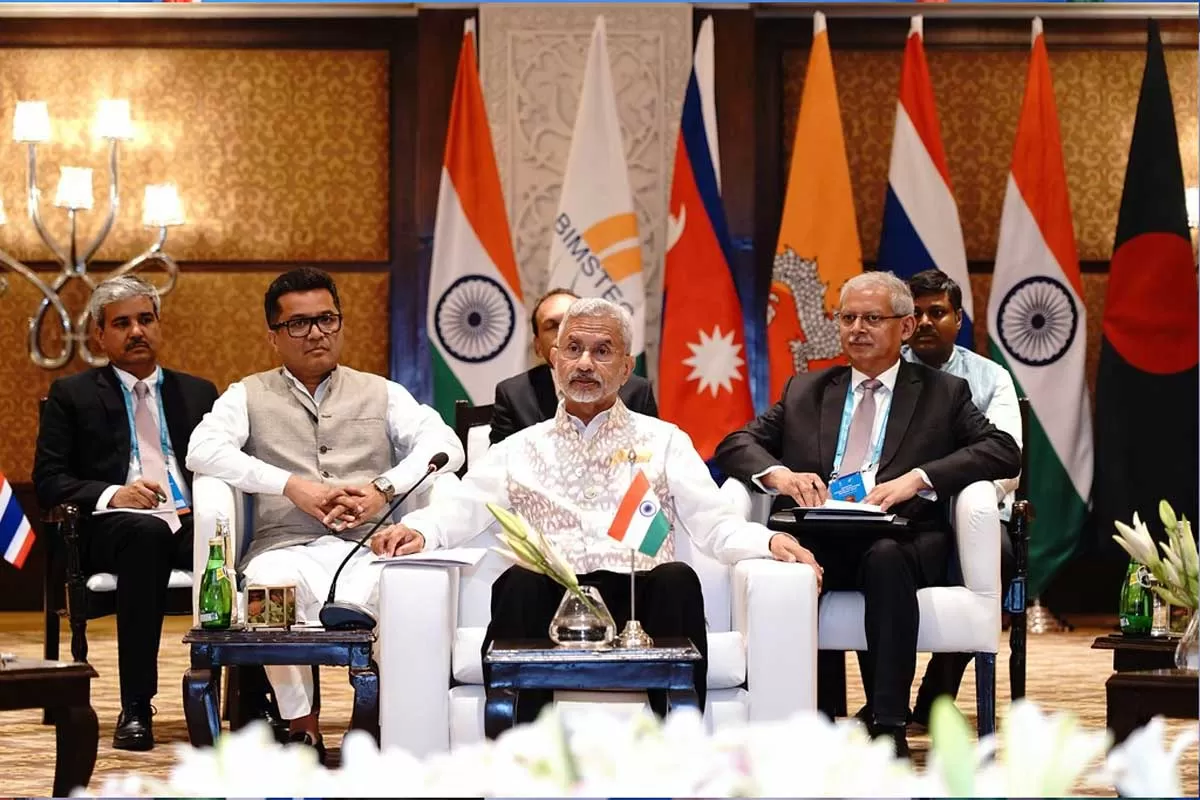
On the sidelines of the 6th BIMSTEC Summit in Bangkok, Prime Minister Shri Narendra Modi held a bilateral meeting with Professor Muhammad Yunus, Chief Advisor of Bangladesh’s interim government, on 4 April 2025.

Prime Minister Modi reaffirmed India’s steadfast support for a democratic, stable, peaceful, progressive, and inclusive Bangladesh. Emphasising India’s people-centric approach to foreign relations, he noted that the cooperation between the two nations has delivered tangible benefits for citizens on both sides of the border.

He conveyed India’s commitment to nurturing a pragmatic, constructive and forward-looking partnership with Bangladesh. While addressing challenges, the Prime Minister advised that rhetoric which could vitiate the atmosphere is best avoided. On matters concerning border security, he emphasised the importance of strict legal enforcement and curbing illegal crossings—particularly nocturnal movements—as essential for maintaining peace and stability.

Expressing concerns about the safety and well-being of minorities in Bangladesh, including the Hindu community, Prime Minister Modi underscored the expectation that their security would be safeguarded through thorough investigations into past incidents of violence and injustice.

He also congratulated Bangladesh on assuming the Chairmanship of BIMSTEC, expressing confidence in its leadership to advance the regional integration agenda. Both leaders agreed to deepen consultations and strengthen cooperation within the BIMSTEC framework.

Prime Minister Modi reiterated that all matters of mutual concern should continue to be addressed through bilateral dialogue, driven by constructive spirit and shared interests in further strengthening the long-standing and mutually beneficial relationship between India and Bangladesh.

On the sidelines of the 6th BIMSTEC Summit in Bangkok, Prime Minister Shri Narendra Modi held a bilateral meeting with Professor Muhammad Yunus, Chief Advisor of Bangladesh’s interim government, on 4 April 2025. Prime Minister Modi reaffirmed India’s steadfast support for a democratic, stable, peaceful, progressive, and inclusive Bangladesh. Emphasising India’s people-centric approach to foreign relations, he noted that the cooperation between the two nations has delivered tangible benefits for citizens on both sides of the border. He conveyed India’s commitment to nurturing a pragmatic, constructive and forward-looking partnership with Bangladesh. While addressing challenges, the Prime Minister advised that rhetoric which could vitiate the atmosphere is best avoided. On matters concerning border security, he emphasised the importance of strict legal enforcement and curbing illegal crossings—particularly nocturnal movements—as essential for maintaining peace and stability. Expressing concerns about the safety and well-being of minorities in Bangladesh, including the Hindu community, Prime Minister Modi underscored the expectation that their security would be safeguarded through thorough investigations into past incidents of violence and injustice. He also congratulated Bangladesh on assuming the Chairmanship of BIMSTEC, expressing confidence in its leadership to advance the regional integration agenda. Both leaders agreed to deepen consultations and strengthen cooperation within the BIMSTEC framework. Prime Minister Modi reiterated that all matters of mutual concern should continue to be addressed through bilateral dialogue, driven by constructive spirit and shared interests in further strengthening the long-standing and mutually beneficial relationship between India and Bangladesh.

Next Story
Infrastructure Urban

Implementation Status of Jal Jeevan Mission

Since August 2019 the Government has implemented Jal Jeevan Mission to provide assured potable water through household tap connections in rural India. At the start of the mission only 32.3 million (mn) rural households, representing 16.7 per cent, were reported to have tap water connections. States and union territories have reported that 125.8 mn additional rural households have since been provided with tap connections. As a result, of about 193.6 mn rural households roughly 158.2 mn, or 81.71 per cent, are reported to have tap water supply at home.\n\nThe State, district and village level st..

Next Story
Infrastructure Urban

Jal Jeevan Mission Reaches Eighty One Per Cent Rural Coverage

The Government reported substantial progress under the Jal Jeevan Mission, launched in August 2019 to provide tap water to every rural household. At launch only 32.3 million (mn) rural households had tap connections and states and Union territories reported provision of 125.8 mn additional households by March 2026. Consequently, out of about 193.6 mn rural households around 158.2 mn, or 81.71 per cent, are reported to have tap water at home. The Finance Minister announced extension of the mission until 2028 in the 2025-26 budget speech. The Swachh Bharat Mission Grameen, launched in October 20..

Next Story
Infrastructure Urban

Empowering Local Governance for Sustainable Rural Water Supply

The Ministry of Jal Shakti has aligned the Jal Jeevan Mission (JJM) with the 73rd Amendment to strengthen village level planning and community ownership of water supply. Gram Panchayats, village water and sanitation committees and Pani Samitis are to plan, implement, manage and maintain piped water systems, with gram sabha processes formalising handover and oversight. Implementation support agencies including non government organisations, community based organisations and self help groups have been empanelled to train local committees and promote women participation. Under JJM, the department ..

Advertisement

Subscribe to Our Newsletter

Get daily newsletters around different themes from Construction world.

STAY CONNECTED

Advertisement

Advertisement

Advertisement















