Rs 5.07 Bn Project to Build Disaster-resilient Model Gram Panchayats
ECONOMY & POLICY

Rs 5.07 Bn Project to Build Disaster-resilient Model Gram Panchayats

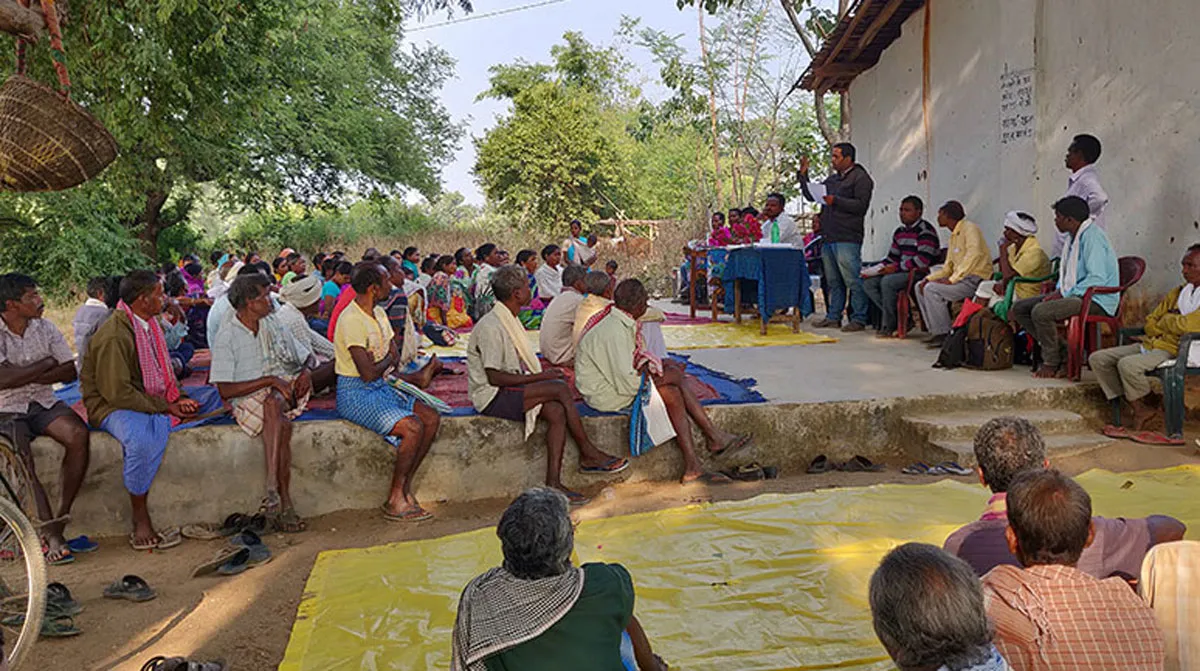
In a major step towards strengthening grassroots disaster preparedness, the Government of India has approved the National Project for Strengthening Community-Based Disaster Risk Reduction Initiatives in Panchayati Raj Institutions, with a total outlay of Rs 5.07 billion. The project will be jointly implemented by the Ministry of Panchayati Raj (MoPR) and the National Disaster Management Authority (NDMA) across 20 states.

The initiative will cover 81 disaster-prone districts, with 20 Gram Panchayats selected in each district, and will additionally develop 20 Model Gram Panchayats focused on major hazard-specific risks. These model villages will act as replicable templates, demonstrating how disaster risk reduction (DRR) can be effectively integrated into local governance, planning and infrastructure. The programme follows a bottom-up approach, placing Panchayati Raj Institutions at the centre of disaster preparedness, mitigation and resilience — truly taking resilience from files to the field.

The project focuses on institutional strengthening and mainstreaming DRR into local development planning, alongside extensive capacity-building and awareness programmes for State and District Disaster Management Authorities, elected representatives and Panchayat functionaries. Targeted Information, Education and Communication (IEC) initiatives and improved coordination among local, district and state stakeholders form a key pillar of the programme.

MoPR will leverage digital platforms such as eGramSwaraj and Gram Manchitra to integrate disaster management planning, monitor expenditure and ensure real-time information flow to Panchayats. Capacity-building initiatives will also be undertaken for elected representatives, Panchayat officials, master trainers and community volunteers to build long-term institutional capability at the grassroots.

Each of the 20 states will identify one Model Gram Panchayat, mapped to six major hazard themes, to showcase end-to-end, long-term mitigation strategies. These Gram Panchayats will be located in close clusters within some of the most disaster-prone districts, ensuring visible and scalable impact.

The project builds on the foundation laid by the Disaster Management Plan of MoPR released in March 2022, reinforcing efforts to integrate Panchayat- and village-level disaster management plans with Gram Panchayat Development Plans, and paving the way for a more resilient rural India.

In a major step towards strengthening grassroots disaster preparedness, the Government of India has approved the National Project for Strengthening Community-Based Disaster Risk Reduction Initiatives in Panchayati Raj Institutions, with a total outlay of Rs 5.07 billion. The project will be jointly implemented by the Ministry of Panchayati Raj (MoPR) and the National Disaster Management Authority (NDMA) across 20 states.The initiative will cover 81 disaster-prone districts, with 20 Gram Panchayats selected in each district, and will additionally develop 20 Model Gram Panchayats focused on major hazard-specific risks. These model villages will act as replicable templates, demonstrating how disaster risk reduction (DRR) can be effectively integrated into local governance, planning and infrastructure. The programme follows a bottom-up approach, placing Panchayati Raj Institutions at the centre of disaster preparedness, mitigation and resilience — truly taking resilience from files to the field.The project focuses on institutional strengthening and mainstreaming DRR into local development planning, alongside extensive capacity-building and awareness programmes for State and District Disaster Management Authorities, elected representatives and Panchayat functionaries. Targeted Information, Education and Communication (IEC) initiatives and improved coordination among local, district and state stakeholders form a key pillar of the programme.MoPR will leverage digital platforms such as eGramSwaraj and Gram Manchitra to integrate disaster management planning, monitor expenditure and ensure real-time information flow to Panchayats. Capacity-building initiatives will also be undertaken for elected representatives, Panchayat officials, master trainers and community volunteers to build long-term institutional capability at the grassroots.Each of the 20 states will identify one Model Gram Panchayat, mapped to six major hazard themes, to showcase end-to-end, long-term mitigation strategies. These Gram Panchayats will be located in close clusters within some of the most disaster-prone districts, ensuring visible and scalable impact.The project builds on the foundation laid by the Disaster Management Plan of MoPR released in March 2022, reinforcing efforts to integrate Panchayat- and village-level disaster management plans with Gram Panchayat Development Plans, and paving the way for a more resilient rural India.

Next Story
Building Material

Kumaraswamy Invites Envoys to Join Flagship Bharat Steel 2026

Union Minister for Steel and Heavy Industries, HD Kumaraswamy, held an interactive meeting with Ambassadors and diplomatic representatives of key partner countries, inviting them to actively participate in Bharat Steel 2026, the flagship international conference-cum-exhibition of the Ministry of Steel scheduled for April 2026.The meeting saw strong participation from representatives of countries that play a significant role in the global steel value chain. It formed part of the Ministry’s broader outreach efforts to deepen international cooperation and strengthen India’s engagement with ma..

Next Story
Infrastructure Transport

Centre Clears Rs 8.87 Bn Plan for World-class Mumbai Marina

The Union Government has approved a Rs 8.87 billion proposal to develop a world-class marina at Mumbai Harbour, a move expected to significantly boost coastal shipping, maritime tourism and waterfront-led urban development in India’s financial capital.The proposed ‘Viksit Bharat Mumbai Marina’ has been cleared by the Ministry of Ports, Shipping and Waterways in line with the vision of Prime Minister Narendra Modi to create global-standard tourism destinations and strengthen the country’s maritime economy. The project is designed to open up Mumbai’s waterfront for public use while att..

Next Story
Infrastructure Urban

Study Highlights Freshwater Sponges’ Role in Fighting Metal Pollution

Scientists have identified freshwater sponges and their associated microbial communities as powerful natural allies in tackling toxic metal pollution, offering new hope for sustainable water quality management. A recent study has revealed that these sponges can act both as bioindicators and effective absorbents of harmful metals such as arsenic, lead and cadmium.The findings come from a study published in Microbiology Spectrum by researchers from Bose Institute, an autonomous institute under the Department of Science and Technology, Government of India. The research focused on freshwater spong..

Advertisement

Subscribe to Our Newsletter

Get daily newsletters around different themes from Construction world.

STAY CONNECTED

Advertisement

Advertisement

Advertisement

Advertisement

Open In App