Stellantis India to Halve Vehicle Development Time, Boost Localisation
ECONOMY & POLICY

Stellantis India to Halve Vehicle Development Time, Boost Localisation

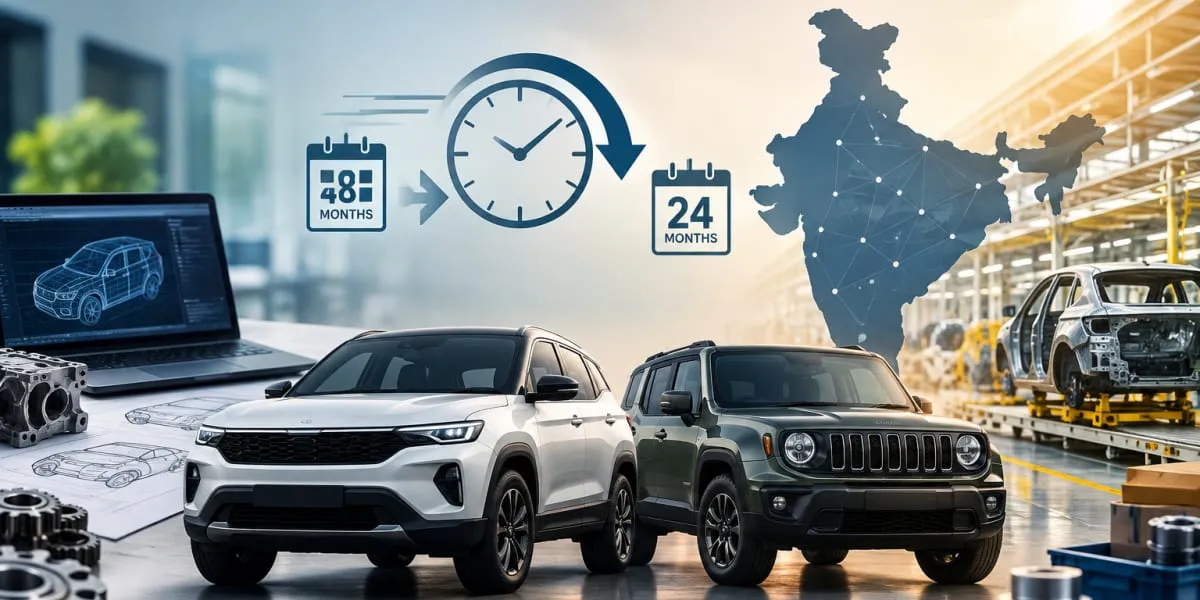
Stellantis India plans to halve vehicle development time and increase localisation for selected Citroen and Jeep models as part of its FaSTLAne 2030 roadmap. The company will invest Rs. 40 bn over the next three years and launch 12 products across the two brands in India, including seven new models.

Stellantis India managing director and chief executive Shailesh Hazela said the group is working to reduce global product development time from 48 months to about 24 months. The company’s engineering centre in India is among its four large technology centres worldwide and develops vehicles for both its Indian brands and global markets.

Stellantis operates a software and technology centre in Bengaluru and has a longstanding manufacturing partnership with Tata Motors Passenger Vehicle through a 50:50 joint venture. The companies recently agreed to expand their cooperation into advanced technology and product development. They plan to jointly develop vehicles for more than 50 global markets and manufacture them in India at Fiat India Automobiles.

Citroen’s current localisation level in India is between 90 and 95 per cent, while Jeep’s is about 70 to 75 per cent. Stellantis India is working towards localisation of more than 90 per cent across its products by strengthening local engineering capabilities and its domestic supply chain. The company said this would provide greater flexibility to match market pricing expectations.

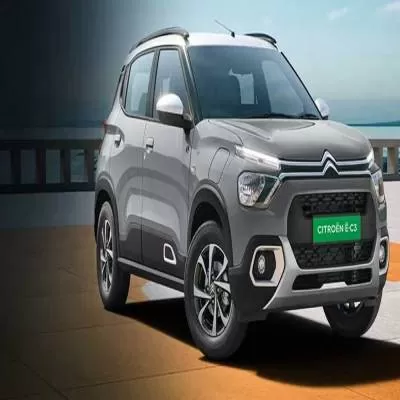
Jeep currently sells the Compass, Wrangler, Meridian and Grand Cherokee in India, while Citroen’s range comprises the C3, BasaltX, AircrossX and C5 Aircross. The planned Jeep additions include one SUV each in the B, C and D segments, along with a D-segment pickup. Citroen is set to receive a C-segment SUV, a D-segment MPV and an A-segment car.

Stellantis India plans to halve vehicle development time and increase localisation for selected Citroen and Jeep models as part of its FaSTLAne 2030 roadmap. The company will invest Rs. 40 bn over the next three years and launch 12 products across the two brands in India, including seven new models. Stellantis India managing director and chief executive Shailesh Hazela said the group is working to reduce global product development time from 48 months to about 24 months. The company’s engineering centre in India is among its four large technology centres worldwide and develops vehicles for both its Indian brands and global markets. Stellantis operates a software and technology centre in Bengaluru and has a longstanding manufacturing partnership with Tata Motors Passenger Vehicle through a 50:50 joint venture. The companies recently agreed to expand their cooperation into advanced technology and product development. They plan to jointly develop vehicles for more than 50 global markets and manufacture them in India at Fiat India Automobiles. Citroen’s current localisation level in India is between 90 and 95 per cent, while Jeep’s is about 70 to 75 per cent. Stellantis India is working towards localisation of more than 90 per cent across its products by strengthening local engineering capabilities and its domestic supply chain. The company said this would provide greater flexibility to match market pricing expectations. Jeep currently sells the Compass, Wrangler, Meridian and Grand Cherokee in India, while Citroen’s range comprises the C3, BasaltX, AircrossX and C5 Aircross. The planned Jeep additions include one SUV each in the B, C and D segments, along with a D-segment pickup. Citroen is set to receive a C-segment SUV, a D-segment MPV and an A-segment car.

Related Stories

Gold Stories

Next Story
Real Estate

LML Realty Sells Out Jhirka Valley Industrial Park in Haryana

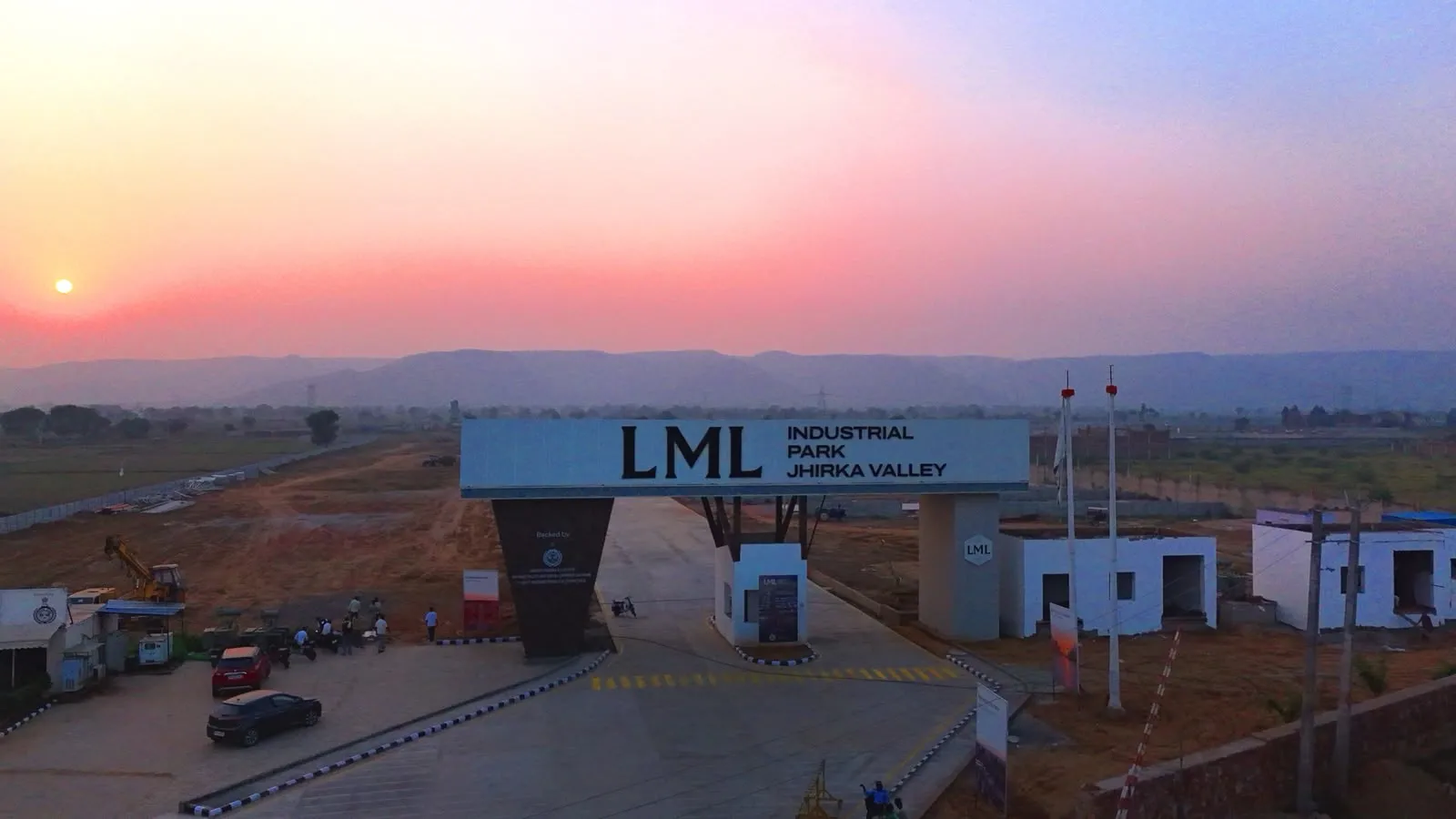
LML Realty, the real estate arm of LML Group, recently announced the complete sell-out of its Jhirka Valley Industrial Park in Haryana, with over 1.17 million sq ft of industrial space acquired by more than 50 companies. With utilities and internal infrastructure in place, the company has commenced plot handovers, enabling buyers to begin construction and establish their operations.The industrial park has attracted companies across diverse sectors, including chemicals, metals and alloys, textiles, electrical equipment, energy, logistics, construction, polymers and engineering. Key buyers inclu..

Next Story
Real Estate

WSB Real Estate Partners Exits Six Housing Investments

WSB Real Estate Partners recently announced the successful exit of six residential investments across Bengaluru, Mumbai Metropolitan Region (MMR) and National Capital Region (NCR), delivering an average internal rate of return (IRR) of 19–21 per cent and an overall investment return of 1.4 times.The real estate-focused investment firm invested approximately Rs 7 billion across six mid-affordable housing projects over the past four years. All six investments were fully repaid between April and November 2026, several months ahead of their original investment tenures.WSB collaborated with sever..

Next Story
Infrastructure Transport

Aluminium Industry Seeks Policy Support for Rs 4 Trillion Investment

The Aluminium Association of India (AAI) has recently urged the government to introduce supportive policy measures to safeguard the sector’s proposed Rs 4 trillion investment pipeline. The association highlighted the need for a predictable policy framework to strengthen domestic manufacturing, expand production capacity and reduce import dependence.AAI submitted its recommendations for the Union Budget 2027-28 to the Ministries of Finance, Commerce and Industry, and Mines, along with the Department for Promotion of Industry and Internal Trade (DPIIT).India’s aluminium demand is projected t..

Advertisement

Subscribe to Our Newsletter

Get daily newsletters around different themes from Construction world.

STAY CONNECTED

Advertisement

SPECIAL OFFER
QR Code