Visakhapatnam Signs Pact With Moscow For Smart City Initiatives
ECONOMY & POLICY

Visakhapatnam Signs Pact With Moscow For Smart City Initiatives

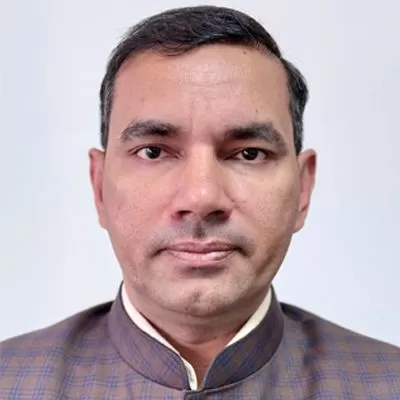
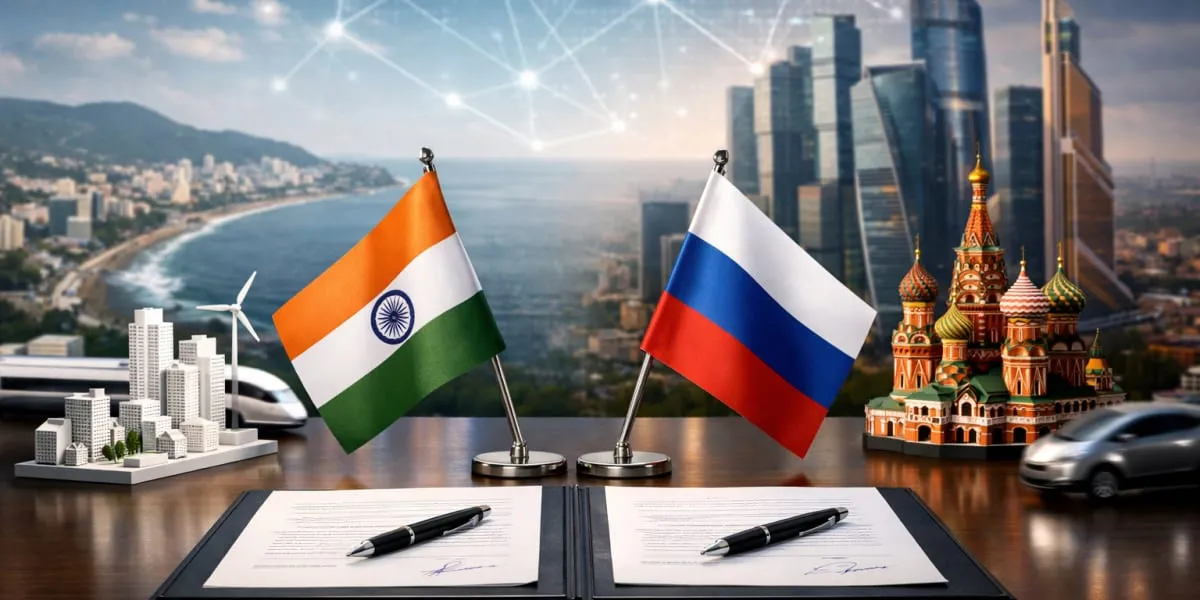
The Greater Visakhapatnam Municipal Corporation has signed a memorandum of cooperation with the Government of Moscow to strengthen collaboration on smart city development, urban transport and digital innovation. The agreement was signed by Greater Visakhapatnam Municipal Corporation commissioner Ketan Garg and Maksim Liksutov, deputy mayor of Moscow and head of the department of transport and road infrastructure development, during the fifth International Transport Summit in Moscow. Visakhapatnam Member of Parliament Mathukumilli Sribharat attended the signing.

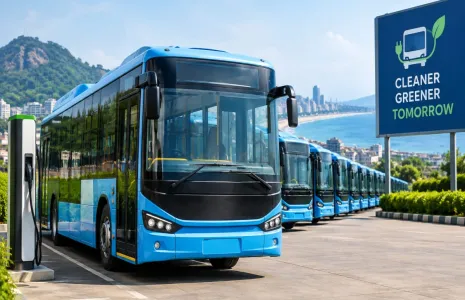
The memorandum provides for cooperation on modern urban transport systems and intelligent transport technologies, including digital ticketing, artificial intelligence integration and autonomous transport. It also envisages participation in the Urban Transport Data Project to enable data driven planning and operations. The partnership is intended to support sustainable mobility and improve commuter experience across the city.

The scope of cooperation extends to industrial collaboration in automotive and electronics manufacturing, energy storage systems and vertical transport solutions, alongside technology transfer and exchange of technical experts. Principal secretary S. Suresh Kumar indicated that the arrangement would promote knowledge exchange and provide access to advanced urban mobility and digital transformation solutions. Municipal administration and urban development minister P. Narayana said the pact underscored Visakhapatnam's growing importance as a key urban centre within the Visakhapatnam Economic Region.

Commissioner Ketan Garg described the agreement as a significant step towards making Visakhapatnam a globally competitive, smart and sustainable city and said the partnership would support the adoption of global best practices. The corporation plans to explore implementation pathways for intelligent transport systems and innovative governance practices to strengthen infrastructure and long term development of the region. Officials will coordinate exchanges of experts and technical studies to pilot technologies and assess scalability.

The Greater Visakhapatnam Municipal Corporation has signed a memorandum of cooperation with the Government of Moscow to strengthen collaboration on smart city development, urban transport and digital innovation. The agreement was signed by Greater Visakhapatnam Municipal Corporation commissioner Ketan Garg and Maksim Liksutov, deputy mayor of Moscow and head of the department of transport and road infrastructure development, during the fifth International Transport Summit in Moscow. Visakhapatnam Member of Parliament Mathukumilli Sribharat attended the signing. The memorandum provides for cooperation on modern urban transport systems and intelligent transport technologies, including digital ticketing, artificial intelligence integration and autonomous transport. It also envisages participation in the Urban Transport Data Project to enable data driven planning and operations. The partnership is intended to support sustainable mobility and improve commuter experience across the city. The scope of cooperation extends to industrial collaboration in automotive and electronics manufacturing, energy storage systems and vertical transport solutions, alongside technology transfer and exchange of technical experts. Principal secretary S. Suresh Kumar indicated that the arrangement would promote knowledge exchange and provide access to advanced urban mobility and digital transformation solutions. Municipal administration and urban development minister P. Narayana said the pact underscored Visakhapatnam's growing importance as a key urban centre within the Visakhapatnam Economic Region. Commissioner Ketan Garg described the agreement as a significant step towards making Visakhapatnam a globally competitive, smart and sustainable city and said the partnership would support the adoption of global best practices. The corporation plans to explore implementation pathways for intelligent transport systems and innovative governance practices to strengthen infrastructure and long term development of the region. Officials will coordinate exchanges of experts and technical studies to pilot technologies and assess scalability.

Related Stories

Gold Stories

Next Story
Real Estate

LML Realty Sells Out Jhirka Valley Industrial Park in Haryana

LML Realty, the real estate arm of LML Group, recently announced the complete sell-out of its Jhirka Valley Industrial Park in Haryana, with over 1.17 million sq ft of industrial space acquired by more than 50 companies. With utilities and internal infrastructure in place, the company has commenced plot handovers, enabling buyers to begin construction and establish their operations.The industrial park has attracted companies across diverse sectors, including chemicals, metals and alloys, textiles, electrical equipment, energy, logistics, construction, polymers and engineering. Key buyers inclu..

Next Story
Real Estate

WSB Real Estate Partners Exits Six Housing Investments

WSB Real Estate Partners recently announced the successful exit of six residential investments across Bengaluru, Mumbai Metropolitan Region (MMR) and National Capital Region (NCR), delivering an average internal rate of return (IRR) of 19–21 per cent and an overall investment return of 1.4 times.The real estate-focused investment firm invested approximately Rs 7 billion across six mid-affordable housing projects over the past four years. All six investments were fully repaid between April and November 2026, several months ahead of their original investment tenures.WSB collaborated with sever..

Next Story
Infrastructure Transport

Aluminium Industry Seeks Policy Support for Rs 4 Trillion Investment

The Aluminium Association of India (AAI) has recently urged the government to introduce supportive policy measures to safeguard the sector’s proposed Rs 4 trillion investment pipeline. The association highlighted the need for a predictable policy framework to strengthen domestic manufacturing, expand production capacity and reduce import dependence.AAI submitted its recommendations for the Union Budget 2027-28 to the Ministries of Finance, Commerce and Industry, and Mines, along with the Department for Promotion of Industry and Internal Trade (DPIIT).India’s aluminium demand is projected t..

Subscribe to Our Newsletter

Get daily newsletters around different themes from Construction world.

STAY CONNECTED

Advertisement

SPECIAL OFFER
QR Code