NHAI Tightens Highway Safety Rules over Improper Crash Barriers
Steel

NHAI Tightens Highway Safety Rules over Improper Crash Barriers

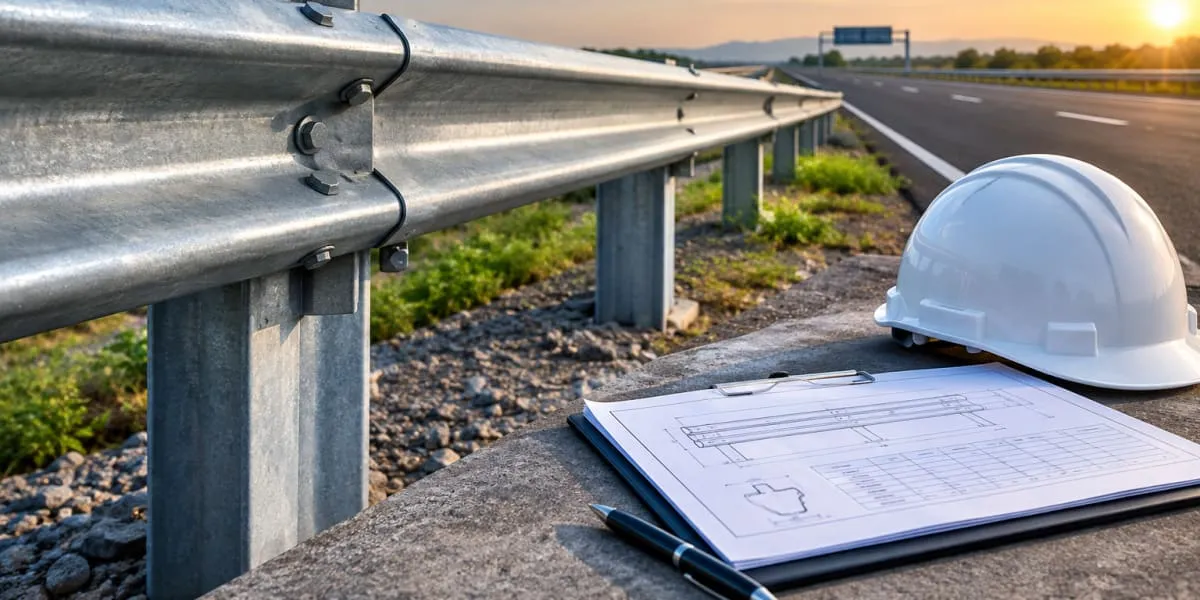
The National Highways Authority of India (NHAI) has tightened safety requirements for metal beam crash barriers after flagging the use of installations that did not conform to prescribed specifications on some of its highway projects. The requirements cover the dimensions and thickness of rails, posts and spacers, as well as the materials and protective coating to be used.

The authority issued the provisions through a policy circular amending its policy of December 17, 2024, on the approval and installation of metal beam crash barriers. It has made the relevant requirements of the Manual of Specifications and Standards and IRC:119-2015 mandatory for all future projects, as well as projects where the barriers have not yet been installed.

For three-beam barriers, the rail and steel posts must each be 3 mm thick. The posts and blocking-out spacers must be made from a 75 mm by 150 mm channel section with a thickness of 5 mm. Posts must be installed at 2-metre centres and have an overall length of 2,100 mm.

The specifications for W-beam barriers also require rails and steel posts to be 3 mm thick. Their posts and blocking-out spacers must use a 75 mm by 150 mm channel section that is 5 mm thick. Posts must be placed at 2-metre centres and have an overall length of 1,800 mm.

NHAI has specified E350-grade steel conforming to IS 2062 (Part 1):2025 for the barriers. Posts, spacers and fasteners must be hot-dip galvanised, with a minimum zinc coating of 0.55 kg per square metre. The revised provisions are intended to ensure that safety barriers installed across highway projects meet consistent structural and material standards.

The National Highways Authority of India (NHAI) has tightened safety requirements for metal beam crash barriers after flagging the use of installations that did not conform to prescribed specifications on some of its highway projects. The requirements cover the dimensions and thickness of rails, posts and spacers, as well as the materials and protective coating to be used. The authority issued the provisions through a policy circular amending its policy of December 17, 2024, on the approval and installation of metal beam crash barriers. It has made the relevant requirements of the Manual of Specifications and Standards and IRC:119-2015 mandatory for all future projects, as well as projects where the barriers have not yet been installed. For three-beam barriers, the rail and steel posts must each be 3 mm thick. The posts and blocking-out spacers must be made from a 75 mm by 150 mm channel section with a thickness of 5 mm. Posts must be installed at 2-metre centres and have an overall length of 2,100 mm. The specifications for W-beam barriers also require rails and steel posts to be 3 mm thick. Their posts and blocking-out spacers must use a 75 mm by 150 mm channel section that is 5 mm thick. Posts must be placed at 2-metre centres and have an overall length of 1,800 mm. NHAI has specified E350-grade steel conforming to IS 2062 (Part 1):2025 for the barriers. Posts, spacers and fasteners must be hot-dip galvanised, with a minimum zinc coating of 0.55 kg per square metre. The revised provisions are intended to ensure that safety barriers installed across highway projects meet consistent structural and material standards.

Related Stories

Gold Stories
Next Story
Infrastructure Energy

Vedanta Secures Two Offshore Blocks in KG Basin Under DSF IV

Vedanta Oil and Gas has secured two offshore blocks in the Krishna Godavari (KG) Basin under the Government of India's Discovered Small Field (DSF) IV bidding round, strengthening its exploration and production portfolio along India's east coast.The newly awarded assets include the shallow water block KG/OSDSF/G1/2025 and the deepwater block KG/DWDSF/GD10/2025. The acquisition forms part of Vedanta's strategy to expand its offshore operations and explore India's untapped hydrocarbon resources through advanced technologies and efficient project execution.The blocks were awarded at a contract si..

Next Story
Resources

Hindustan Zinc's Sakhi Enterprise Income Grows 43%

Hindustan Zinc's Sakhi Microenterprise initiative has recorded a 43 per cent year-on-year increase in collective income, rising from Rs 2.3 million in FY26 to Rs 3.28 million, according to the company. The initiative, operated through Sakhi Utpadan Samiti, currently engages 426 women in income-generating activities across multiple production units.The programme aims to promote financial independence by helping rural women develop entrepreneurial skills and establish sustainable livelihoods. One of its beneficiaries, Manju Devi, who previously depended on seasonal agricultural work, now operate..
Next Story
Technology

KP Group Launches Waterless Solar Cleaning Robot at REI Expo

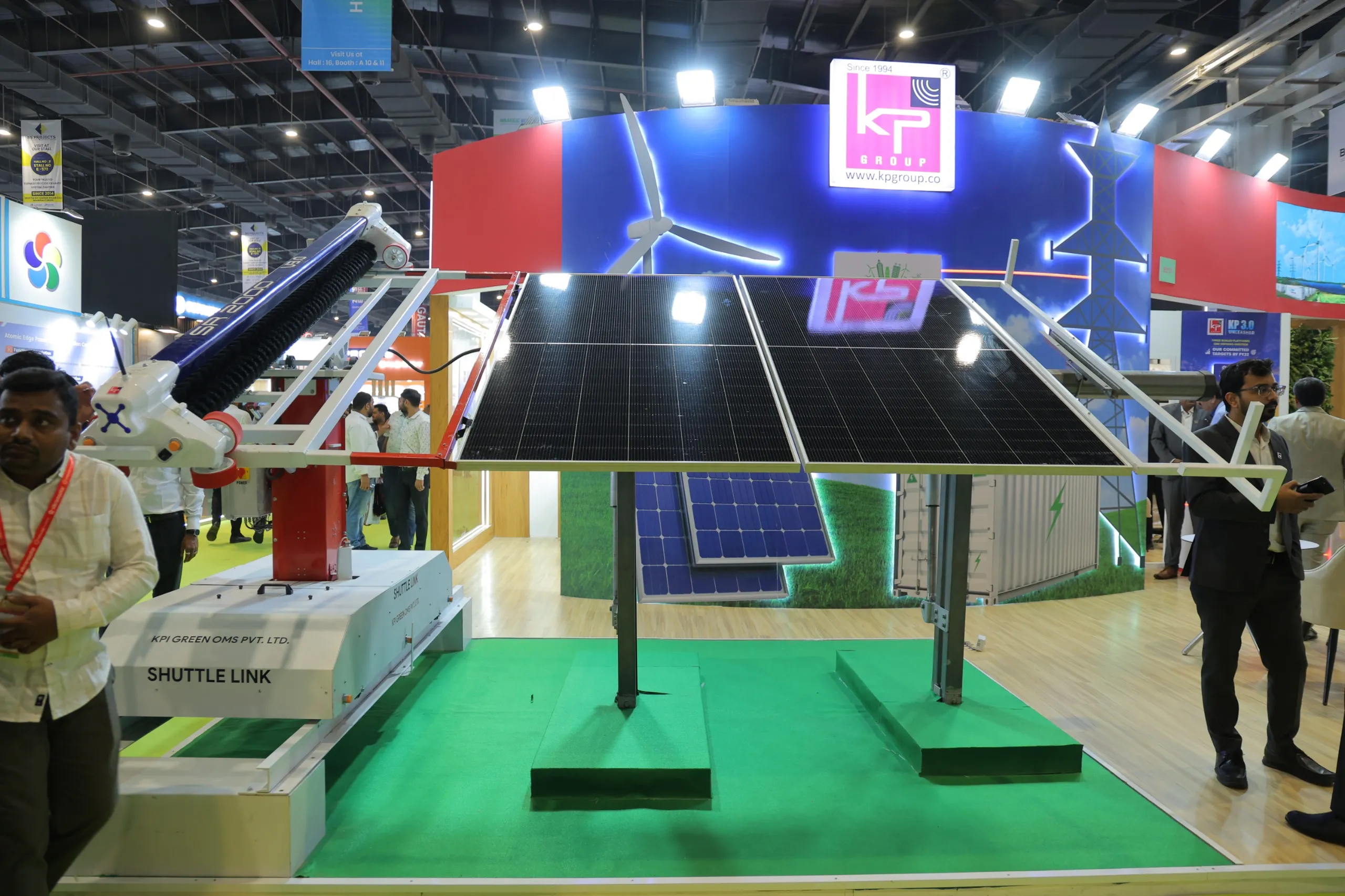
KP Group's KPI Green OMS has launched the SR 2000 V3.0, a waterless robotic solar panel cleaning system designed for single-axis tracker and fixed-tilt solar power plants, at the Renewable Energy India (REI) Expo 2026 in Greater Noida. The robot aims to improve solar plant efficiency while reducing water consumption and maintenance requirements.Designed to address dust accumulation on solar modules, particularly in dry and remote locations, the SR 2000 V3.0 uses a UV-resistant polybutylene terephthalate (PBT) brush operating at 130 rpm. According to the company, the system achieves a cleaning ..

Advertisement

Subscribe to Our Newsletter

Get daily newsletters around different themes from Construction world.

STAY CONNECTED

Advertisement

SPECIAL OFFER
QR Code