+
Centre approves development of 21 Greenfield airports
AVIATION & AIRPORTS

Centre approves development of 21 Greenfield airports

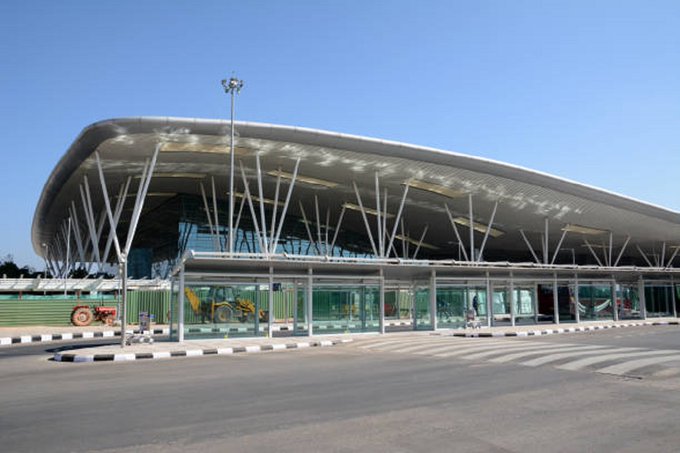
Minister of Civil Aviation V K Singh told the media that the Indian government had given ‘In Principle’ approval to establish 21 Greenfield airports across the nation.

As per the reports, India's annual civil aviation sector growth rate currently is at 9% but is likely to reach double digits in the following years. Over the coming two decades, the number of airports is likely to surge from 133 to 500. Of these, 367 are slated to be greenfield airports.

Singh said that these 21 airports would be installed in Mopa in Navi Mumbai, Goa, Shirdi and Sindhudurg in Maharashtra, Bijapur, Kalaburagi, Hassan, and Shimoga in Karnataka, Dabra (Gwalior) in Madhya Pradesh, Kushinagar and Jewar (Noida) in Uttar Pradesh, Dholera and Hirasar in Gujarat, Dagadarthi, Karaikal in Puducherry, Bhogapuram and Orvakal (Kurnool) in Andhra Pradesh, Pakyong in Sikkim, Kannur in Kerala, Durgapur in West Bengal and Hollongi (Itanagar) in Arunachal Pradesh.

Notably, eight of these 21 Greenfield airports have already been operationalised, i.e. Shirdi Airport in Maharashtra, Durgapur Airport in West Bengal, Kannur Airport in Kerala, Orvakal (Kurnool) Airport in Andhra Pradesh, Kalaburagi Airport in Karnataka, Pakyong Airport in Sikkim, Sindhudurg Airport in Maharashtra and Kushinagar Airport in Uttar Pradesh.

Regarding the setback in construction, Singh noted that the timeline for the development of airports depends upon several factors like land acquisition, mandatory approvals, removal of barriers, financial closure by the respective airport developers. The responsibility for the execution of airport projects, including funding of the projects remains with the concerned airport developer, comprising the respective State Government (in case the State Government is the project proponent).

Image Source

Also read: Govt plans Rs 36,000 cr investment for greenfield airports

Minister of Civil Aviation V K Singh told the media that the Indian government had given ‘In Principle’ approval to establish 21 Greenfield airports across the nation. As per the reports, India's annual civil aviation sector growth rate currently is at 9% but is likely to reach double digits in the following years. Over the coming two decades, the number of airports is likely to surge from 133 to 500. Of these, 367 are slated to be greenfield airports. Singh said that these 21 airports would be installed in Mopa in Navi Mumbai, Goa, Shirdi and Sindhudurg in Maharashtra, Bijapur, Kalaburagi, Hassan, and Shimoga in Karnataka, Dabra (Gwalior) in Madhya Pradesh, Kushinagar and Jewar (Noida) in Uttar Pradesh, Dholera and Hirasar in Gujarat, Dagadarthi, Karaikal in Puducherry, Bhogapuram and Orvakal (Kurnool) in Andhra Pradesh, Pakyong in Sikkim, Kannur in Kerala, Durgapur in West Bengal and Hollongi (Itanagar) in Arunachal Pradesh. Notably, eight of these 21 Greenfield airports have already been operationalised, i.e. Shirdi Airport in Maharashtra, Durgapur Airport in West Bengal, Kannur Airport in Kerala, Orvakal (Kurnool) Airport in Andhra Pradesh, Kalaburagi Airport in Karnataka, Pakyong Airport in Sikkim, Sindhudurg Airport in Maharashtra and Kushinagar Airport in Uttar Pradesh. Regarding the setback in construction, Singh noted that the timeline for the development of airports depends upon several factors like land acquisition, mandatory approvals, removal of barriers, financial closure by the respective airport developers. The responsibility for the execution of airport projects, including funding of the projects remains with the concerned airport developer, comprising the respective State Government (in case the State Government is the project proponent). Image Source Also read: Govt plans Rs 36,000 cr investment for greenfield airports

Related Stories

Gold Stories

Next Story
Infrastructure Urban

Infrastructure Opportunity Outlook by IMPACCT.Info

India’s infrastructure pipeline is witnessing dynamic activity across stages — from immediate bidding to future planning. IMPACCT segments these into three categories: Immediate, 3–6 Month, and Future Opportunities, enabling businesses to identify, prepare, and participate in high-value tenders and projects across sectors.To read full article Click Here ..

Next Story
Real Estate

Glass, Reframed!

Glass façades, quintessential aesthetic building envelopes globally, have been widely adopted in India as well. But when the focus is high-performance building systems that deliver energy efficiency, comfort and architectural identity, glass isn’t the only preference. Combination solutions, involving glass and some other material, improve façade outcomes. Some combinations come at comparable prices, some at a higher price. Here is a selection of performance-oriented solutions...To read the full story Click Here ..

Next Story
Infrastructure Urban

Beyond Building Faster

India’s cities are expanding at an unprecedented pace, bringing new infrastructure and development opportunities while also intensifying challenges around mobility, public spaces, liveability and supporting infrastructure. The question, therefore, is not simply whether India can build faster, but whether it can build cities that work better.At a CW webinar, Are We Designing Better Cities – or Just Building Faster?, moderator Ar. Samir Shaikh, Founding Principal, AR&UD Studio, brought together perspectives from design, development, master planning and technology...To read the full artic..

Advertisement

Subscribe to Our Newsletter

Get daily newsletters around different themes from Construction world.

STAY CONNECTED

Advertisement

SPECIAL OFFER
QR Code