Noida Airport Project Worth Rs 83 Billion to Test Buildout Boom
AVIATION & AIRPORTS

Noida Airport Project Worth Rs 83 Billion to Test Buildout Boom

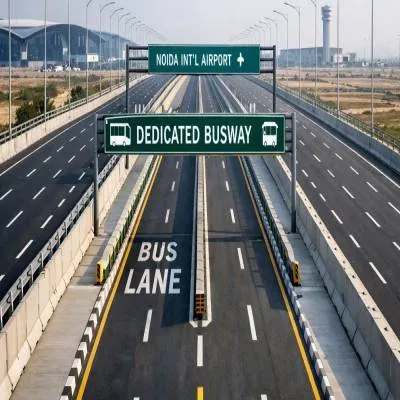
The planned airport in Noida is being presented as a major test of the country's buildout momentum and is estimated to cost Rs 83 billion (bn). Developers and officials expect the project to signal whether private capital remains willing to underwrite large infrastructure projects in the region. The proposal comes as urban expansion and logistics demand place renewed focus on new aviation capacity.

Financing mechanisms are expected to combine equity, debt and possible public support, and market participants will watch transaction structures and interest from institutional investors. The project's ability to attract investment will be read as a gauge of risk appetite for large scale brownfield and greenfield developments in India. Analysts note that rising costs and tighter global liquidity have already complicated several large projects, and this airport will test those dynamics.

Regulatory clearances, land acquisition and environmental assessments are likely to determine the pace of progress and timelines for delivery. Local authorities are reported to be engaged in consultations to align zoning and transport links with broader regional planning. The sequence of approvals will be closely monitored by contractors and financiers given the scale of the investment.

The proposal will also be assessed in relation to existing aviation hubs and recent capacity additions, with planners considering connectivity and demand distribution across the National Capital Region. Competing infrastructure projects and potential overlaps in catchment areas may influence commercial viability and phasing decisions. Stakeholders emphasise integrated transport links as critical to ensuring effective utilisation.

While the capital commitment is substantial, supporters argue that successful delivery could catalyse further private participation and spur ancillary development in manufacturing, logistics and services. Conversely, delays or cost overruns would reinforce caution among institutional lenders and could slow the broader buildout. The airport's progress will therefore be watched as both a project and a barometer of the sector's health.

The planned airport in Noida is being presented as a major test of the country's buildout momentum and is estimated to cost Rs 83 billion (bn). Developers and officials expect the project to signal whether private capital remains willing to underwrite large infrastructure projects in the region. The proposal comes as urban expansion and logistics demand place renewed focus on new aviation capacity. Financing mechanisms are expected to combine equity, debt and possible public support, and market participants will watch transaction structures and interest from institutional investors. The project's ability to attract investment will be read as a gauge of risk appetite for large scale brownfield and greenfield developments in India. Analysts note that rising costs and tighter global liquidity have already complicated several large projects, and this airport will test those dynamics. Regulatory clearances, land acquisition and environmental assessments are likely to determine the pace of progress and timelines for delivery. Local authorities are reported to be engaged in consultations to align zoning and transport links with broader regional planning. The sequence of approvals will be closely monitored by contractors and financiers given the scale of the investment. The proposal will also be assessed in relation to existing aviation hubs and recent capacity additions, with planners considering connectivity and demand distribution across the National Capital Region. Competing infrastructure projects and potential overlaps in catchment areas may influence commercial viability and phasing decisions. Stakeholders emphasise integrated transport links as critical to ensuring effective utilisation. While the capital commitment is substantial, supporters argue that successful delivery could catalyse further private participation and spur ancillary development in manufacturing, logistics and services. Conversely, delays or cost overruns would reinforce caution among institutional lenders and could slow the broader buildout. The airport's progress will therefore be watched as both a project and a barometer of the sector's health.

Next Story
Infrastructure Urban

Centre Examines Duty Relief Under MOOWR For Battery Storage Imports

The finance ministry is examining whether to continue customs warehousing benefits under the Manufacture and Other Operations in Warehouse Regulations, 2019 framework for imported battery energy storage systems. It plans consultations with the ministries of power and new and renewable energy to decide on the future scope of duty and GST deferment for such imports. The review follows concerns from the renewable energy sector that the current approach is creating an uneven playing field. Under the regulations, companies may import goods without paying customs duty or goods and services tax upfro..

Next Story
Infrastructure Urban

Jamshedpur MP Seeks Rs 4,820 Million Plan For Tatanagar Platforms

Member of Parliament Bidyut Baran Mahato held a meeting with Vikas Jain, Executive Director (Public Grievances) of the Railway Board, following a special session of Parliament to press for accelerated rail infrastructure work around Jamshedpur and Tatanagar. The discussions addressed a range of projects that the ministry is prioritising for the area. Final Location Surveys for the construction of the fourth and fifth railway lines between Pandrasali and Kandra and for the development of a satellite station near Tatanagar have already been approved, clearing the way for detailed planning. Mahat..

Next Story
Infrastructure Energy

Final Batch Of Two 3,300 HP Locomotives Reach Mozambique

The final batch of two 3,300 horsepower (hp) locomotives manufactured by Banaras Locomotive Works (BLW) has reached Mozambique, marking completion of an export consignment. The locomotives arrived at Maputo harbour and were cleared for onward movement to the national rail operator. The shipment closes a programme that began with earlier consignments delivered over the past months. Banaras Locomotive Works, a production unit of Indian Railways, built the locomotives under a contract with the Mozambican rail authority and managed the final inspections and commissioning preparations prior to disp..

Advertisement

Subscribe to Our Newsletter

Get daily newsletters around different themes from Construction world.

STAY CONNECTED

Advertisement

Advertisement

Advertisement