Trichy Airport unveils terminal inspired by South Indian Heritage
AVIATION & AIRPORTS

Trichy Airport unveils terminal inspired by South Indian Heritage

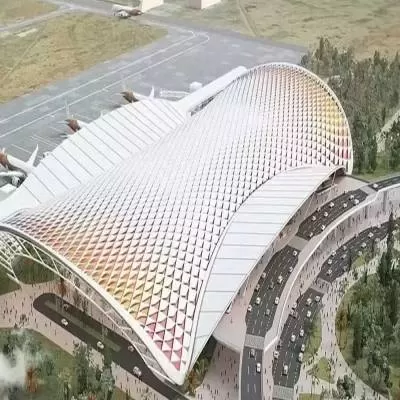
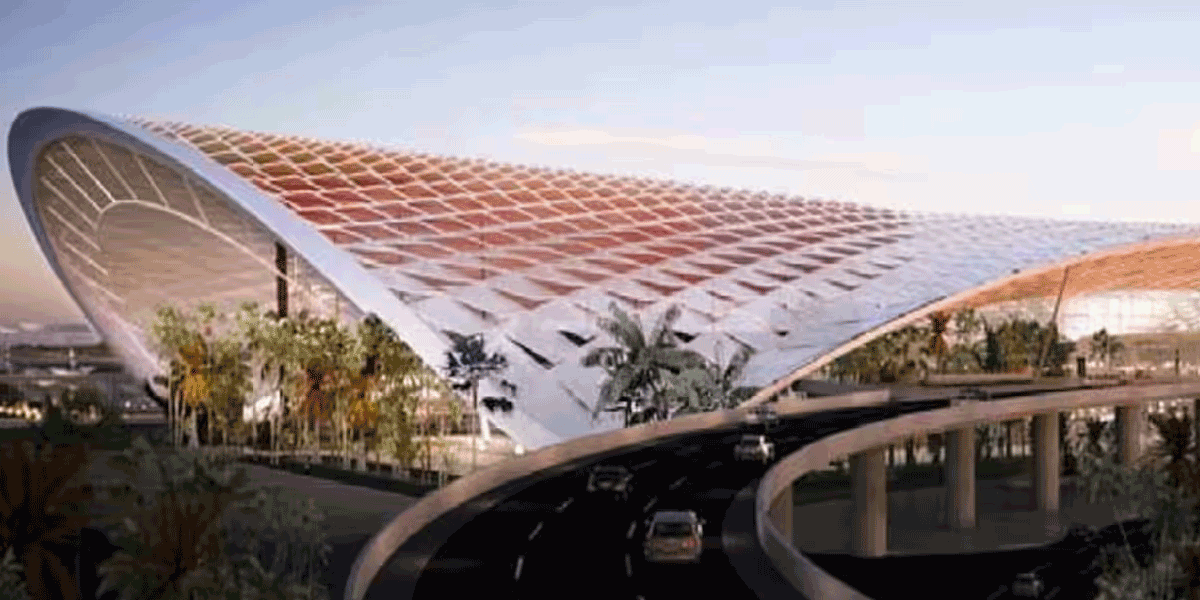
The architectural inspiration for the new integrated terminal building at Trichy airport draws heavily from the rich heritage of monuments in and around Trichy, along with influences from festivals like Pongal and rangoli. According to airport authorities, the iconic design is particularly influenced by the ornate roofs seen in the 'gopurams' of South Indian architecture. Prime Minister Narendra Modi is set to inaugurate the Rs 10 billion terminal on January 2.

Welcoming passengers with a structure reminiscent of the Srirangam Ranganathar temple gopuram, the terminal boasts a capacity to accommodate 4.5 million passengers annually, three times more than the current terminal. The two-level air-conditioned modular building spans 75,000 square meters, with an arrival lounge on the ground floor and departure facilities on the upper level. It is equipped to handle a peak hour passenger traffic of 3,900, encompassing both domestic and international flights.

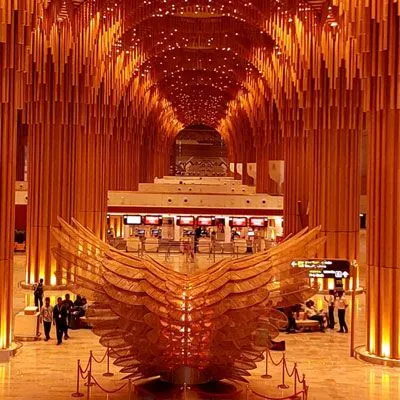
The distinctive roof form dominating the departure concourse takes inspiration from traditional South Indian architecture. The terminal's roof, flooring patterns, column cladding, feature walls, and signage design all pay homage to local arts, culture, and traditions. Notably, the modular construction of the terminal allows for future expansion or alterations without compromising the existing structure and design.

Built in accordance with 'GRIHA' (Green Rating for Integrated Habitat Assessment) standards, the terminal boasts a four-star rating for its sustainable design. The architectural firm Pascall + Watson, with international acclaim, has been responsible for the design. The building's sustainability features prioritise the use of natural light and incorporate renewable energy measures, aligning with modern environmental standards.

The architectural inspiration for the new integrated terminal building at Trichy airport draws heavily from the rich heritage of monuments in and around Trichy, along with influences from festivals like Pongal and rangoli. According to airport authorities, the iconic design is particularly influenced by the ornate roofs seen in the 'gopurams' of South Indian architecture. Prime Minister Narendra Modi is set to inaugurate the Rs 10 billion terminal on January 2. Welcoming passengers with a structure reminiscent of the Srirangam Ranganathar temple gopuram, the terminal boasts a capacity to accommodate 4.5 million passengers annually, three times more than the current terminal. The two-level air-conditioned modular building spans 75,000 square meters, with an arrival lounge on the ground floor and departure facilities on the upper level. It is equipped to handle a peak hour passenger traffic of 3,900, encompassing both domestic and international flights. The distinctive roof form dominating the departure concourse takes inspiration from traditional South Indian architecture. The terminal's roof, flooring patterns, column cladding, feature walls, and signage design all pay homage to local arts, culture, and traditions. Notably, the modular construction of the terminal allows for future expansion or alterations without compromising the existing structure and design. Built in accordance with 'GRIHA' (Green Rating for Integrated Habitat Assessment) standards, the terminal boasts a four-star rating for its sustainable design. The architectural firm Pascall + Watson, with international acclaim, has been responsible for the design. The building's sustainability features prioritise the use of natural light and incorporate renewable energy measures, aligning with modern environmental standards.

Next Story
Infrastructure Transport

MMRDA advances 250 m on Orange Gate–Marine Drive tunnel

The Mumbai Metropolitan Region Development Authority (MMRDA) has completed 250 m of underground tunnelling for the Orange Gate–Marine Drive Urban Road Tunnel using India’s largest slurry shield tunnel boring machine (TBM) deployed for an urban road project.The project involves twin tunnels extending over 7 km beneath critical transport corridors, including Central Railway, Western Railway and Metro Line 3. The work requires high-precision engineering to navigate densely developed urban infrastructure.Once completed, the tunnel is expected to reduce travel time between Orange Gate and Marin..

Next Story
Infrastructure Urban

Hindustan Zinc Pays Rs 188.46 Billion in FY26

Hindustan Zinc contributed Rs 188.46 billion to the public exchequer in FY 2025-26, according to its 9th Tax Transparency Report. The contribution, equivalent to 46 per cent of the company’s revenue, included direct and indirect taxes, government royalties, dividends to the Government of India, withholding taxes and other statutory levies.The company’s five-year cumulative contribution to the exchequer stood at Rs 915.72 billion. In FY26, Hindustan Zinc reported revenue of Rs 408.44 billion, EBITDA of Rs 221.62 billion and profit after tax of Rs 138.32 billion. It also achieved its highest..

Next Story
Infrastructure Urban

World of Concrete India 2026 Opens in Mumbai

Informa Markets in India will host the 12th edition of World of Concrete India 2026 from 3–5 June 2026 at the Bombay Exhibition Centre, Mumbai. The specialised B2B exhibition will bring together manufacturers, suppliers, contractors, developers, architects, consultants, infrastructure companies, project leaders and government stakeholders.The event is expected to feature over 350 brands and more than 18,000 trade professionals. It will cover concrete and cement, dry mortar, precast technologies, formwork, construction chemicals, industrial and commercial flooring, scaffolding, safety solutio..

Advertisement

Subscribe to Our Newsletter

Get daily newsletters around different themes from Construction world.

STAY CONNECTED

Advertisement

Advertisement

Advertisement

-->