Two Mega Airports Set to Open in India in October
AVIATION & AIRPORTS

Two Mega Airports Set to Open in India in October

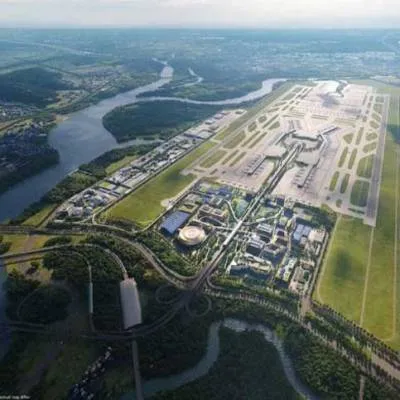
India is set to witness the inauguration of two major airports this month: Navi Mumbai International Airport (NMIA) in the Mumbai Metropolitan Region and Noida International Airport (NIA) in the Delhi NCR. Prime Minister Narendra Modi will inaugurate NMIA on 8 October 2025, while the Union Civil Aviation Minister, Kinjarapu Ram Mohan Naidu, confirmed that NIA will be inaugurated on 30 October 2025.

Both airports aim to meet the rising demand for air travel and ease congestion at existing airports in the country’s largest cities. The DGCA has already granted an aerodrome license to NMIA, allowing operations to commence. NIA, located in Jewar, Uttar Pradesh, is expected to receive its license shortly, with most infrastructure already completed.

Airlines have begun partnerships with both airports. Air India Group, IndiGo, and Akasa Air will operate from NMIA, while IndiGo and Akasa Air are set to launch services from NIA.

Adani Group Chairman Gautam Adani personally inspected the final preparations for NMIA and acknowledged the contributions of staff and workers on social media, highlighting their role in bringing the airport to life.

Navi Mumbai International Airport is a 74:26 joint venture between Adani Airport Holdings Ltd (AAHL) and CIDCO. The airport is being developed in five phases, with the first phase accommodating 20 million passengers per annum (MPPA) and handling 0.5 million metric tons (MMT) of cargo. Upon full completion, NMIA will have a capacity of 90 MPPA and 3.2 MMT of cargo annually.

Noida International Airport, developed by Yamuna International Airport (YIAPL), a subsidiary of Zurich Airport International AG, will commence operations within 45 days of inauguration. The first phase, featuring one runway and one terminal, will handle 12 million passengers per year, with capacity expanding to 70 million passengers annually after the fourth phase. The greenfield project, built with an investment of over $2 billion, aims to support the growing air traffic demand in the NCR region.

News source: The New Indian Express

India is set to witness the inauguration of two major airports this month: Navi Mumbai International Airport (NMIA) in the Mumbai Metropolitan Region and Noida International Airport (NIA) in the Delhi NCR. Prime Minister Narendra Modi will inaugurate NMIA on 8 October 2025, while the Union Civil Aviation Minister, Kinjarapu Ram Mohan Naidu, confirmed that NIA will be inaugurated on 30 October 2025.Both airports aim to meet the rising demand for air travel and ease congestion at existing airports in the country’s largest cities. The DGCA has already granted an aerodrome license to NMIA, allowing operations to commence. NIA, located in Jewar, Uttar Pradesh, is expected to receive its license shortly, with most infrastructure already completed.Airlines have begun partnerships with both airports. Air India Group, IndiGo, and Akasa Air will operate from NMIA, while IndiGo and Akasa Air are set to launch services from NIA.Adani Group Chairman Gautam Adani personally inspected the final preparations for NMIA and acknowledged the contributions of staff and workers on social media, highlighting their role in bringing the airport to life.Navi Mumbai International Airport is a 74:26 joint venture between Adani Airport Holdings Ltd (AAHL) and CIDCO. The airport is being developed in five phases, with the first phase accommodating 20 million passengers per annum (MPPA) and handling 0.5 million metric tons (MMT) of cargo. Upon full completion, NMIA will have a capacity of 90 MPPA and 3.2 MMT of cargo annually.Noida International Airport, developed by Yamuna International Airport (YIAPL), a subsidiary of Zurich Airport International AG, will commence operations within 45 days of inauguration. The first phase, featuring one runway and one terminal, will handle 12 million passengers per year, with capacity expanding to 70 million passengers annually after the fourth phase. The greenfield project, built with an investment of over $2 billion, aims to support the growing air traffic demand in the NCR region.News source: The New Indian Express

Next Story
Real Estate

RBI Rate Cut Boosts Confidence Across Housing Market

Industry Context and Market DynamicsThe real estate industry has welcomed the RBI’s rate cut as a timely boost to affordability and demand. With home prices having risen steadily across major markets, even a marginal reduction in interest rates meaningfully strengthens purchasing power, especially for first-time and mid-income buyers.Ashish Jerath, President – Sales & Marketing, Smartworld Developers, observes:“The RBI’s 25-basis-point cut, bringing the repo rate down to 5.25%, is a timely boost for the real estate sector. Lower interest rates reduce borrowing costs, enabling homeb..

Next Story
Infrastructure Transport

BMC Resumes Rs 170 Billion Road Works, Targets 80 per cent By Jan 2026

Following the withdrawal of the southwest monsoon in October, the Brihanmumbai Municipal Corporation (BMC) has restarted work on 645 roads—covering 297.49 kilometres—under its large-scale concretisation programme. Data shows that more than 60 per cent of the resumed works are located in the western suburbs. Officials said the civic body aims to complete concretisation on 80 per cent of the roads where fresh work has begun by January 2026. Launched in 2022, the Rs 170 billion project seeks to concretise 700 kilometres of roads across Mumbai. All civil works were halted during the monsoon ..

Next Story
Infrastructure Urban

India Pushes Digital Shift In Urban Land Mapping

The Department of Land Resources (DoLR) under the Ministry of Rural Development has convened a National Symposium on NAKSHA – the National Geospatial Knowledge-based Land Survey of Urban Habitations – to advance India’s transition to modern, technology-driven land mapping. Speaking at the inaugural session, Secretary Manoj Joshi underscored the urgent need to move revenue departments away from outdated, tape-based methods and rough hand-drawn sketches. He stressed that adopting latitude–longitude-based digital mapping and GIS-linked registration systems is essential for economic stabi..

Advertisement

Subscribe to Our Newsletter

Get daily newsletters around different themes from Construction world.

STAY CONNECTED

Advertisement

Advertisement

Advertisement

Advertisement

Open In App