Ammann Group to utilise 60% recyclable raw materials in building projects
ROADS & HIGHWAYS

Ammann Group to utilise 60% recyclable raw materials in building projects

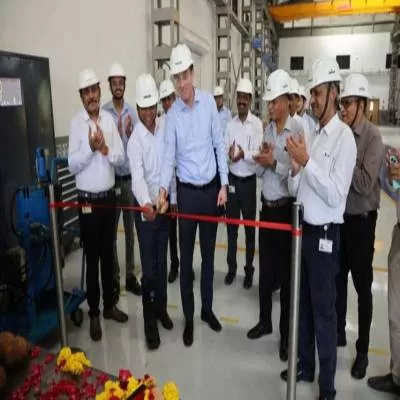
With the asphalt plant, the India-based Ammann Group will utilise up to 60% recyclable raw materials in its building projects.

Anand Sundaresan, managing director of Ammann (India), told the media that it is under commissioning and will start working shortly.

G R Infraprojects is a road engineering, procurement, and construction (EPC) firm that focuses mostly on the road sector.

The significance of the development is that, as the usage of environmentally friendly construction materials becomes more important, Ammann Group has been providing its factories to global construction giants.

Sundaresan explained that they have the technology to employ up to 100% recycled materials.

The company's entire order intake in fiscal year (FY) 2022 was Rs 9,924 crore and is likely to exceed Rs 15,000 crore this FY. Though the company's primary focus remains on road construction, it has begun to expand into other industries like railroads and electricity transmission to boost income and reduce risk in its present business model.

The Ammann Group's RAH100 drier can generate mix from up to 100% recovered asphalt pavement (RAP). The RAH60 is a parallel flow dryer that can utilise up to 60% hot recycled materials. On the other side, the RAH50 is a middle-ring drier that uses up to 40% recycled materials.

Sundaresan said that the company's innovative technologies gather job site compaction data for future study. This improves efficiency and quality control for the end-user. For example, its rollers achieve compaction targets in fewer passes, reducing fuel consumption and emissions, and so contributing to green building.

The company's intelligent compaction technology can measure and report compaction progress in real-time, leading to significant fuel savings, machine wear, and emissions reductions.

He added that their mixer design is unique in that it achieves uniform mixing in about 30 seconds. German institutions have likewise put it to the test.

Sundaresan said on the strength of various measures made by the Central government in the last few years, they feel hopeful about the potential ahead for the building and infrastructure sectors.

For example, the government has authorised 34,800 km of national road projects out of 65,000 km for the first phase of the Bharatmala Pariyojana Highway Construction Programme, allocating close to 5.4 lakh crore for its development.

The Gati Shakti Master Plan, as well as other national infrastructure initiatives, will assist to boost demand for construction equipment. The Ammann Group completed the acquisition of its interest in Gujarat Apollo Industries, a joint venture partner, in 2020. The relationship between the two firms began in 2012.

Image Source

Also read: Giving infrastructure the bio-cement advantage!

"Join industry leaders at RAHSTA Expo, India's premier platform for roads, highways and traffic infrastructure. Register now to explore innovations, network with experts and shape the future of mobility."

With the asphalt plant, the India-based Ammann Group will utilise up to 60% recyclable raw materials in its building projects. Anand Sundaresan, managing director of Ammann (India), told the media that it is under commissioning and will start working shortly. G R Infraprojects is a road engineering, procurement, and construction (EPC) firm that focuses mostly on the road sector. The significance of the development is that, as the usage of environmentally friendly construction materials becomes more important, Ammann Group has been providing its factories to global construction giants. Sundaresan explained that they have the technology to employ up to 100% recycled materials. The company's entire order intake in fiscal year (FY) 2022 was Rs 9,924 crore and is likely to exceed Rs 15,000 crore this FY. Though the company's primary focus remains on road construction, it has begun to expand into other industries like railroads and electricity transmission to boost income and reduce risk in its present business model. The Ammann Group's RAH100 drier can generate mix from up to 100% recovered asphalt pavement (RAP). The RAH60 is a parallel flow dryer that can utilise up to 60% hot recycled materials. On the other side, the RAH50 is a middle-ring drier that uses up to 40% recycled materials. Sundaresan said that the company's innovative technologies gather job site compaction data for future study. This improves efficiency and quality control for the end-user. For example, its rollers achieve compaction targets in fewer passes, reducing fuel consumption and emissions, and so contributing to green building. The company's intelligent compaction technology can measure and report compaction progress in real-time, leading to significant fuel savings, machine wear, and emissions reductions. He added that their mixer design is unique in that it achieves uniform mixing in about 30 seconds. German institutions have likewise put it to the test. Sundaresan said on the strength of various measures made by the Central government in the last few years, they feel hopeful about the potential ahead for the building and infrastructure sectors. For example, the government has authorised 34,800 km of national road projects out of 65,000 km for the first phase of the Bharatmala Pariyojana Highway Construction Programme, allocating close to 5.4 lakh crore for its development. The Gati Shakti Master Plan, as well as other national infrastructure initiatives, will assist to boost demand for construction equipment. The Ammann Group completed the acquisition of its interest in Gujarat Apollo Industries, a joint venture partner, in 2020. The relationship between the two firms began in 2012. Image Source Also read: Giving infrastructure the bio-cement advantage!

Next Story
Infrastructure Transport

MMRDA advances 250 m on Orange Gate–Marine Drive tunnel

The Mumbai Metropolitan Region Development Authority (MMRDA) has completed 250 m of underground tunnelling for the Orange Gate–Marine Drive Urban Road Tunnel using India’s largest slurry shield tunnel boring machine (TBM) deployed for an urban road project.The project involves twin tunnels extending over 7 km beneath critical transport corridors, including Central Railway, Western Railway and Metro Line 3. The work requires high-precision engineering to navigate densely developed urban infrastructure.Once completed, the tunnel is expected to reduce travel time between Orange Gate and Marin..

Next Story
Infrastructure Urban

Hindustan Zinc Pays Rs 188.46 Billion in FY26

Hindustan Zinc contributed Rs 188.46 billion to the public exchequer in FY 2025-26, according to its 9th Tax Transparency Report. The contribution, equivalent to 46 per cent of the company’s revenue, included direct and indirect taxes, government royalties, dividends to the Government of India, withholding taxes and other statutory levies.The company’s five-year cumulative contribution to the exchequer stood at Rs 915.72 billion. In FY26, Hindustan Zinc reported revenue of Rs 408.44 billion, EBITDA of Rs 221.62 billion and profit after tax of Rs 138.32 billion. It also achieved its highest..

Next Story
Infrastructure Urban

World of Concrete India 2026 Opens in Mumbai

Informa Markets in India will host the 12th edition of World of Concrete India 2026 from 3–5 June 2026 at the Bombay Exhibition Centre, Mumbai. The specialised B2B exhibition will bring together manufacturers, suppliers, contractors, developers, architects, consultants, infrastructure companies, project leaders and government stakeholders.The event is expected to feature over 350 brands and more than 18,000 trade professionals. It will cover concrete and cement, dry mortar, precast technologies, formwork, construction chemicals, industrial and commercial flooring, scaffolding, safety solutio..

Advertisement

Subscribe to Our Newsletter

Get daily newsletters around different themes from Construction world.

STAY CONNECTED

Advertisement

Advertisement

Advertisement