CSIR Transfers Bio-Bitumen Technology For Sustainable Roads
ROADS & HIGHWAYS

CSIR Transfers Bio-Bitumen Technology For Sustainable Roads

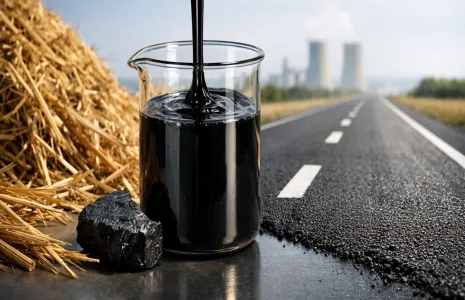
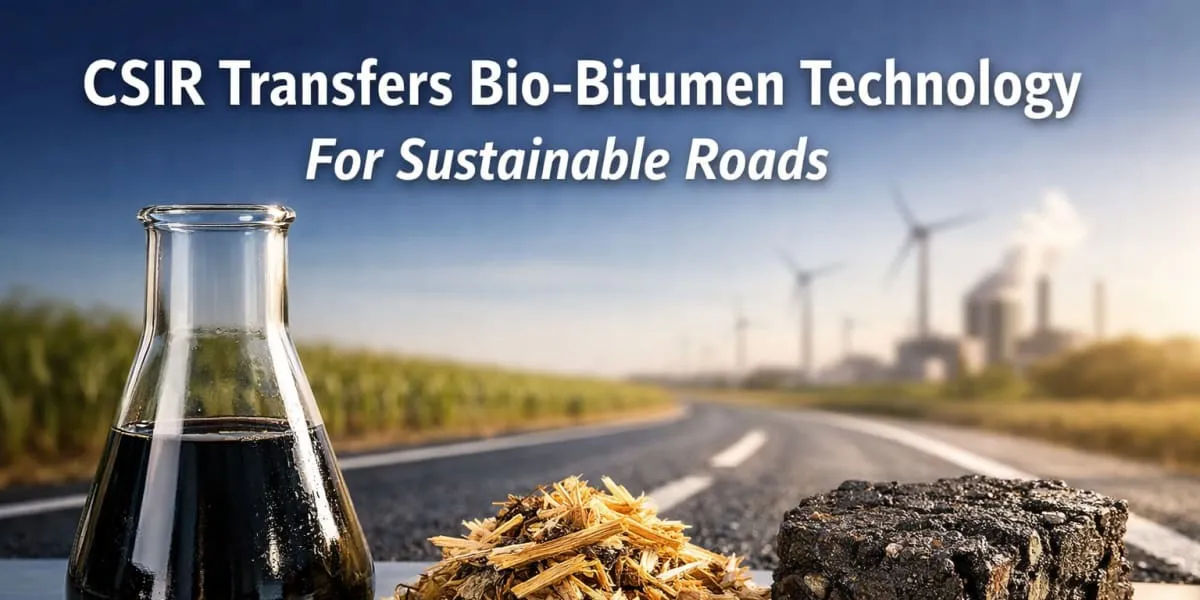
The Council of Scientific and Industrial Research (CSIR) organised a technology transfer event to promote a bio-bitumen production process derived from lignocellulosic biomass and farm residue. The process was developed jointly by the CSIR–Central Road Research Institute (CSIR-CRRI) and the CSIR–Indian Institute of Petroleum (CSIR-IIP). The event outlined how agricultural biomass can be converted into a renewable alternative to petroleum based bitumen.

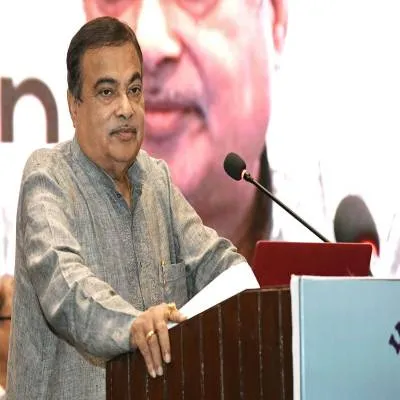
Senior ministers and CSIR leadership attended, including the Union Minister for Agriculture and Farmers' Welfare and Rural Development, the Union Minister of State for Science and Technology and Earth Sciences, and the Director General of CSIR. Officials from the Ministry of Road Transport and Highways, industry stakeholders, scientists and farmers considered adoption. The attendance aimed to assist convergence between agriculture, science and infrastructure policy.

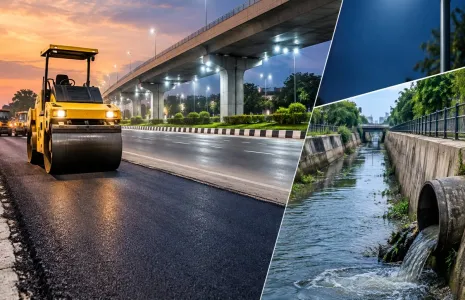
The production route uses thermochemical conversion to create a binder that has demonstrated performance comparable with conventional bitumen while lowering lifecycle carbon intensity. Developers reported that the material is compatible with existing paving practices and can be integrated into national highway projects. The technology is positioned as an environmentally friendlier and cost-effective alternative for road construction.

Officials said adoption would create additional income streams for farmers and reduce pollution from stubble burning, thereby improving air quality and rural livelihoods. The initiative was presented as aligning with Net Zero targets and flagship programmes that support self reliance, circular economy principles and bio energy development. Stakeholders noted that scaling up will depend on public private partnerships and supply chain development.

CSIR confirmed its commitment to support industry uptake through demonstrations and licensing arrangements and continue rolling out technologies for national development. The transfer represents a move towards substituting petro based materials with bio based alternatives across infrastructure supply chains. Observers added that widespread implementation will require coordinated action across ministries, research institutes and private sector partners.

The Council of Scientific and Industrial Research (CSIR) organised a technology transfer event to promote a bio-bitumen production process derived from lignocellulosic biomass and farm residue. The process was developed jointly by the CSIR–Central Road Research Institute (CSIR-CRRI) and the CSIR–Indian Institute of Petroleum (CSIR-IIP). The event outlined how agricultural biomass can be converted into a renewable alternative to petroleum based bitumen. Senior ministers and CSIR leadership attended, including the Union Minister for Agriculture and Farmers' Welfare and Rural Development, the Union Minister of State for Science and Technology and Earth Sciences, and the Director General of CSIR. Officials from the Ministry of Road Transport and Highways, industry stakeholders, scientists and farmers considered adoption. The attendance aimed to assist convergence between agriculture, science and infrastructure policy. The production route uses thermochemical conversion to create a binder that has demonstrated performance comparable with conventional bitumen while lowering lifecycle carbon intensity. Developers reported that the material is compatible with existing paving practices and can be integrated into national highway projects. The technology is positioned as an environmentally friendlier and cost-effective alternative for road construction. Officials said adoption would create additional income streams for farmers and reduce pollution from stubble burning, thereby improving air quality and rural livelihoods. The initiative was presented as aligning with Net Zero targets and flagship programmes that support self reliance, circular economy principles and bio energy development. Stakeholders noted that scaling up will depend on public private partnerships and supply chain development. CSIR confirmed its commitment to support industry uptake through demonstrations and licensing arrangements and continue rolling out technologies for national development. The transfer represents a move towards substituting petro based materials with bio based alternatives across infrastructure supply chains. Observers added that widespread implementation will require coordinated action across ministries, research institutes and private sector partners.

Next Story
Infrastructure Urban

Centre Disburses Over Rs 24,610 mn in XV Finance Commission Grants

The Union Government has released XV Finance Commission tied grants during the financial year 2025–26 to rural local bodies in Chhattisgarh, Gujarat, Madhya Pradesh, Punjab and Sikkim and has released withheld portions of tied and untied grants to Himachal Pradesh, Odisha and Tripura. The total disbursal exceeded Rs 24,610 mn, with figures expressed in million (mn) thereafter. The releases cover allocations pertaining to different financial years and aim to strengthen rural local governance. State-wise disbursements included Rs 3,324.6 mn for Punjab, Rs 9,432.7 mn for Madhya Pradesh, Rs 3,47..

Next Story
Infrastructure Urban

Centre Releases Over Rs 15 bn as XV FC Grants to Rural Bodies

The Union Government has released over Rs 15 bn in grants recommended by the Fifteenth Finance Commission (XV FC) to strengthen Panchayati Raj Institutions (PRIs) and Rural Local Bodies (RLBs) in six states. The funds comprise tied and untied grants disbursed in FY 2025–26. Telangana received Rs 2.48 bn as the first instalment of untied grants for FY 2025–26, benefitting 12600 Gram Panchayats (GPs). Uttarakhand received Rs 913.1 mn as the second instalment and an additional Rs 18.4 mn of a withheld first instalment was released to a further 216 GPs. Mizoram is included among beneficiary st..

Next Story
Infrastructure Energy

Government Assures Fuel Supplies And Seafarer Safety Amid West Asia Developments

The Government of India has stepped up coordinated measures to maintain stability in critical sectors as developments in West Asia continue to unfold. It has prioritised uninterrupted energy supplies, safeguarded maritime operations and extended consular assistance to nationals. Central authorities are working with State and Union territory administrations to ensure timely information dissemination and operational continuity. Refineries are reported to be operating at high capacity with adequate inventories of petrol and diesel, and domestic LPG production has been increased to support consump..

Advertisement

Subscribe to Our Newsletter

Get daily newsletters around different themes from Construction world.

STAY CONNECTED

Advertisement

Advertisement

Advertisement