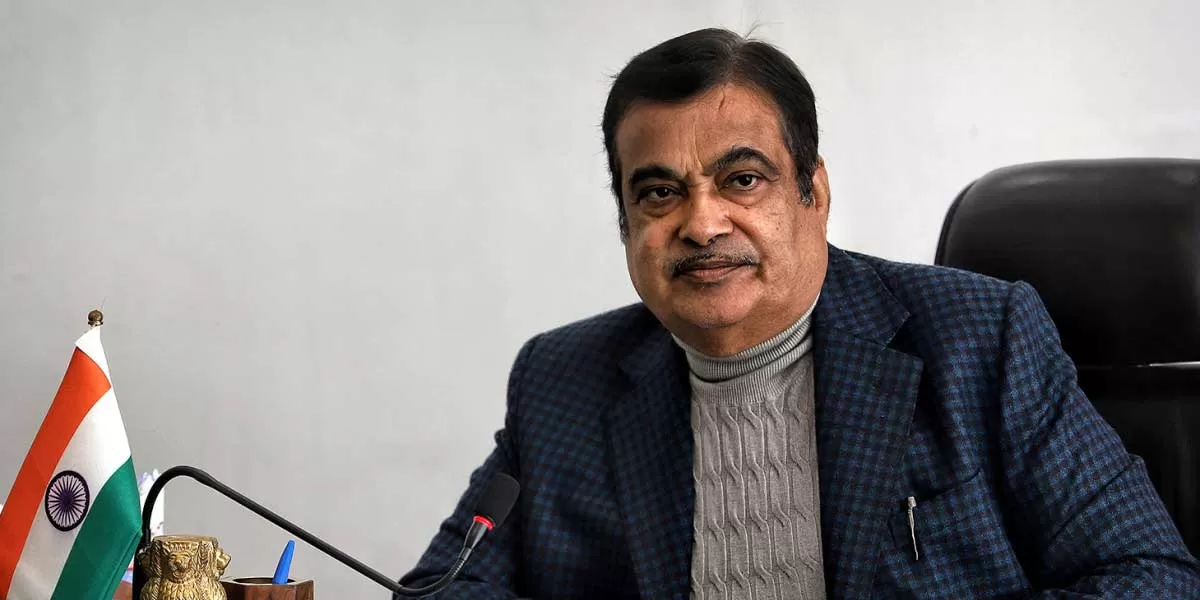
Gadkari stresses AI and advanced technologies for better road safety
ROADS & HIGHWAYS

Gadkari stresses AI and advanced technologies for better road safety

Union Minister for Road Transport & Highways Nitin Gadkari emphasised the importance of leveraging artificial intelligence (AI) and advanced technologies to enhance road safety in India, amid rising road accidents. Speaking at the 12th Traffic InfraTech Expo on October 25, 2024, Gadkari underscored the critical need to adopt innovative solutions in the transportation sector to address this growing concern.

Highlighting alarming statistics, Gadkari noted that India records approximately five lakh road accidents annually, with a significant proportion of fatalities affecting individuals aged 18-36. He estimated the economic loss from accidents at nearly 3% of the nation’s GDP. Improving road safety, he stressed, is a top government priority, with several initiatives already underway.

The minister advocated for improving road engineering using state-of-the-art global technologies and expressed interest in collaborating with Indian startups and young engineers working on innovative safety solutions. Gadkari stressed that road safety can only be achieved by integrating engineering advancements, effective law enforcement, and AI-driven technologies.

He further discussed the ministry's push toward tech-based law enforcement, including the use of AI for traffic violation detection, enabling precise penalties. Gadkari also shared plans to modernise toll collection by exploring satellite-based tolling systems to enhance efficiency and transparency.

To accelerate progress, the government will appoint experts from the private sector to develop new safety technologies. A dedicated committee will evaluate proposals from startups and industry leaders, with a three-month timeline to finalise its assessments and ensure rapid improvements.

Gadkari assured that quality and standards will remain uncompromised, regardless of whether solutions come from large corporations or small firms. He encouraged smaller companies with innovative technologies to participate in government tenders, emphasising the need for cost-effective solutions without compromising profitability. (ET)

Union Minister for Road Transport & Highways Nitin Gadkari emphasised the importance of leveraging artificial intelligence (AI) and advanced technologies to enhance road safety in India, amid rising road accidents. Speaking at the 12th Traffic InfraTech Expo on October 25, 2024, Gadkari underscored the critical need to adopt innovative solutions in the transportation sector to address this growing concern. Highlighting alarming statistics, Gadkari noted that India records approximately five lakh road accidents annually, with a significant proportion of fatalities affecting individuals aged 18-36. He estimated the economic loss from accidents at nearly 3% of the nation’s GDP. Improving road safety, he stressed, is a top government priority, with several initiatives already underway. The minister advocated for improving road engineering using state-of-the-art global technologies and expressed interest in collaborating with Indian startups and young engineers working on innovative safety solutions. Gadkari stressed that road safety can only be achieved by integrating engineering advancements, effective law enforcement, and AI-driven technologies. He further discussed the ministry's push toward tech-based law enforcement, including the use of AI for traffic violation detection, enabling precise penalties. Gadkari also shared plans to modernise toll collection by exploring satellite-based tolling systems to enhance efficiency and transparency. To accelerate progress, the government will appoint experts from the private sector to develop new safety technologies. A dedicated committee will evaluate proposals from startups and industry leaders, with a three-month timeline to finalise its assessments and ensure rapid improvements. Gadkari assured that quality and standards will remain uncompromised, regardless of whether solutions come from large corporations or small firms. He encouraged smaller companies with innovative technologies to participate in government tenders, emphasising the need for cost-effective solutions without compromising profitability. (ET)

Next Story
Real Estate

RBI Rate Cut Boosts Confidence Across Housing Market

Industry Context and Market DynamicsThe real estate industry has welcomed the RBI’s rate cut as a timely boost to affordability and demand. With home prices having risen steadily across major markets, even a marginal reduction in interest rates meaningfully strengthens purchasing power, especially for first-time and mid-income buyers.Ashish Jerath, President – Sales & Marketing, Smartworld Developers, observes:“The RBI’s 25-basis-point cut, bringing the repo rate down to 5.25%, is a timely boost for the real estate sector. Lower interest rates reduce borrowing costs, enabling homeb..

Next Story
Infrastructure Transport

BMC Resumes Rs 170 Billion Road Works, Targets 80 per cent By Jan 2026

Following the withdrawal of the southwest monsoon in October, the Brihanmumbai Municipal Corporation (BMC) has restarted work on 645 roads—covering 297.49 kilometres—under its large-scale concretisation programme. Data shows that more than 60 per cent of the resumed works are located in the western suburbs. Officials said the civic body aims to complete concretisation on 80 per cent of the roads where fresh work has begun by January 2026. Launched in 2022, the Rs 170 billion project seeks to concretise 700 kilometres of roads across Mumbai. All civil works were halted during the monsoon ..

Next Story
Infrastructure Urban

India Pushes Digital Shift In Urban Land Mapping

The Department of Land Resources (DoLR) under the Ministry of Rural Development has convened a National Symposium on NAKSHA – the National Geospatial Knowledge-based Land Survey of Urban Habitations – to advance India’s transition to modern, technology-driven land mapping. Speaking at the inaugural session, Secretary Manoj Joshi underscored the urgent need to move revenue departments away from outdated, tape-based methods and rough hand-drawn sketches. He stressed that adopting latitude–longitude-based digital mapping and GIS-linked registration systems is essential for economic stabi..

Advertisement

Subscribe to Our Newsletter

Get daily newsletters around different themes from Construction world.

STAY CONNECTED

Advertisement

Advertisement

Advertisement

Advertisement

Open In App