Lanxess and Hindustan Colas Sign MoU for Road Technologies
ROADS & HIGHWAYS

Lanxess and Hindustan Colas Sign MoU for Road Technologies

Pune: Specialty chemicals company Lanxess and Hindustan Colas have signed a memorandum of understanding (MoU) to explore strategic cooperation in advanced road construction technologies for the Indian infrastructure market. The agreement establishes a framework for assessing technical, commercial and business opportunities involving bitumen and asphalt modification technologies.

Under the MoU, the companies will jointly assess solutions intended to improve pavement performance, increase production efficiency, reduce environmental impact and support the development of sustainable road infrastructure in India. The partnership will combine Lanxess’s technology and technical capabilities with Hindustan Colas’s local testing and operational expertise.

The companies will conduct laboratory and commercial-scale evaluations of Addipave® CR 36, Lanxess’s cross-linking technology for polymer modified bitumen (PMB) applications. The evaluation will examine the technology’s suitability for local operating conditions and its potential contribution to the performance and production of modified bitumen formulations.

According to Lanxess, the technology is expected to improve PMB production efficiency, strengthen product consistency and quality, enhance operational safety and support better formulation performance. Lanxess will provide the product, technical expertise and trial support, while Hindustan Colas will contribute testing facilities, operational assistance and performance assessment.

Vince Patram, global head of marketing for Lanxess’s lubricant additives business unit, said the cooperation would use Hindustan Colas’s local market insight to help expand the company’s presence in India through asphalt applications tailored to domestic requirements. Debashis Chakraverty, CEO and director of Hindustan Colas, said the company viewed the evaluation as an opportunity to examine technologies that could enhance pavement performance, improve sustainability and create long-term value for India’s road construction industry.

Pune: Specialty chemicals company Lanxess and Hindustan Colas have signed a memorandum of understanding (MoU) to explore strategic cooperation in advanced road construction technologies for the Indian infrastructure market. The agreement establishes a framework for assessing technical, commercial and business opportunities involving bitumen and asphalt modification technologies. Under the MoU, the companies will jointly assess solutions intended to improve pavement performance, increase production efficiency, reduce environmental impact and support the development of sustainable road infrastructure in India. The partnership will combine Lanxess’s technology and technical capabilities with Hindustan Colas’s local testing and operational expertise. The companies will conduct laboratory and commercial-scale evaluations of Addipave® CR 36, Lanxess’s cross-linking technology for polymer modified bitumen (PMB) applications. The evaluation will examine the technology’s suitability for local operating conditions and its potential contribution to the performance and production of modified bitumen formulations. According to Lanxess, the technology is expected to improve PMB production efficiency, strengthen product consistency and quality, enhance operational safety and support better formulation performance. Lanxess will provide the product, technical expertise and trial support, while Hindustan Colas will contribute testing facilities, operational assistance and performance assessment. Vince Patram, global head of marketing for Lanxess’s lubricant additives business unit, said the cooperation would use Hindustan Colas’s local market insight to help expand the company’s presence in India through asphalt applications tailored to domestic requirements. Debashis Chakraverty, CEO and director of Hindustan Colas, said the company viewed the evaluation as an opportunity to examine technologies that could enhance pavement performance, improve sustainability and create long-term value for India’s road construction industry.

Related Stories

Gold Stories

Next Story
Infrastructure Urban

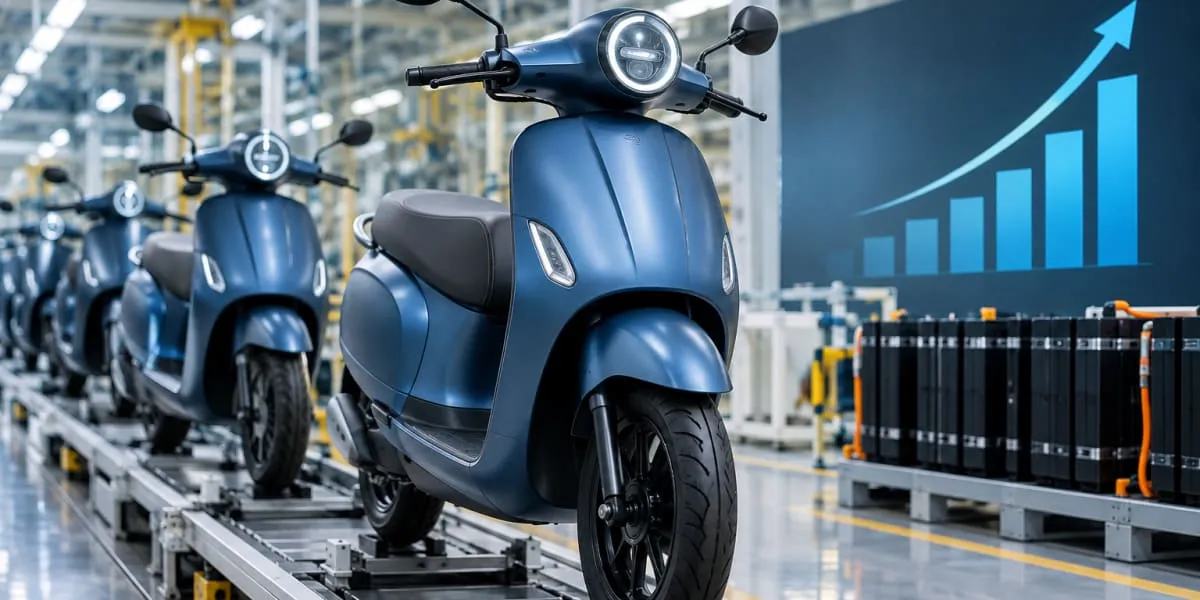
Bajaj Auto to Raise Monthly Electric 2W Capacity to 80,000 by March

Bajaj Auto plans to raise monthly production capacity for electric two-wheelers to around 80,000 units by the end of March, as demand for its Chetak electric scooter continues to exceed available output. The company currently has capacity for around 60,000 electric two-wheelers a month. Joint Managing Director Rakesh Sharma said production had returned to the existing full capacity after a supply chain disruption affected output. The issue had reduced recent production to around 40,000 units, resulting in a shortfall of 20,000 vehicles despite strong demand. The company expects to remove produ..

Next Story
Infrastructure Transport

India’s Domestic Air Passenger Traffic Falls 6.5% in September

India’s domestic air passenger traffic declined 6.49 per cent month on month to 11.8 mn in September, according to data released by the Directorate General of Civil Aviation (DGCA). IndiGo retained its leading position, carrying nearly two-thirds of domestic passengers, while the Air India Group remained the second-largest operator. IndiGo held a 65.4 per cent market share and transported 7.73 mn passengers during the month. The Air India Group accounted for 26.8 per cent of the market, carrying 3.165 mn passengers, based on data from the aviation regulator. Akasa Air ranked third with a 5.6..

Next Story
Infrastructure Urban

DPIIT Advances Trust-Based Governance Across India

The Department for Promotion of Industry and Internal Trade (DPIIT), under the Ministry of Commerce and Industry, is shifting India’s regulatory approach from permission-based administration to trust-based governance. The reforms seek to reduce business compliance, support startups, attract investment and simplify approvals across the country. According to an official statement, 47,957 compliance requirements have been reduced across Central Ministries and States and Union Territories. Of these, 22,290 have been digitised, 16,141 simplified, 5,255 decriminalised and 4,271 eliminated. The Jan..

Advertisement

Subscribe to Our Newsletter

Get daily newsletters around different themes from Construction world.

STAY CONNECTED

Advertisement

SPECIAL OFFER
QR Code