Man in Odisha builds road in 30 years after MLA turns down request
ROADS & HIGHWAYS

Man in Odisha builds road in 30 years after MLA turns down request

In the Nayagarh district of Odisha, a man named Harihar Behera constructed a road between his village Tulubi and the main road after the regional MLA had refused his request to build a road there.

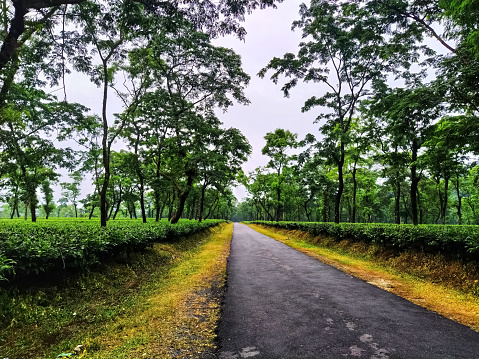
The construction took place through the forest to improve the connectivity of the village to the main road.

According to the media reports, there was no action taking place for the last 30 years. The MLA had discarded Behera's request by telling him it is not possible to construct a road in the forest because of the rough terrain. Behera managed to build the road and started the construction. He alone developed it and proved the task was achievable.

Harihar and his brother began the work by clearing the trees in the forest and land, then building a 3 km stretch for the vehicles.

Behera revealed that their relatives would find it challenging to travel here because of the muddy pathway, and it was becoming very hard without a road.

Harihar spent nearly 30 years constructing the 3 km stretch and achieved glory among his people.

The government of Odisha recently also decided to upgrade the road into an all-weather road for easy travel during the harsh weather.

Image Source

In the Nayagarh district of Odisha, a man named Harihar Behera constructed a road between his village Tulubi and the main road after the regional MLA had refused his request to build a road there. The construction took place through the forest to improve the connectivity of the village to the main road. According to the media reports, there was no action taking place for the last 30 years. The MLA had discarded Behera's request by telling him it is not possible to construct a road in the forest because of the rough terrain. Behera managed to build the road and started the construction. He alone developed it and proved the task was achievable. Harihar and his brother began the work by clearing the trees in the forest and land, then building a 3 km stretch for the vehicles. Behera revealed that their relatives would find it challenging to travel here because of the muddy pathway, and it was becoming very hard without a road. Harihar spent nearly 30 years constructing the 3 km stretch and achieved glory among his people. The government of Odisha recently also decided to upgrade the road into an all-weather road for easy travel during the harsh weather. Image Source

Next Story
Infrastructure Urban

Implementation Status of Jal Jeevan Mission

Since August 2019 the Government has implemented Jal Jeevan Mission to provide assured potable water through household tap connections in rural India. At the start of the mission only 32.3 million (mn) rural households, representing 16.7 per cent, were reported to have tap water connections. States and union territories have reported that 125.8 mn additional rural households have since been provided with tap connections. As a result, of about 193.6 mn rural households roughly 158.2 mn, or 81.71 per cent, are reported to have tap water supply at home.\n\nThe State, district and village level st..

Next Story
Infrastructure Urban

Jal Jeevan Mission Reaches Eighty One Per Cent Rural Coverage

The Government reported substantial progress under the Jal Jeevan Mission, launched in August 2019 to provide tap water to every rural household. At launch only 32.3 million (mn) rural households had tap connections and states and Union territories reported provision of 125.8 mn additional households by March 2026. Consequently, out of about 193.6 mn rural households around 158.2 mn, or 81.71 per cent, are reported to have tap water at home. The Finance Minister announced extension of the mission until 2028 in the 2025-26 budget speech. The Swachh Bharat Mission Grameen, launched in October 20..

Next Story
Infrastructure Urban

Empowering Local Governance for Sustainable Rural Water Supply

The Ministry of Jal Shakti has aligned the Jal Jeevan Mission (JJM) with the 73rd Amendment to strengthen village level planning and community ownership of water supply. Gram Panchayats, village water and sanitation committees and Pani Samitis are to plan, implement, manage and maintain piped water systems, with gram sabha processes formalising handover and oversight. Implementation support agencies including non government organisations, community based organisations and self help groups have been empanelled to train local committees and promote women participation. Under JJM, the department ..

Advertisement

Subscribe to Our Newsletter

Get daily newsletters around different themes from Construction world.

STAY CONNECTED

Advertisement

Advertisement

Advertisement