Mumbai–Pune Missing Link Nears Opening, Cuts 30 Minutes
ROADS & HIGHWAYS

Mumbai–Pune Missing Link Nears Opening, Cuts 30 Minutes

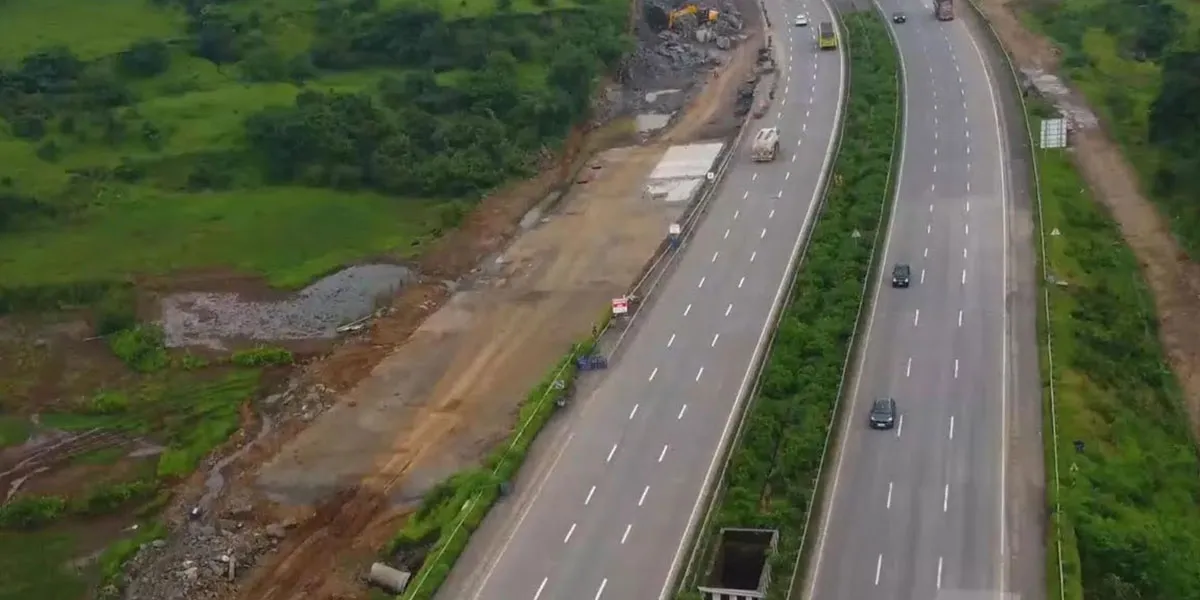
Commuters travelling between Mumbai and Pune are set to get relief from frequent traffic congestion as the long-awaited ‘missing link’ project near Lonavala approaches completion. The 13.3-km road, being developed by the Maharashtra State Road Development Corporation, is expected to open to the public in the coming months and is projected to reduce travel time by around 25–30 minutes.

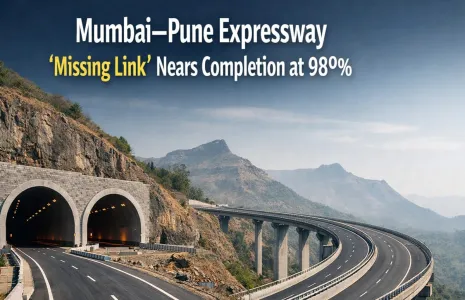
A senior MSRDC official said the project faced significant engineering challenges due to its alignment through hilly terrain and across a deep valley. The route cuts across the Western Ghats and includes two tunnels measuring 8.9 km and 1.7 km, along with two cable-stayed bridges of 840 metres and 650 metres. With the completion of the viaduct connecting the two tunnels, only minor finishing works remain before commissioning. Lane widening towards Khopoli has also been completed to manage higher traffic volumes once the bypass opens.

The existing section of the Mumbai–Pune Expressway between the Khopoli exit and Sinhgad Institute at Kusgaon spans 19.8 km and passes through Lonavala, a stretch that often witnesses severe congestion due to narrow lanes and heavy tourist inflows. The missing link will reduce this distance to 13.3 km, creating a non-stop bypass around Lonavala.

Once operational, the new alignment is expected to bring down Mumbai–Pune travel time by nearly half an hour. Currently, the journey can take over 3.5 hours during peak congestion, though it typically averages around three hours. With the missing link in place, the travel time is expected to reduce further to about 2.5 hours, especially when combined with the time savings offered by the Atal Setu.

The project will also shorten the distance between Mumbai and Pune by more than 6 km, helping save fuel and reduce emissions. MSRDC said the tunnels, which are 23.3 metres wide, feature four traffic lanes and an emergency lane, making them among the widest in Asia. The 650-metre bridge is also one of the tallest in the country.

The project, estimated at Rs 65.95 billion, began in 2019 and was originally slated for completion in 2022. However, execution was delayed due to the Covid-19 pandemic, difficult geological conditions and heavy monsoon rains. According to MSRDC, the revised deadline of March 2026 is now expected to be met.

Commuters travelling between Mumbai and Pune are set to get relief from frequent traffic congestion as the long-awaited ‘missing link’ project near Lonavala approaches completion. The 13.3-km road, being developed by the Maharashtra State Road Development Corporation, is expected to open to the public in the coming months and is projected to reduce travel time by around 25–30 minutes. A senior MSRDC official said the project faced significant engineering challenges due to its alignment through hilly terrain and across a deep valley. The route cuts across the Western Ghats and includes two tunnels measuring 8.9 km and 1.7 km, along with two cable-stayed bridges of 840 metres and 650 metres. With the completion of the viaduct connecting the two tunnels, only minor finishing works remain before commissioning. Lane widening towards Khopoli has also been completed to manage higher traffic volumes once the bypass opens. The existing section of the Mumbai–Pune Expressway between the Khopoli exit and Sinhgad Institute at Kusgaon spans 19.8 km and passes through Lonavala, a stretch that often witnesses severe congestion due to narrow lanes and heavy tourist inflows. The missing link will reduce this distance to 13.3 km, creating a non-stop bypass around Lonavala. Once operational, the new alignment is expected to bring down Mumbai–Pune travel time by nearly half an hour. Currently, the journey can take over 3.5 hours during peak congestion, though it typically averages around three hours. With the missing link in place, the travel time is expected to reduce further to about 2.5 hours, especially when combined with the time savings offered by the Atal Setu. The project will also shorten the distance between Mumbai and Pune by more than 6 km, helping save fuel and reduce emissions. MSRDC said the tunnels, which are 23.3 metres wide, feature four traffic lanes and an emergency lane, making them among the widest in Asia. The 650-metre bridge is also one of the tallest in the country. The project, estimated at Rs 65.95 billion, began in 2019 and was originally slated for completion in 2022. However, execution was delayed due to the Covid-19 pandemic, difficult geological conditions and heavy monsoon rains. According to MSRDC, the revised deadline of March 2026 is now expected to be met.

Related Stories

Gold Stories

Next Story
Real Estate

LML Realty Sells Out Jhirka Valley Industrial Park in Haryana

LML Realty, the real estate arm of LML Group, recently announced the complete sell-out of its Jhirka Valley Industrial Park in Haryana, with over 1.17 million sq ft of industrial space acquired by more than 50 companies. With utilities and internal infrastructure in place, the company has commenced plot handovers, enabling buyers to begin construction and establish their operations.The industrial park has attracted companies across diverse sectors, including chemicals, metals and alloys, textiles, electrical equipment, energy, logistics, construction, polymers and engineering. Key buyers inclu..

Next Story
Real Estate

WSB Real Estate Partners Exits Six Housing Investments

WSB Real Estate Partners recently announced the successful exit of six residential investments across Bengaluru, Mumbai Metropolitan Region (MMR) and National Capital Region (NCR), delivering an average internal rate of return (IRR) of 19–21 per cent and an overall investment return of 1.4 times.The real estate-focused investment firm invested approximately Rs 7 billion across six mid-affordable housing projects over the past four years. All six investments were fully repaid between April and November 2026, several months ahead of their original investment tenures.WSB collaborated with sever..

Next Story
Infrastructure Transport

Aluminium Industry Seeks Policy Support for Rs 4 Trillion Investment

The Aluminium Association of India (AAI) has recently urged the government to introduce supportive policy measures to safeguard the sector’s proposed Rs 4 trillion investment pipeline. The association highlighted the need for a predictable policy framework to strengthen domestic manufacturing, expand production capacity and reduce import dependence.AAI submitted its recommendations for the Union Budget 2027-28 to the Ministries of Finance, Commerce and Industry, and Mines, along with the Department for Promotion of Industry and Internal Trade (DPIIT).India’s aluminium demand is projected t..

Subscribe to Our Newsletter

Get daily newsletters around different themes from Construction world.

STAY CONNECTED

Advertisement

SPECIAL OFFER
QR Code