NHAI Introduces Independent Checks for Major Bridge Designs
ROADS & HIGHWAYS

NHAI Introduces Independent Checks for Major Bridge Designs

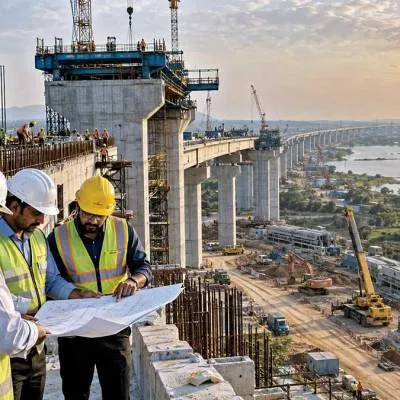
The National Highways Authority of India (NHAI) has introduced a uniform system for independently checking designs and drawings for major bridges and other critical structures developed under its projects. The policy is intended to identify design-related issues at an early stage and improve compliance with applicable technical requirements.

Under the new system, designs for identified critical structures will be examined by empanelled Indian Institutes of Technology (IITs), reputed government technical institutions and experienced technical firms. The organisations selected for the work will be required to have expertise in bridge engineering and hydraulic studies.

The initiative will cover major bridges and viaducts, including major river bridges with a design discharge of 3,000 cubic metres per second or more. It will also apply to structures and bridges with an individual effective span of 40 metres or more.

NHAI said the independent checking process would help ensure that designs meet the applicable Indian Roads Congress (IRC) codes, technical specifications and contractual requirements. The authority has described the measure as particularly important for major bridges and other complex structures, where design verification is central to construction planning and structural performance.

The policy will take effect on December 1, 2026. It will apply to all new Engineering, Procurement and Construction (EPC), Hybrid Annuity Model (HAM) and Build-Operate-Transfer (BOT) National Highway projects, as well as projects in which design verification or proof checking has not yet begun. The new framework establishes a common process for obtaining external technical scrutiny across the covered projects.

The National Highways Authority of India (NHAI) has introduced a uniform system for independently checking designs and drawings for major bridges and other critical structures developed under its projects. The policy is intended to identify design-related issues at an early stage and improve compliance with applicable technical requirements. Under the new system, designs for identified critical structures will be examined by empanelled Indian Institutes of Technology (IITs), reputed government technical institutions and experienced technical firms. The organisations selected for the work will be required to have expertise in bridge engineering and hydraulic studies. The initiative will cover major bridges and viaducts, including major river bridges with a design discharge of 3,000 cubic metres per second or more. It will also apply to structures and bridges with an individual effective span of 40 metres or more. NHAI said the independent checking process would help ensure that designs meet the applicable Indian Roads Congress (IRC) codes, technical specifications and contractual requirements. The authority has described the measure as particularly important for major bridges and other complex structures, where design verification is central to construction planning and structural performance. The policy will take effect on December 1, 2026. It will apply to all new Engineering, Procurement and Construction (EPC), Hybrid Annuity Model (HAM) and Build-Operate-Transfer (BOT) National Highway projects, as well as projects in which design verification or proof checking has not yet begun. The new framework establishes a common process for obtaining external technical scrutiny across the covered projects.

Related Stories

Gold Stories
Next Story
Infrastructure Transport

Thiruvananthapuram Airport to Get Rs. 25 bn Terminal Expansion

Thiruvananthapuram International Airport, managed by Adani Airports, will undergo a Rs. 25 bn terminal expansion under Project Anantha. The project is intended to increase international passenger-handling capacity and improve operational efficiency at the Kerala airport. The groundbreaking ceremony is scheduled for October 15, coinciding with the airport completing five years under its current management. The development will cover approximately 92,552 square metres and raise annual international passenger capacity from 3.5 mn to around 11.5 mn. Project Anantha forms part of a wider transforma..
Next Story
Infrastructure Transport

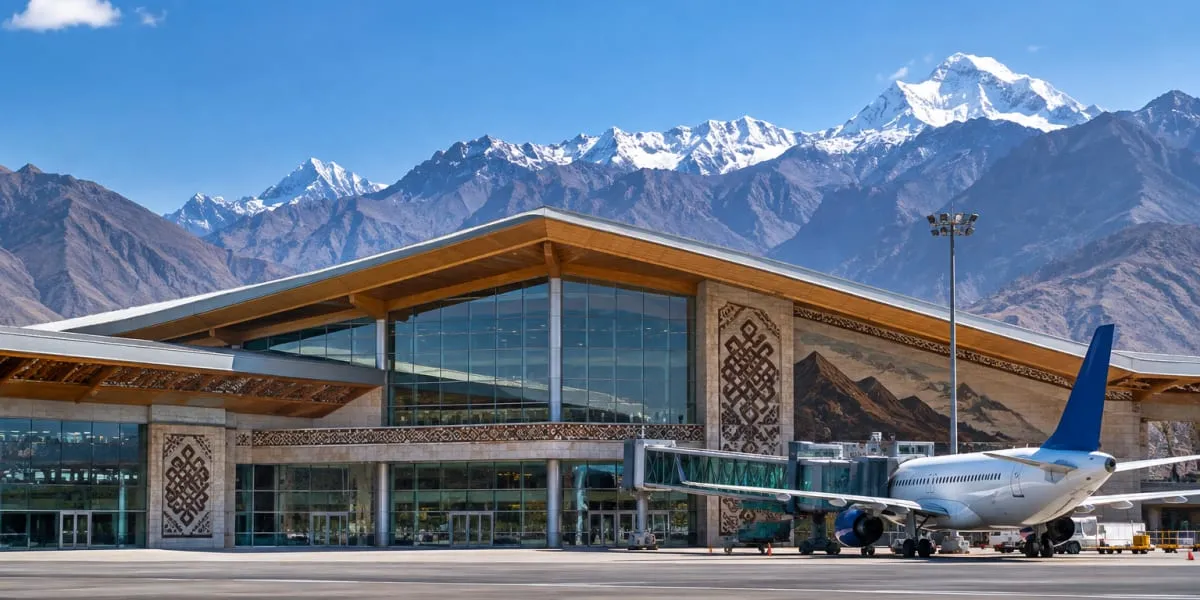
PM Modi Inaugurates Leh Airport Terminal Costing Rs. 6.4 bn

Prime Minister Narendra Modi inaugurated the new passenger terminal at Leh Airport on October 15, 2026, adding capacity at one of the world’s highest commercial airports. The facility, built at a cost of Rs. 6.4 bn, has been designed to handle 3.5 mn passengers annually and support rising air travel demand in Ladakh. The terminal covers 23,810 square metres and combines modern airport infrastructure with design elements inspired by Ladakh’s local art and cultural heritage. A video shared by Union Civil Aviation Minister Ram Mohan Naidu Kinjarapu showed the check-in area, airline counters, ..

Next Story
Infrastructure Transport

Kerala Examines Land Acquisition for Kannur Airport Expansion

The Kerala government is examining the land acquisition process for the proposed expansion of Kannur International Airport and plans to take an early decision on difficulties faced by affected families, Chief Minister V D Satheesan told the state Assembly on Thursday. He was responding to a submission by MLA T K Govindan. The proposed project involves extending the airport runway from 3,050 metres to 4,000 metres. The government granted administrative sanction on December 27, 2016, to acquire 99.92 hectares, but the process remains incomplete despite a notification issued in 2017. The governme..

Advertisement

Subscribe to Our Newsletter

Get daily newsletters around different themes from Construction world.

STAY CONNECTED

Advertisement

SPECIAL OFFER
QR Code