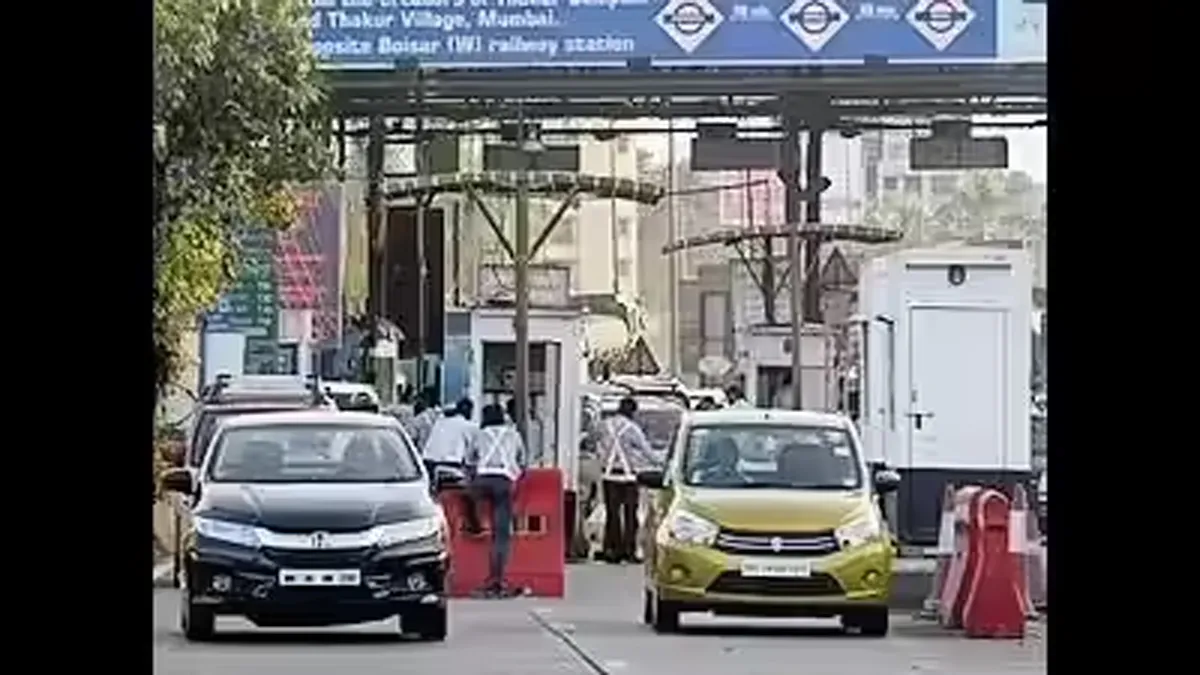
NHAI Rejects Plan To Shift Dahisar Toll Plaza Near Versova
ROADS & HIGHWAYS

NHAI Rejects Plan To Shift Dahisar Toll Plaza Near Versova

In a setback to efforts aimed at decongesting Dahisar’s traffic-heavy corridors, the National Highways Authority of India (NHAI) has rejected the Maharashtra State Road Development Corporation’s (MSRDC) proposal to relocate the toll plaza on the Vasai section of the national highway closer to the Versova Bridge.

On 9 September, Deputy Chief Minister Eknath Shinde, who also heads the Urban Development and MSRDC ministries, had approved plans to move the toll plaza approximately two kilometres away from its existing location to help reduce bottlenecks along the route. The current Dahisar toll naka falls under the Brihanmumbai Municipal Corporation (BMC) limits, but the proposed relocation would place it within the Vasai Virar City Municipal Corporation (VVCMC) jurisdiction.

The MSRDC formally wrote to NHAI on 22 September, seeking permission to shift the toll plaza beyond the Versova Bridge. However, NHAI’s Mumbai office, which oversees national highways in Maharashtra, announced on X (formerly Twitter) that the Competent Authority had denied the proposal. The post stated that the MSRDC’s plan was not in accordance with national tolling regulations, and this decision had been formally communicated to the state agency.

Earlier, Transport Minister Pratap Sarnaik, during his visit to the Dahisar toll plaza on 13 August, had announced the relocation proposal to ease vehicular congestion and address local residents’ complaints about the bottleneck caused by toll queues. The plan was initially scheduled for implementation by Diwali 2025.

In addition to reducing existing congestion, the shift was also intended to pre-empt traffic build-up from the soon-to-be-operational Metro Line 9, whose one station is located near the current toll plaza. Once the metro line opens, traffic volumes in the area are expected to rise significantly.

However, several political leaders, including those from the Bharatiya Janata Party (BJP), criticised the move as politically motivated, opposing the relocation decision.

Officials from the NHAI, MSRDC, and Minister Pratap Sarnaik were unavailable for comment following the announcement.

"Join industry leaders at RAHSTA Expo, India's premier platform for roads, highways and traffic infrastructure. Register now to explore innovations, network with experts and shape the future of mobility."

In a setback to efforts aimed at decongesting Dahisar’s traffic-heavy corridors, the National Highways Authority of India (NHAI) has rejected the Maharashtra State Road Development Corporation’s (MSRDC) proposal to relocate the toll plaza on the Vasai section of the national highway closer to the Versova Bridge. On 9 September, Deputy Chief Minister Eknath Shinde, who also heads the Urban Development and MSRDC ministries, had approved plans to move the toll plaza approximately two kilometres away from its existing location to help reduce bottlenecks along the route. The current Dahisar toll naka falls under the Brihanmumbai Municipal Corporation (BMC) limits, but the proposed relocation would place it within the Vasai Virar City Municipal Corporation (VVCMC) jurisdiction. The MSRDC formally wrote to NHAI on 22 September, seeking permission to shift the toll plaza beyond the Versova Bridge. However, NHAI’s Mumbai office, which oversees national highways in Maharashtra, announced on X (formerly Twitter) that the Competent Authority had denied the proposal. The post stated that the MSRDC’s plan was not in accordance with national tolling regulations, and this decision had been formally communicated to the state agency. Earlier, Transport Minister Pratap Sarnaik, during his visit to the Dahisar toll plaza on 13 August, had announced the relocation proposal to ease vehicular congestion and address local residents’ complaints about the bottleneck caused by toll queues. The plan was initially scheduled for implementation by Diwali 2025. In addition to reducing existing congestion, the shift was also intended to pre-empt traffic build-up from the soon-to-be-operational Metro Line 9, whose one station is located near the current toll plaza. Once the metro line opens, traffic volumes in the area are expected to rise significantly. However, several political leaders, including those from the Bharatiya Janata Party (BJP), criticised the move as politically motivated, opposing the relocation decision. Officials from the NHAI, MSRDC, and Minister Pratap Sarnaik were unavailable for comment following the announcement.

Next Story
Real Estate

Pecan Realty Completes Rs 1.5 Billion Transactions

Pecan Realty has recently completed four institutional transactions worth over Rs 1.5 billion over the past two years, strengthening its position as an execution-led real estate platform. The deals include resolution-led acquisitions, structured finance transactions and capital partnerships across its development portfolio.The transactions covered acquisitions through the National Company Law Tribunal process and helped provide repayment or exits to both private and public sector lenders. The company said the deals demonstrate its ability to resolve complex project situations, work with instit..

Next Story
Real Estate

SNN Estates Expands North Bengaluru Housing Project

SNN Estates has announced an expansion of its SNN Estates Felicity residential project in North Bengaluru following strong buyer demand, with 75 per cent of the first-phase inventory sold within three days of launch.The developer will add 76 apartments in the new phase, taking the project's estimated revenue potential to around Rs 1,000 crore upon completion of Phase 2.Spread across 6.5 acres in Rachenahalli, near Manyata Tech Park, the project comprises 604 apartments in 1.5, 2, 2.5, 3 and 4 BHK configurations. The development includes a 50,000-sq-ft clubhouse with amenities such as sports co..

Next Story
Infrastructure Urban

SCG Drives ASEAN Industrial Transformation Strategy

SCG is strengthening its focus on ASEAN as a key growth region by advancing industrial transformation, enhancing competitiveness and building resilient regional value chains. Thammasak Sethaudom, President and Chief Executive Officer, SCG, highlighted the need for industries to continuously develop capabilities, strengthen resilience and deepen regional cooperation to achieve sustainable long-term growth.SCG views ASEAN as an important growth engine alongside China, supported by favourable demographics, trade connectivity and investment flows. With ASEAN’s GDP projected to grow by around 4.7..

Advertisement

Subscribe to Our Newsletter

Get daily newsletters around different themes from Construction world.

STAY CONNECTED

Advertisement

Advertisement

Advertisement