+
SC Directs Punjab to Identify Land for Highway Afforestation
ROADS & HIGHWAYS

SC Directs Punjab to Identify Land for Highway Afforestation

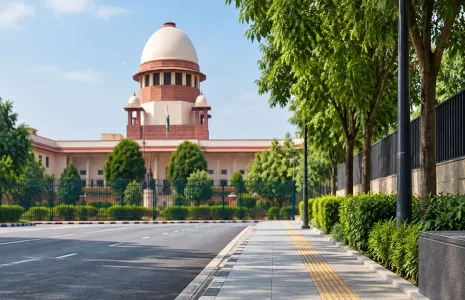
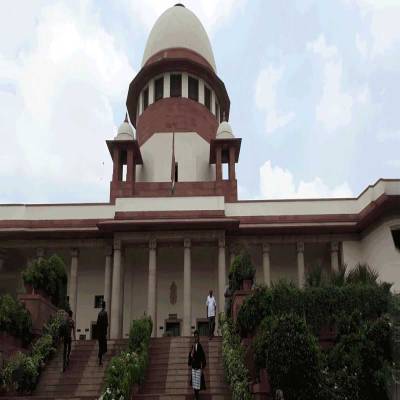
The Supreme Court has directed the Punjab government to submit a proposal identifying adequate land for compensatory afforestation connected with the construction of national highways. The direction followed concerns about declining forest cover in the state and the slow implementation of its afforestation plan.

A three-judge bench comprising Chief Justice of India Surya Kant, Justice Joymalya Bagchi and Justice V. Mohana asked the state to provide land wherever it was required by the National Highways Authority of India (NHAI) for highway construction. The court also directed the NHAI to serve a copy of its petition on the Punjab government.

The bench issued notice on the NHAI’s challenge to several orders of the Punjab and Haryana High Court that restricted the felling of trees for road projects. The state government has been asked to respond by November 27. The proceedings concern the balance between statutory afforestation requirements and the construction of public infrastructure.

Solicitor General Tushar Mehta, appearing for the NHAI, submitted that continuing directions restraining tree felling were affecting road construction. He said compensatory afforestation was mandatory when trees were felled and noted that some roads in Punjab were required for strategic purposes because the state shares an international border.

The Supreme Court also asked whether land for compensatory afforestation was being allocated within 5 km of locations where trees had been removed. Mehta said land was allocated in some cases but was not always available within that radius. He maintained that planting was nevertheless taking place and argued that the high court’s directions were delaying public projects.

The court’s direction requires Punjab to set out how suitable land will be made available for future highway-related afforestation. The proposal is expected to clarify the state’s land-allocation process while addressing the environmental obligations associated with national highway construction.

The Supreme Court has directed the Punjab government to submit a proposal identifying adequate land for compensatory afforestation connected with the construction of national highways. The direction followed concerns about declining forest cover in the state and the slow implementation of its afforestation plan. A three-judge bench comprising Chief Justice of India Surya Kant, Justice Joymalya Bagchi and Justice V. Mohana asked the state to provide land wherever it was required by the National Highways Authority of India (NHAI) for highway construction. The court also directed the NHAI to serve a copy of its petition on the Punjab government. The bench issued notice on the NHAI’s challenge to several orders of the Punjab and Haryana High Court that restricted the felling of trees for road projects. The state government has been asked to respond by November 27. The proceedings concern the balance between statutory afforestation requirements and the construction of public infrastructure. Solicitor General Tushar Mehta, appearing for the NHAI, submitted that continuing directions restraining tree felling were affecting road construction. He said compensatory afforestation was mandatory when trees were felled and noted that some roads in Punjab were required for strategic purposes because the state shares an international border. The Supreme Court also asked whether land for compensatory afforestation was being allocated within 5 km of locations where trees had been removed. Mehta said land was allocated in some cases but was not always available within that radius. He maintained that planting was nevertheless taking place and argued that the high court’s directions were delaying public projects. The court’s direction requires Punjab to set out how suitable land will be made available for future highway-related afforestation. The proposal is expected to clarify the state’s land-allocation process while addressing the environmental obligations associated with national highway construction.

Related Stories

Gold Stories

Next Story
Equipment

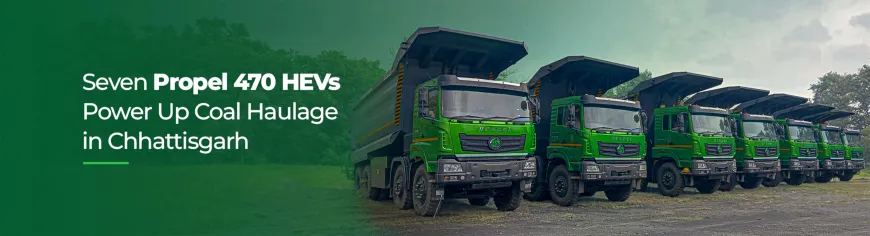
Seven Propel 470 HEV electric tippers go to work on coal haulage in Chhattisgarh

Propel EV, the electric mobility division of Propel Industries and India's No. 1 electric tipper brand, has deployed seven 470 HEV electric trucks with a leading coal-haulage contractor at one of India's largest opencast coal mines in Chhattisgarh. The trucks are in daily operation, moving coal on continuous haul cycles in one of the most demanding applications in Indian mining.Why Electric - and Why CoalCoal haulage runs round the clock: heavy loads, long haul cycles, steep ramps and abrasive dust. It is also where diesel hurts most. Engines run continuously, fuel is the largest single operat..

Next Story
Infrastructure Transport

UP Cabinet Approves Renaming Jewar Airport After PM Modi

The Uttar Pradesh Cabinet has approved a proposal to rename Noida International Airport at Jewar as Narendra Modi International Airport, Noida-Jewar. Chief Minister Yogi Adityanath announced the decision after a Cabinet meeting, saying the airport represented a major contribution to the state and would become Uttar Pradesh’s largest airport and a significant aviation hub. The greenfield airport’s foundation stone was laid by Prime Minister Narendra Modi on November 25, 2021. He inaugurated Phase 1 on March 28, 2026, and commercial flights began on June 15. The facility is being developed a..

Next Story
Infrastructure Energy

Rolls-Royce Seeks Deeper Strategic Role in India

Rolls-Royce has described India as central to its long-term ambitions and said it wants to deepen its role as a strategic partner supporting the country’s energy security, infrastructure growth, national security and connectivity. The British aero-engine maker said its future expansion would build on decades of operations, industrial partnerships, engineering capabilities and a growing manufacturing and supply-chain ecosystem. The company held a board meeting in India for the first time this week. During a three-day visit, Rolls-Royce chief executive Tufan Erginbilgic met Prime Minister Nare..

Advertisement

Subscribe to Our Newsletter

Get daily newsletters around different themes from Construction world.

STAY CONNECTED

Advertisement

SPECIAL OFFER
QR Code