




Two New Flyovers to Cut Byculla to CSMT Travel Time
ROADS & HIGHWAYS

Two New Flyovers to Cut Byculla to CSMT Travel Time

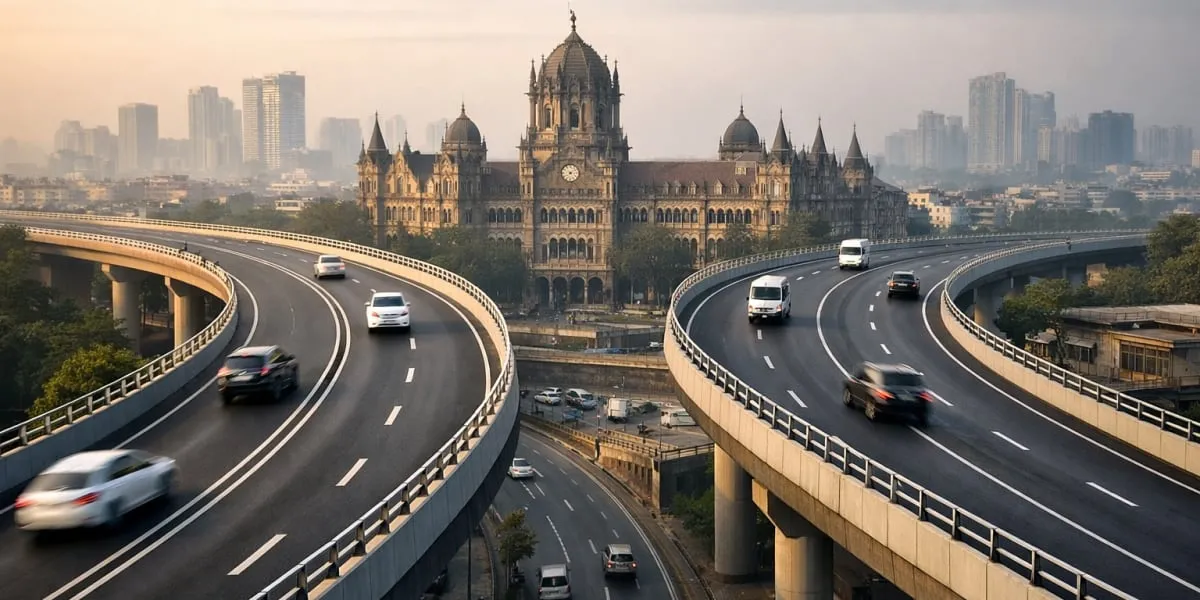
Mumbai municipal authorities have approved construction of two new flyovers aimed at easing traffic congestion in central city corridors. The announcement said the structures will reduce travel time between Byculla and Chhatrapati Shivaji Maharaj Terminus (CSMT) to 10 minutes. The scheme targets peak hour bottlenecks on arterial roads that serve commuters and commercial vehicles. The plan forms part of a wider infrastructure push to enhance urban mobility.

The project will create two elevated corridors that bypass surface junctions and reduce signal delays, improving the flow of passenger and goods traffic. Officials outlined that the interventions are designed to complement existing road and rail networks and to distribute vehicular load more evenly across the central business district. The work is intended to support daily commuters, bus services and logistics movement into the port and station precincts. Environmental and safety standards will be observed throughout the construction phase.

Route details released by the city administration indicate connections at strategic nodes to integrate with feeder roads and pedestrian crossings while maintaining access for local traffic. Construction sequencing will aim to limit disruption, with phased closures and traffic management plans during peak operations. Urban planners said measures will be taken to protect surrounding residential and heritage areas during the build.

The authority advised that commuters can expect smoother journeys and reduced congestion once the flyovers are operational, including shorter public transport cycles and quicker last mile transfers. Stakeholders will monitor traffic patterns and adjust signal timing and route management as the new corridors open. Officials indicated that coordination with local transport providers will be essential during the transition. The announcement underlined the city administration's focus on infrastructure interventions that improve mobility and support economic activity in central Mumbai.

Mumbai municipal authorities have approved construction of two new flyovers aimed at easing traffic congestion in central city corridors. The announcement said the structures will reduce travel time between Byculla and Chhatrapati Shivaji Maharaj Terminus (CSMT) to 10 minutes. The scheme targets peak hour bottlenecks on arterial roads that serve commuters and commercial vehicles. The plan forms part of a wider infrastructure push to enhance urban mobility. The project will create two elevated corridors that bypass surface junctions and reduce signal delays, improving the flow of passenger and goods traffic. Officials outlined that the interventions are designed to complement existing road and rail networks and to distribute vehicular load more evenly across the central business district. The work is intended to support daily commuters, bus services and logistics movement into the port and station precincts. Environmental and safety standards will be observed throughout the construction phase. Route details released by the city administration indicate connections at strategic nodes to integrate with feeder roads and pedestrian crossings while maintaining access for local traffic. Construction sequencing will aim to limit disruption, with phased closures and traffic management plans during peak operations. Urban planners said measures will be taken to protect surrounding residential and heritage areas during the build. The authority advised that commuters can expect smoother journeys and reduced congestion once the flyovers are operational, including shorter public transport cycles and quicker last mile transfers. Stakeholders will monitor traffic patterns and adjust signal timing and route management as the new corridors open. Officials indicated that coordination with local transport providers will be essential during the transition. The announcement underlined the city administration's focus on infrastructure interventions that improve mobility and support economic activity in central Mumbai.

Related Stories

Gold Stories
Next Story
Infrastructure Urban

KONE Opens India's First Digital Experience Centre in Pune

KONE, a global elevator and escalator manufacturer, has inaugurated its first Digital Experience Centre (DEC) in India, located in Pune. The facility aims to showcase how artificial intelligence (AI), connectivity and data-driven technologies can enhance customer experiences and improve building operations.The centre was inaugurated by Jussi Herlin, Executive Vice Chair, KONE Corporation; Philippe Delorme, President and CEO, KONE; and Nandan Nilekani, Co-founder and Chairman of the Board, Infosys.Designed as an interactive customer environment, the facility demonstrates digital solutions cover..

Next Story
Infrastructure Urban

CII GreenCo Launches Circularity Guidelines for Indian Industry

The Confederation of Indian Industry (CII) GreenCo Council has launched the CII GreenCo Circularity Guidelines – Pilot Version at the 17th CII GreenCo Waste & Resource Management Summit 2026 in Chennai. The initiative aims to strengthen resource efficiency, waste reduction and circular economy practices across Indian manufacturing and process industries.The guidelines introduce a structured framework with circularity indices covering raw materials, consumables, packaging and other resource inputs. These indicators will help industries assess existing practices, identify opportunities to ..

Next Story
Infrastructure Energy

Global Electronics Association Launches IPC-1783-CO2E Standard

The Global Electronics Association has introduced IPC-1783-CO2E, a new international standard aimed at improving consistency, transparency and comparability in product carbon footprint reporting across the electronics manufacturing industry.The standard, titled International Standard for Data Collection and Reporting of CO2 Equivalent (CO2e) Emissions for the Electronics Manufacturing Supply Chain, provides industry-specific guidance for collecting, estimating and reporting carbon emissions data.With increasing regulatory requirements and customer expectations, electronics manufacturers face c..

Advertisement

Subscribe to Our Newsletter

Get daily newsletters around different themes from Construction world.

STAY CONNECTED

Advertisement

SPECIAL OFFER
QR Code