Vedanta Ltd in a race to become India's first chip maker
ROADS & HIGHWAYS

Vedanta Ltd in a race to become India's first chip maker

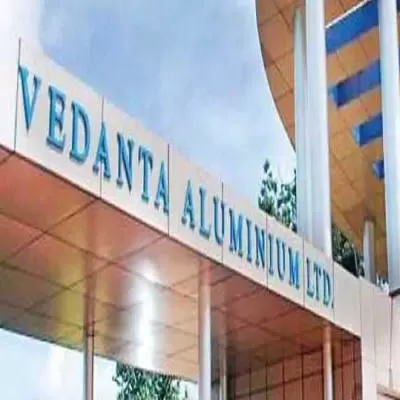
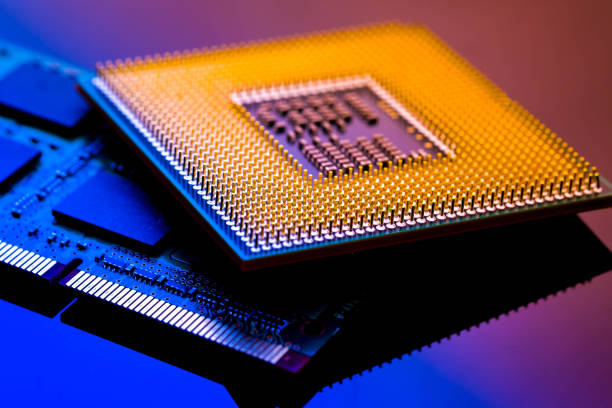
Vedanta Ltd is seeking 1,000 acres of free land from states and other incentives for its $20 billion foray into semiconductor and display manufacturing in a race to become India's first chip maker.

In February, the oil-to-metals conglomerate said it would diversify into chip manufacturing and declared plans to form a joint venture (JV) with Taiwan's Foxconn to support Prime Minister Narendra Modi's plans to create India a semiconductor manufacturing hub.

Under a Modi programme offering fiscal support, though Vedanta is seeking federal incentives, it is separately asking states for 1,000 acres of land free of cost on a lease for 99 years.

It requires 700 acres for its facility and the remainder for ancillaries.

Vedanta has told state governments that its operations would help them generate tax revenues of $2.2 billion over 20 years and create up to 100,000 direct and indirect jobs, said the first source.

The company is in the advanced stages of reviewing proposals from at least three Indian states, Telangana and Maharashtra in the west and Karnataka in the south.

More corporations and nation-states, including India, are examining ways to have seamless access to chips, which is at the core of many future critical technologies.

Most of the world's chip output is confined to a few countries like Taiwan and the United States (US). India is now actively attracting companies, saying it wants to usher in a new era in electronics manufacturing in December.

From $15 billion in 2020, the Indian semiconductor market is likely to reach $63 billion by 2026.

Generally, chip plants consume electricity and water in large quantities, and their erratic supplies often trouble the industry in India.

Image Source

Also read: Vedanta to sell 25% stake each in 3 Sterlite Technologies units

Vedanta Ltd is seeking 1,000 acres of free land from states and other incentives for its $20 billion foray into semiconductor and display manufacturing in a race to become India's first chip maker. In February, the oil-to-metals conglomerate said it would diversify into chip manufacturing and declared plans to form a joint venture (JV) with Taiwan's Foxconn to support Prime Minister Narendra Modi's plans to create India a semiconductor manufacturing hub. Under a Modi programme offering fiscal support, though Vedanta is seeking federal incentives, it is separately asking states for 1,000 acres of land free of cost on a lease for 99 years. It requires 700 acres for its facility and the remainder for ancillaries. Vedanta has told state governments that its operations would help them generate tax revenues of $2.2 billion over 20 years and create up to 100,000 direct and indirect jobs, said the first source. The company is in the advanced stages of reviewing proposals from at least three Indian states, Telangana and Maharashtra in the west and Karnataka in the south. More corporations and nation-states, including India, are examining ways to have seamless access to chips, which is at the core of many future critical technologies. Most of the world's chip output is confined to a few countries like Taiwan and the United States (US). India is now actively attracting companies, saying it wants to usher in a new era in electronics manufacturing in December. From $15 billion in 2020, the Indian semiconductor market is likely to reach $63 billion by 2026. Generally, chip plants consume electricity and water in large quantities, and their erratic supplies often trouble the industry in India. Image Source Also read: Vedanta to sell 25% stake each in 3 Sterlite Technologies units

Next Story
Infrastructure Urban

ISRO’s IMAT Success Boosts Readiness for Maiden Gaganyaan Mission

Union Minister of State for Science and Technology Dr Jitendra Singh informed Parliament that ISRO has achieved a key milestone in its preparations for India’s first human space mission with the successful completion of the Integrated Main Parachute Airdrop Test (IMAT). He said in the Lok Sabha that the test forms a central part of the qualification campaign for the Crew Module’s parachute-based deceleration system, one of the most vital elements in human-rating the mission.According to Dr. Jitendra Singh, the IMAT recreated one of the most demanding descent conditions by intentionally del..

Next Story
Infrastructure Urban

Gyanesh Kumar Takes Charge as Chair of International IDEA Council

Chief Election Commissioner of India Gyanesh Kumar has assumed the Chairship of the Council of Member States of the International Institute for Democracy and Electoral Assistance for 2026. The ceremony in Stockholm was also attended by India’s Ambassador to Sweden, Anurag Bhushan. India, a founding member of International IDEA, has long contributed to the organisation’s governance and global democratic dialogue, and the new Chairship signals broad recognition of the Election Commission of India as a trusted and innovative election management institution.During his visit, Kumar held discuss..

Next Story
Infrastructure Energy

Coal Mines Boost Local Growth and Support India’s Energy Self-reliance

The Magadh and Amrapali coal mines in Jharkhand are playing a pivotal role in strengthening India’s energy security, contributing nearly half of Central Coalfields Limited’s total coal production in 2024–25. Both mines support the broader goal of ensuring steady coal availability for the power sector under the vision of Aatmanirbhar Bharat. Magadh has estimated mineable reserves of 854.91 million tonnes, while Amrapali holds 456.34 million tonne. For FY 2025–26, the two are expected to generate net sales revenues of Rs 28.12 billion and Rs 23.67 billion respectively. Local development ..

Advertisement

Subscribe to Our Newsletter

Get daily newsletters around different themes from Construction world.

STAY CONNECTED

Advertisement

Advertisement

Advertisement

Advertisement

Open In App