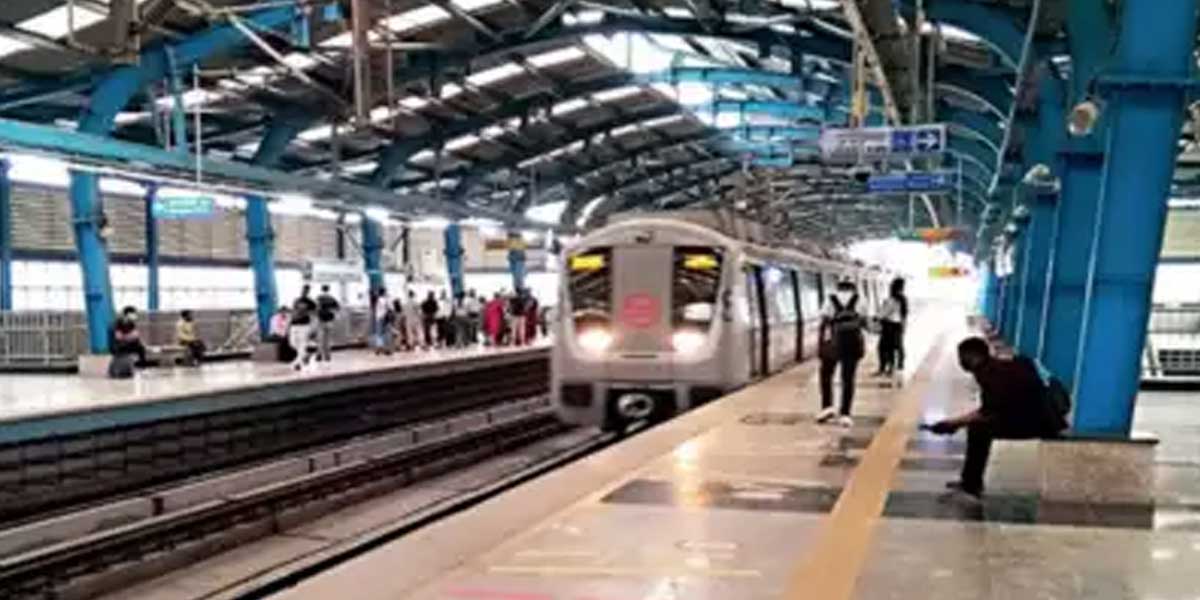
35,000 mn for RRTS, no funds marked for Delhi Metro
RAILWAYS & METRO RAIL

35,000 mn for RRTS, no funds marked for Delhi Metro

The first high-speed Regional Rapid Transit System (RRTS) route in the nation, which is being built between Delhi and Meerut, received a significant 35,960 million boost in the Union Budget. The amount, however, was less than the 44,720 million from the previous year.

The Delhi Metro Rail Corporation, which is building three priority lines as part of its Phase IV expansion, did not receive a specific allocation. For all national metro rail projects, 195,180 million dollars were allotted in the budget.

According to a source, "for the past few years, the Union finance ministry has been providing a budget for all metro train projects in India in entirety instead of to each individual venture." Grants to the DMRC were previously made independently. The source further stated that DMRC would request funding in accordance with the Union Housing and Urban Affairs Ministry's regulations, which serves as the nodal agency for all metro projects.

The allocation for metro projects consists of 13,240 million in subordinate loan, 44,710 million in equity investment, and 137,230 million in pass-through aid.

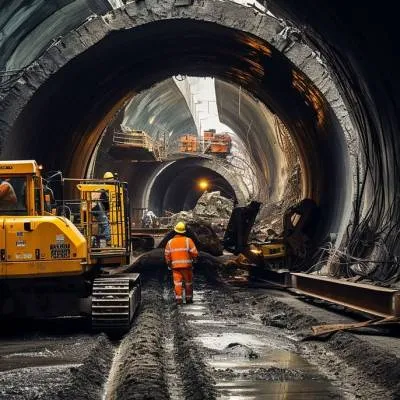
Rapid station construction is taking place on the RRTS, notably on the priority segment. "1,100 engineers and over 14,000 people are employed full-time. Currently, 35% of the underground segment is complete, and 65% of the elevated viaducts have been built "said a representative of the executing agency, the National Capital Region Transport Corporation.

Anand Vihar, Sarai Kale Khan, New Ashok Nagar, and Jangpura are the four stations in Delhi along the 82-km Delhi-Ghaziabad-Meerut corridor. Train testing is being done in preparation for operations on the priority section to begin this year. The forthcoming operation of this segment will provide new regional rail services in the NCR and offer passengers a cutting-edge, conditioned, quick, and dependable transportation service. By 2025, the entire route will be made public.

The first high-speed Regional Rapid Transit System (RRTS) route in the nation, which is being built between Delhi and Meerut, received a significant 35,960 million boost in the Union Budget. The amount, however, was less than the 44,720 million from the previous year. The Delhi Metro Rail Corporation, which is building three priority lines as part of its Phase IV expansion, did not receive a specific allocation. For all national metro rail projects, 195,180 million dollars were allotted in the budget. According to a source, for the past few years, the Union finance ministry has been providing a budget for all metro train projects in India in entirety instead of to each individual venture. Grants to the DMRC were previously made independently. The source further stated that DMRC would request funding in accordance with the Union Housing and Urban Affairs Ministry's regulations, which serves as the nodal agency for all metro projects. The allocation for metro projects consists of 13,240 million in subordinate loan, 44,710 million in equity investment, and 137,230 million in pass-through aid. Rapid station construction is taking place on the RRTS, notably on the priority segment. 1,100 engineers and over 14,000 people are employed full-time. Currently, 35% of the underground segment is complete, and 65% of the elevated viaducts have been built said a representative of the executing agency, the National Capital Region Transport Corporation. Anand Vihar, Sarai Kale Khan, New Ashok Nagar, and Jangpura are the four stations in Delhi along the 82-km Delhi-Ghaziabad-Meerut corridor. Train testing is being done in preparation for operations on the priority section to begin this year. The forthcoming operation of this segment will provide new regional rail services in the NCR and offer passengers a cutting-edge, conditioned, quick, and dependable transportation service. By 2025, the entire route will be made public.

Next Story
Infrastructure Urban

Implementation Status of Jal Jeevan Mission

Since August 2019 the Government has implemented Jal Jeevan Mission to provide assured potable water through household tap connections in rural India. At the start of the mission only 32.3 million (mn) rural households, representing 16.7 per cent, were reported to have tap water connections. States and union territories have reported that 125.8 mn additional rural households have since been provided with tap connections. As a result, of about 193.6 mn rural households roughly 158.2 mn, or 81.71 per cent, are reported to have tap water supply at home.\n\nThe State, district and village level st..

Next Story
Infrastructure Urban

Jal Jeevan Mission Reaches Eighty One Per Cent Rural Coverage

The Government reported substantial progress under the Jal Jeevan Mission, launched in August 2019 to provide tap water to every rural household. At launch only 32.3 million (mn) rural households had tap connections and states and Union territories reported provision of 125.8 mn additional households by March 2026. Consequently, out of about 193.6 mn rural households around 158.2 mn, or 81.71 per cent, are reported to have tap water at home. The Finance Minister announced extension of the mission until 2028 in the 2025-26 budget speech. The Swachh Bharat Mission Grameen, launched in October 20..

Next Story
Infrastructure Urban

Empowering Local Governance for Sustainable Rural Water Supply

The Ministry of Jal Shakti has aligned the Jal Jeevan Mission (JJM) with the 73rd Amendment to strengthen village level planning and community ownership of water supply. Gram Panchayats, village water and sanitation committees and Pani Samitis are to plan, implement, manage and maintain piped water systems, with gram sabha processes formalising handover and oversight. Implementation support agencies including non government organisations, community based organisations and self help groups have been empanelled to train local committees and promote women participation. Under JJM, the department ..

Advertisement

Subscribe to Our Newsletter

Get daily newsletters around different themes from Construction world.

STAY CONNECTED

Advertisement

Advertisement

Advertisement