ADB Urges Metro Rail to Explore Non-Fare Revenue Options
RAILWAYS & METRO RAIL

ADB Urges Metro Rail to Explore Non-Fare Revenue Options

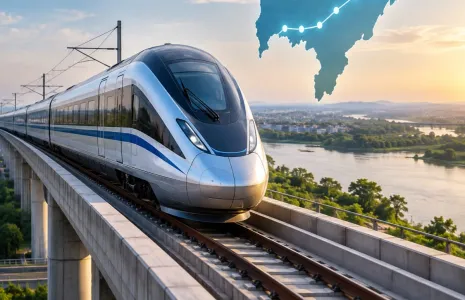
The Asian Development Bank (ADB) has found that metro rail companies in India can significantly enhance their financial sustainability by aggressively exploring non-ticket sale revenues through avenues such as advertising, leasing space, property development, and shopping at stations.

While the development of metro rail systems is crucial to meeting the mobility needs of rapidly growing urban populations in a sustainable and low-carbon manner, the cost of financing these projects is substantial. Governments often struggle to secure the necessary initial capital to create the infrastructure, and generating sufficient funds to cover operating and maintenance costs poses a significant challenge.

According to ADB, relying solely on fare income is insufficient, as ticket prices must be kept low to attract a high ridership. To achieve financial sustainability, metro rail companies must explore additional revenue streams beyond ticket sales, such as advertising, leasing space, property development, and shopping at stations.

In terms of advertising revenue, options like digital screens at stations, including jumbo-sized LCD or LED panels, should be considered. Another attractive option is 'train wrap' advertising, where the entire train is covered in advertisements. Additionally, 'pouring rights,' which allow beverage sales on all station premises, and 'station naming rights,' where a corporation or entity pays to name a station for a certain period, can generate substantial income.

Transit stations could also serve as ideal venues for hosting corporate events, conferences, festivals, and exhibitions. Furthermore, property development at stations could yield significant cash flows if properly planned. This would involve developing property above and adjacent to stations, as well as at maintenance depots. Acquiring sites at prices before the construction of the metro project could also be advantageous.

"Join industry leaders at RAHSTA Expo, India's premier platform for roads, highways and traffic infrastructure. Register now to explore innovations, network with experts and shape the future of mobility."

The Asian Development Bank (ADB) has found that metro rail companies in India can significantly enhance their financial sustainability by aggressively exploring non-ticket sale revenues through avenues such as advertising, leasing space, property development, and shopping at stations.While the development of metro rail systems is crucial to meeting the mobility needs of rapidly growing urban populations in a sustainable and low-carbon manner, the cost of financing these projects is substantial. Governments often struggle to secure the necessary initial capital to create the infrastructure, and generating sufficient funds to cover operating and maintenance costs poses a significant challenge.According to ADB, relying solely on fare income is insufficient, as ticket prices must be kept low to attract a high ridership. To achieve financial sustainability, metro rail companies must explore additional revenue streams beyond ticket sales, such as advertising, leasing space, property development, and shopping at stations.In terms of advertising revenue, options like digital screens at stations, including jumbo-sized LCD or LED panels, should be considered. Another attractive option is 'train wrap' advertising, where the entire train is covered in advertisements. Additionally, 'pouring rights,' which allow beverage sales on all station premises, and 'station naming rights,' where a corporation or entity pays to name a station for a certain period, can generate substantial income.Transit stations could also serve as ideal venues for hosting corporate events, conferences, festivals, and exhibitions. Furthermore, property development at stations could yield significant cash flows if properly planned. This would involve developing property above and adjacent to stations, as well as at maintenance depots. Acquiring sites at prices before the construction of the metro project could also be advantageous.

Next Story
Infrastructure Energy

Centre Prioritising Energy Security With Coal Gasification

Union minister for Coal and Mines G Kishan Reddy said the Centre is prioritising energy security through a strategic shift to coal gasification and has announced incentives totalling Rs 460 billion (bn) to support the effort. He said more than 35 companies will start coal gasification activities in India within two months and that the government is encouraging firms that bring technology to close the domestic technology gap. The minister described the initiative as aimed at reducing import dependence and developing indigenous capacity. India has the fifth-largest coal reserve in the world, and..

Next Story
Infrastructure Urban

BHEL and Coal India Invest Rs 250 bn in Odisha Gasification

Bharat Heavy Electricals (BHEL) and Coal India (CIL) are jointly investing Rs 250 billion in a coal gasification project in Odisha, with the Prime Minister laying the foundation stone in Jharsuguda. Union Coal and Mines Minister G Kishan Reddy described the initiative as a transformative shift in coal utilisation that will open industrial avenues for the state. The project moves coal beyond conventional power generation to industrial feedstocks. Coal gasification will convert coal into synthesis gas, a versatile feedstock for chemicals, fertilisers and synthetic fuels, and the technology is ex..

Next Story
Infrastructure Energy

BCCL Hands Over Dugdha Coal Washery To JSW Steel

Bharat Coking Coal has handed over the Dugdha Coal Washery to JSW Steel, marking the first coal washery asset monetisation under the Ministry of Coal's asset monetisation programme. The handover took place in the presence of senior officials from Bharat Coking Coal Ltd, JSW Steel and JSW Energy. The washery has a capacity of two million tonnes per annum (mn t per annum), and its transfer is intended to introduce private sector practices into coal beneficiation operations. The monetisation is aimed at modernising coal sector assets, improving operational efficiency and enhancing resource utilis..

Advertisement

Subscribe to Our Newsletter

Get daily newsletters around different themes from Construction world.

STAY CONNECTED

Advertisement

Advertisement

Advertisement