



India, Qatar Set Target to Double Trade by 2030
ECONOMY & POLICY

India, Qatar Set Target to Double Trade by 2030

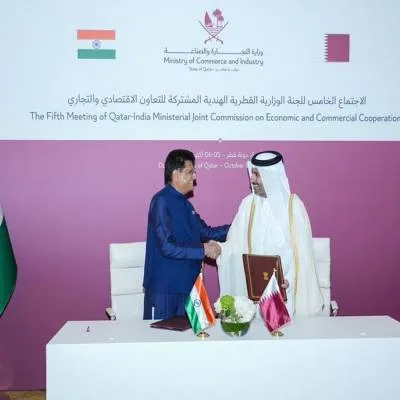
Union Minister for Commerce and Industry Piyush Goyal paid an official visit to Doha, Qatar, to co-chair the India–Qatar Joint Commission on Economic and Commercial Cooperation with H.E. Sheikh Faisal bin Thani bin Faisal Al Thani, Minister of Commerce and Industry of Qatar.

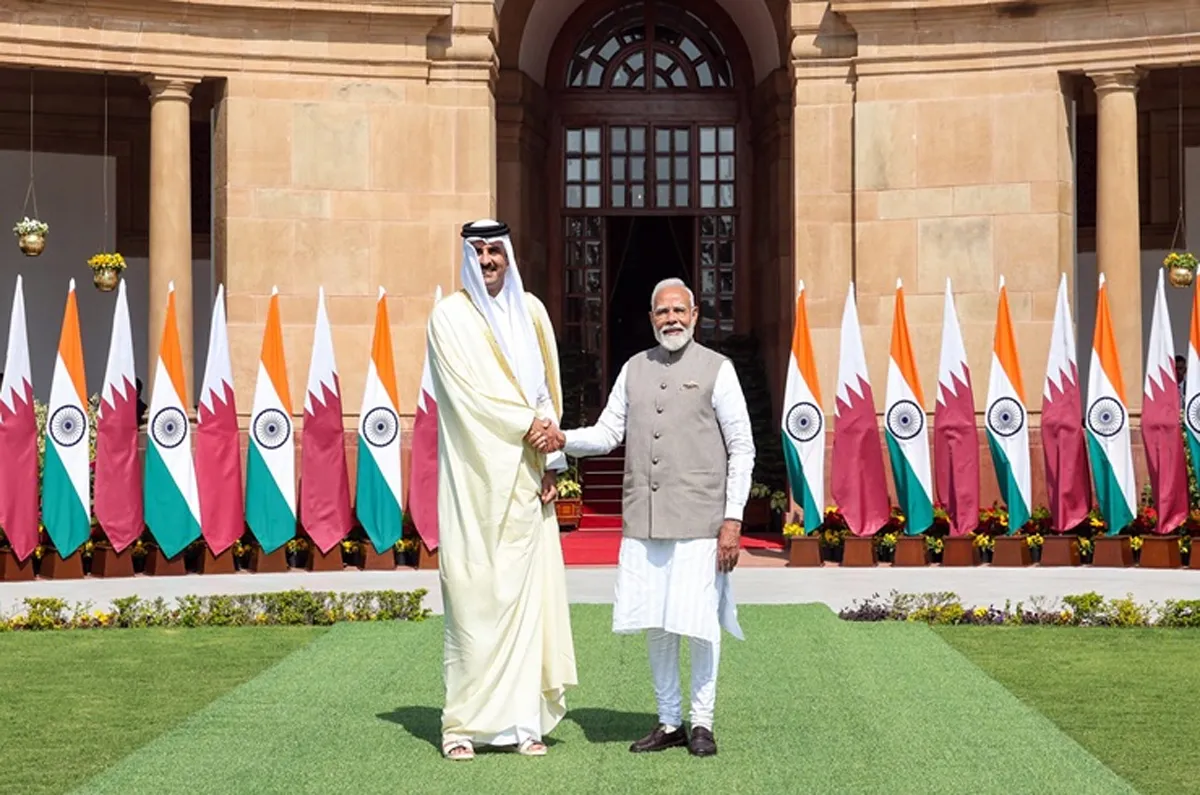
This marked the first meeting of the upgraded Joint Commission following the decision taken during the Amir of Qatar’s visit to India in February 2025 to elevate the earlier Joint Working Group on Trade and Commerce. The visit underscored both nations’ commitment to strengthening economic engagement and expanding collaboration across multiple sectors.

During the Commission meeting, the Ministers reviewed overall trade valued at more than USD 14 billion in 2024–25 and identified measures to enhance and diversify bilateral trade in goods and services. Both sides agreed on a shared goal to double trade by 2030, exploring new opportunities in energy, infrastructure, manufacturing, finance, technology, and green growth.

They also agreed to expedite finalisation of the Terms of Reference (ToR) to commence formal negotiations on the India–Qatar Comprehensive Economic Partnership Agreement (CEPA). The Ministers took note of Qatar’s earlier announcement to invest USD 10 billion in India during the State Visit of His Highness the Amir and reaffirmed a mutual commitment to unlocking new avenues for investment and growth.

The discussions placed strong emphasis on cooperation in priority sectors including the digital economy, healthcare, agriculture, tourism, culture, and environment.

On the sidelines of the visit, Goyal held a series of bilateral meetings with senior Qatari officials and business leaders to explore collaboration in food security, trade finance, project partnerships, and potential investments by Qatari entities in India’s infrastructure and industrial sectors.

The Minister also addressed the first meeting of the India–Qatar Joint Business Council (JBC), which included senior representatives from FICCI, CII, ASSOCHAM, and the Qatar Chamber. He later engaged with members of the Qatari Businessmen Association (QBA), highlighting India’s position as one of the world’s fastest-growing major economies and an emerging hub for innovation, manufacturing, and technology under the Viksit Bharat@2047 vision.

As a significant milestone in digital cooperation, Goyal launched Unified Payments Interface (UPI) services in Qatar, enabling seamless digital transactions for both the Indian diaspora and local consumers.

He also interacted with members of the Indian Business and Professionals Council (IBPC), the Doha Chapter of the Institute of Chartered Accountants of India (ICAI), and the Indian community in Qatar, acknowledging their role as a bridge for strengthening bilateral economic relations.

The visit concluded with both countries reaffirming their shared vision for a forward-looking, diversified, and resilient economic partnership built on mutual trust, energy cooperation, technological innovation, and strong people-to-people ties.

"Join industry leaders at RAHSTA Expo, India's premier platform for roads, highways and traffic infrastructure. Register now to explore innovations, network with experts and shape the future of mobility."

Union Minister for Commerce and Industry Piyush Goyal paid an official visit to Doha, Qatar, to co-chair the India–Qatar Joint Commission on Economic and Commercial Cooperation with H.E. Sheikh Faisal bin Thani bin Faisal Al Thani, Minister of Commerce and Industry of Qatar. This marked the first meeting of the upgraded Joint Commission following the decision taken during the Amir of Qatar’s visit to India in February 2025 to elevate the earlier Joint Working Group on Trade and Commerce. The visit underscored both nations’ commitment to strengthening economic engagement and expanding collaboration across multiple sectors. During the Commission meeting, the Ministers reviewed overall trade valued at more than USD 14 billion in 2024–25 and identified measures to enhance and diversify bilateral trade in goods and services. Both sides agreed on a shared goal to double trade by 2030, exploring new opportunities in energy, infrastructure, manufacturing, finance, technology, and green growth. They also agreed to expedite finalisation of the Terms of Reference (ToR) to commence formal negotiations on the India–Qatar Comprehensive Economic Partnership Agreement (CEPA). The Ministers took note of Qatar’s earlier announcement to invest USD 10 billion in India during the State Visit of His Highness the Amir and reaffirmed a mutual commitment to unlocking new avenues for investment and growth. The discussions placed strong emphasis on cooperation in priority sectors including the digital economy, healthcare, agriculture, tourism, culture, and environment. On the sidelines of the visit, Goyal held a series of bilateral meetings with senior Qatari officials and business leaders to explore collaboration in food security, trade finance, project partnerships, and potential investments by Qatari entities in India’s infrastructure and industrial sectors. The Minister also addressed the first meeting of the India–Qatar Joint Business Council (JBC), which included senior representatives from FICCI, CII, ASSOCHAM, and the Qatar Chamber. He later engaged with members of the Qatari Businessmen Association (QBA), highlighting India’s position as one of the world’s fastest-growing major economies and an emerging hub for innovation, manufacturing, and technology under the Viksit Bharat@2047 vision. As a significant milestone in digital cooperation, Goyal launched Unified Payments Interface (UPI) services in Qatar, enabling seamless digital transactions for both the Indian diaspora and local consumers. He also interacted with members of the Indian Business and Professionals Council (IBPC), the Doha Chapter of the Institute of Chartered Accountants of India (ICAI), and the Indian community in Qatar, acknowledging their role as a bridge for strengthening bilateral economic relations. The visit concluded with both countries reaffirming their shared vision for a forward-looking, diversified, and resilient economic partnership built on mutual trust, energy cooperation, technological innovation, and strong people-to-people ties.

Next Story
Real Estate

Pecan Realty Completes Rs 1.5 Billion Transactions

Pecan Realty has recently completed four institutional transactions worth over Rs 1.5 billion over the past two years, strengthening its position as an execution-led real estate platform. The deals include resolution-led acquisitions, structured finance transactions and capital partnerships across its development portfolio.The transactions covered acquisitions through the National Company Law Tribunal process and helped provide repayment or exits to both private and public sector lenders. The company said the deals demonstrate its ability to resolve complex project situations, work with instit..

Next Story
Real Estate

SNN Estates Expands North Bengaluru Housing Project

SNN Estates has announced an expansion of its SNN Estates Felicity residential project in North Bengaluru following strong buyer demand, with 75 per cent of the first-phase inventory sold within three days of launch.The developer will add 76 apartments in the new phase, taking the project's estimated revenue potential to around Rs 1,000 crore upon completion of Phase 2.Spread across 6.5 acres in Rachenahalli, near Manyata Tech Park, the project comprises 604 apartments in 1.5, 2, 2.5, 3 and 4 BHK configurations. The development includes a 50,000-sq-ft clubhouse with amenities such as sports co..

Next Story
Infrastructure Urban

SCG Drives ASEAN Industrial Transformation Strategy

SCG is strengthening its focus on ASEAN as a key growth region by advancing industrial transformation, enhancing competitiveness and building resilient regional value chains. Thammasak Sethaudom, President and Chief Executive Officer, SCG, highlighted the need for industries to continuously develop capabilities, strengthen resilience and deepen regional cooperation to achieve sustainable long-term growth.SCG views ASEAN as an important growth engine alongside China, supported by favourable demographics, trade connectivity and investment flows. With ASEAN’s GDP projected to grow by around 4.7..

Advertisement

Subscribe to Our Newsletter

Get daily newsletters around different themes from Construction world.

STAY CONNECTED

Advertisement

Advertisement

Advertisement














