Alstom Automates Bengaluru Metro's 7.5 km Pink Line Section
RAILWAYS & METRO RAIL

Alstom Automates Bengaluru Metro's 7.5 km Pink Line Section

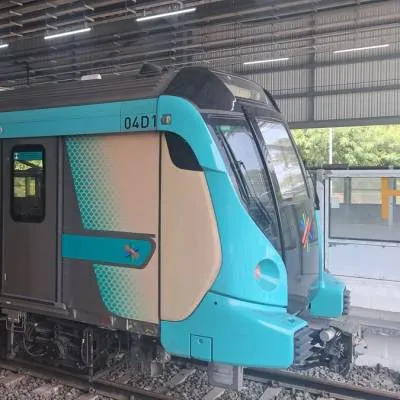
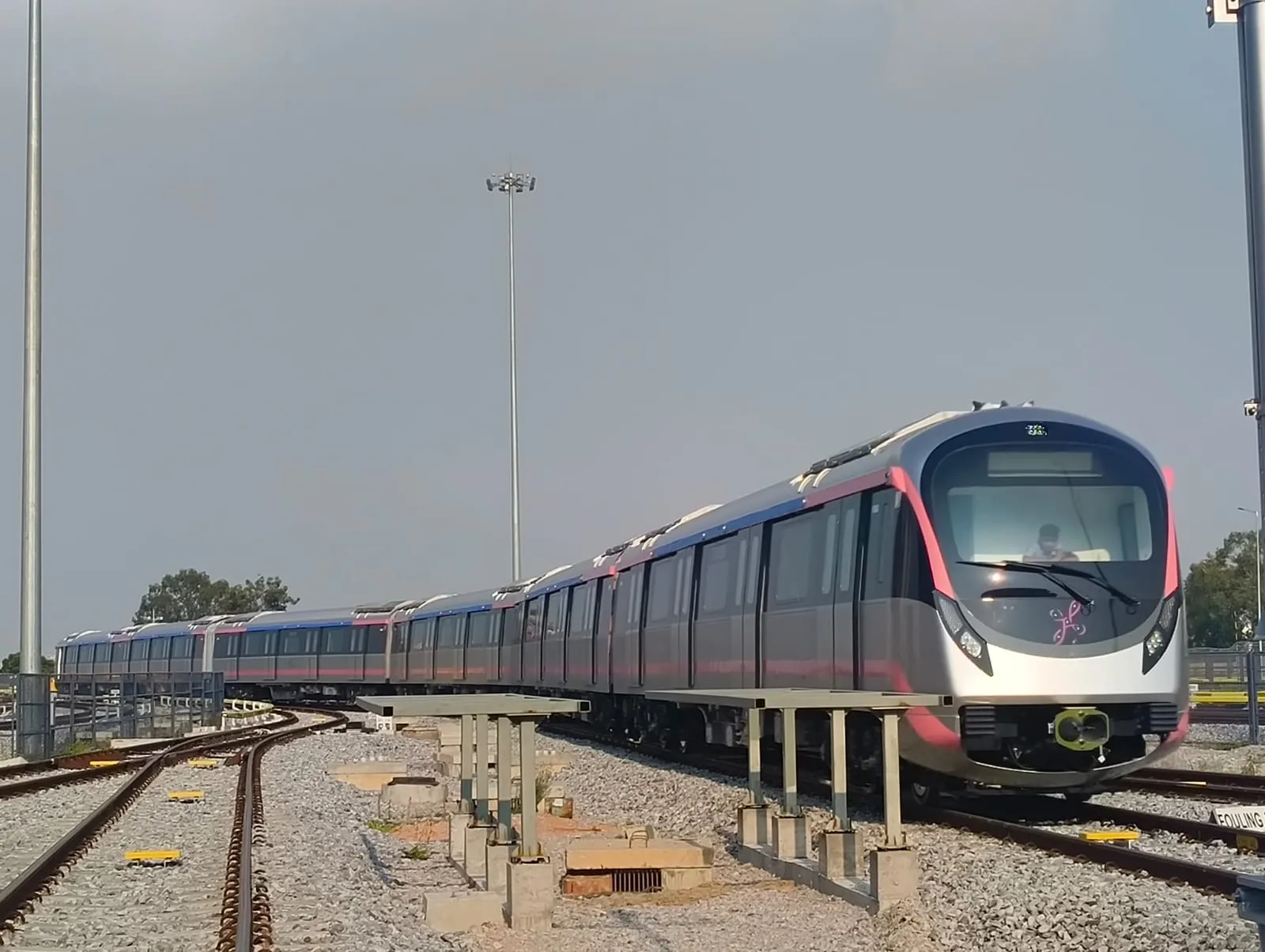
Alstom has announced the commencement of passenger services on the 7.5 km elevated priority section of Bengaluru Metro's Pink Line Reach 6, equipped with its communications-based train control (CBTC) signalling technology. The section connects key residential, educational and healthcare hubs across South Bengaluru, strengthening the city's urban transport network.

The priority section operates under Grade of Automation 2 (GoA2), enabling automatic train operation (ATO) from the first day of revenue service, a first for an Indian metro project. Under this system, train acceleration and braking are automated, while the driver remains responsible for essential operational functions.

The project also includes the fully commissioned Kothanur depot, equipped with automatic train protection (ATP), and an integrated test track featuring ATO capabilities. These systems are designed to support safe, reliable and high-frequency metro operations.

The six stations covered under the elevated section are Swagath Road, Jayadeva Hospital, JP Nagar 4th Phase, Indian Institute of Management, Hulimavu and Gottigere. Jayadeva Hospital station provides an interchange with the Yellow Line, improving connectivity across South Bengaluru.

Alstom's CBTC signalling system enables continuous communication between trains and trackside equipment, supporting precise train positioning and operations for six equipped trainsets. Train movements are monitored through the Urbalis Vision platform at the Operations Control Centre in Baiyappanahalli.

The company has also deployed its HealthHub predictive maintenance solution, which provides real-time monitoring of signalling assets to minimise downtime and optimise lifecycle maintenance costs.

Olivier Loison, Managing Director, Alstom India, said, "We are proud to see our CBTC technology power Bengaluru Metro's Pink Line. This milestone reflects our team's commitment to deliver world-class, reliable signalling solutions to help the city transition to a sustainable and connected future."

The Pink Line project marks Alstom's third contract with Bengaluru Metro Rail Corporation Limited (BMRCL). The company previously supplied signalling solutions for Phase I's Purple and Green Lines between 2009 and 2017 and is involved in traction and power supply electrification works for Phase II.

With more than 30 years of experience in CBTC technology, Alstom's signalling systems have been selected for 190 metro lines globally, including 18 lines equipped or under development across India.

The project further strengthens Alstom's role in advancing automated metro operations and supporting the expansion of sustainable urban mobility infrastructure in India.

Alstom has announced the commencement of passenger services on the 7.5 km elevated priority section of Bengaluru Metro's Pink Line Reach 6, equipped with its communications-based train control (CBTC) signalling technology. The section connects key residential, educational and healthcare hubs across South Bengaluru, strengthening the city's urban transport network.The priority section operates under Grade of Automation 2 (GoA2), enabling automatic train operation (ATO) from the first day of revenue service, a first for an Indian metro project. Under this system, train acceleration and braking are automated, while the driver remains responsible for essential operational functions.The project also includes the fully commissioned Kothanur depot, equipped with automatic train protection (ATP), and an integrated test track featuring ATO capabilities. These systems are designed to support safe, reliable and high-frequency metro operations.The six stations covered under the elevated section are Swagath Road, Jayadeva Hospital, JP Nagar 4th Phase, Indian Institute of Management, Hulimavu and Gottigere. Jayadeva Hospital station provides an interchange with the Yellow Line, improving connectivity across South Bengaluru.Alstom's CBTC signalling system enables continuous communication between trains and trackside equipment, supporting precise train positioning and operations for six equipped trainsets. Train movements are monitored through the Urbalis Vision platform at the Operations Control Centre in Baiyappanahalli.The company has also deployed its HealthHub predictive maintenance solution, which provides real-time monitoring of signalling assets to minimise downtime and optimise lifecycle maintenance costs.Olivier Loison, Managing Director, Alstom India, said, We are proud to see our CBTC technology power Bengaluru Metro's Pink Line. This milestone reflects our team's commitment to deliver world-class, reliable signalling solutions to help the city transition to a sustainable and connected future.The Pink Line project marks Alstom's third contract with Bengaluru Metro Rail Corporation Limited (BMRCL). The company previously supplied signalling solutions for Phase I's Purple and Green Lines between 2009 and 2017 and is involved in traction and power supply electrification works for Phase II.With more than 30 years of experience in CBTC technology, Alstom's signalling systems have been selected for 190 metro lines globally, including 18 lines equipped or under development across India.The project further strengthens Alstom's role in advancing automated metro operations and supporting the expansion of sustainable urban mobility infrastructure in India.

Related Stories

Gold Stories

Next Story
Infrastructure Transport

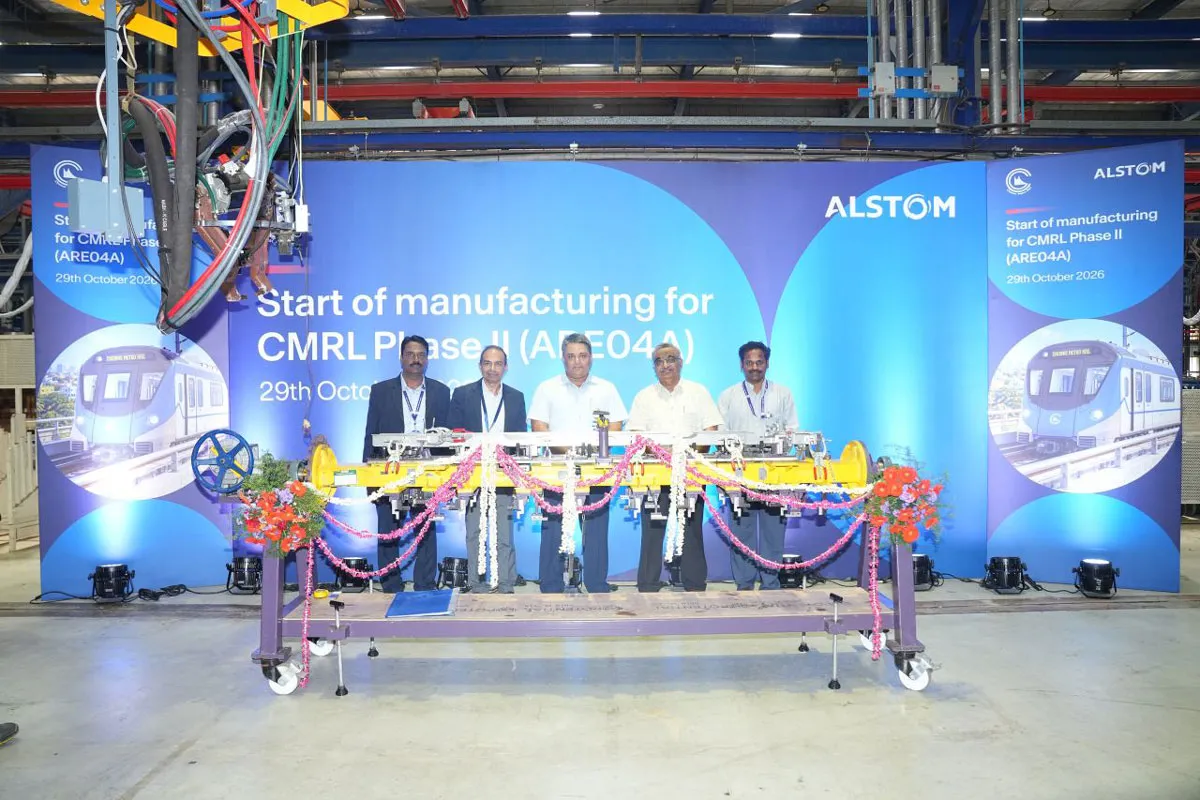
Alstom Begins Production of 96 Driverless Chennai Metro Cars

Alstom has commenced manufacturing 96 Metropolis driverless metro cars for Chennai Metro Phase II at its Sri City facility in Andhra Pradesh. The production forms part of a €135 million contract awarded by Chennai Metro Rail Limited (CMRL) in 2025, covering the design and manufacture of 32 three-car trainsets and 15 years of comprehensive maintenance following the warranty period.Chennai Metro Phase II spans approximately 119 km across three corridors and associated inter-corridor sections, comprising more than 76 km of elevated tracks and 43 km of underground routes.Under the Make in India ..

Next Story
Products

Hafele launches Alustro flexible shelving system

Häfele India has introduced the Alustro Flexible Shelving System, a modular storage solution designed to maximise space and offer flexibility in residential interiors. The system can be configured for applications such as room dividers, walk-in wardrobes, kitchen units, wall-mounted shelves and vanity mirrors.Alustro allows users to combine aluminium, wooden and glass shelves within a single structure. It supports shelf heights of up to 3,000 mm and section widths of up to 1,164 mm. Additional options include coat stand profiles with protective gaskets for wardrobes and front- or rear-facing ..
Next Story
Infrastructure Urban

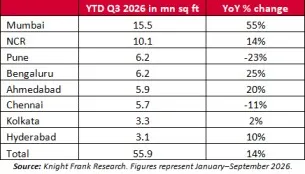
India's warehousing leasing rises 12 per cent to 19.1 million sq ft in Q3

India's warehousing market recorded leasing of 19.1 million sq ft across eight primary markets in Q3 2026, an increase of 12 per cent year-on-year, according to Knight Frank India's India Warehousing Market Report – Q3 2026. Manufacturing and third-party logistics (3PL) operators remained the key demand drivers, while occupiers continued to favour Grade A facilities.Manufacturing and 3PL together accounted for 76 per cent of leasing demand during the quarter. Manufacturing leasing, excluding fast-moving consumer goods (FMCG) and consumer durables (FMCD), increased 11 per cent year-on-year, s..

Advertisement

Subscribe to Our Newsletter

Get daily newsletters around different themes from Construction world.

STAY CONNECTED

Advertisement

SPECIAL OFFER
QR Code