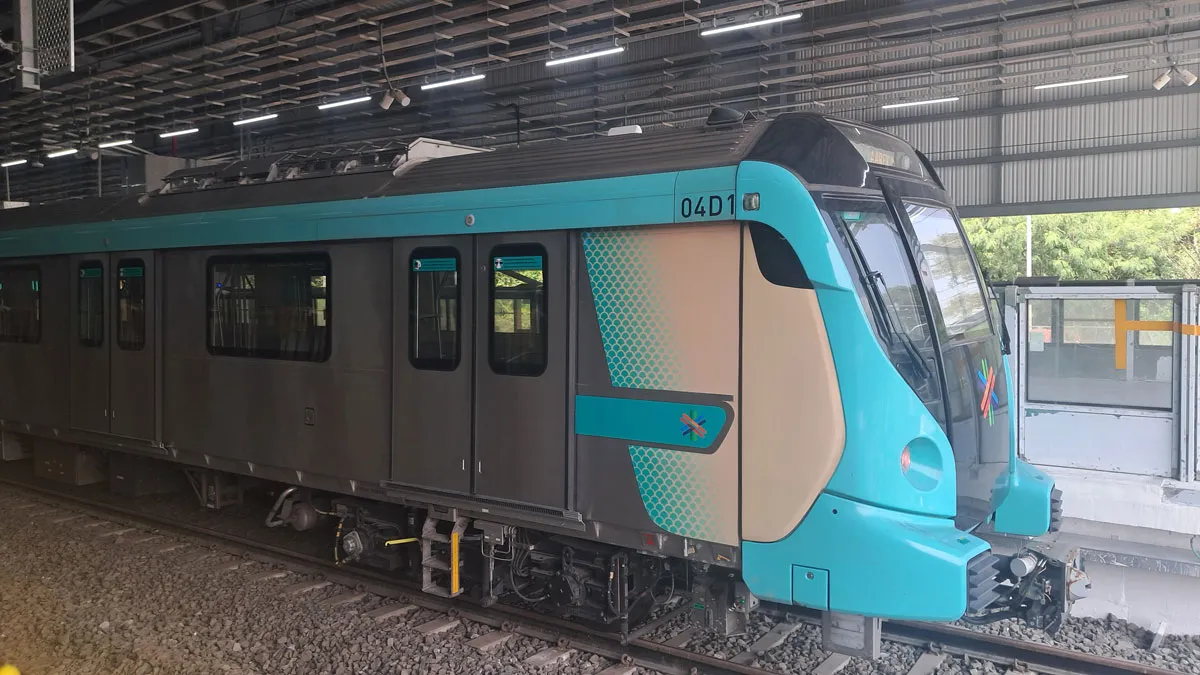
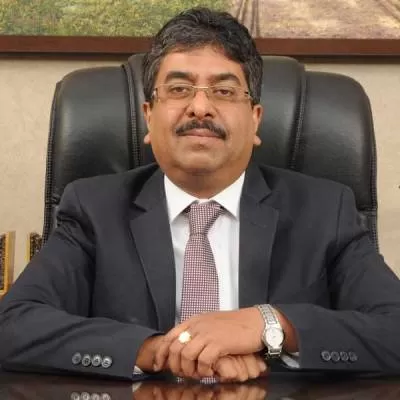
To understand the Mumbai Metro Aqua Line is to look beyond tracks and trains and into the fragile, crowded and layered city beneath Mumbai’s streets. Running 33.5 km entirely underground, Line 3 is not merely a transport corridor – it is an unprecedented exercise in building infrastructure through reclaimed land, heritage precincts, century-old utilities and some of the densest neighbourhoods in the country. As the first phase enters commercial operation, the Aqua Line stands at a critical moment: no longer a construction challenge alone but a test of how Indian cities execute, integrate and govern complex underground systems at scale.A metro unlike Mumbai has built beforeUnlike Mumbai’s earlier elevated metro corridors, the Aqua Line demanded an entirely different construction and institutional approach. Conceived as a north-south backbone connecting Aarey to South Mumbai’s historic core, the corridor traverses areas where surface space is scarce, land values are prohibitive and underground space is already congested with utilities laid over decades.According to Subodh Kumar Gupta, Director (Projects), Mumbai Metro Rail Corporation Ltd (MMRCL), the project’s challenge lay not in acquiring long surface corridors but in surgically inserting stations, shafts, and access points into an already built-up city. “Unlike greenfield metro projects, land acquisition for the Aqua Line had to be undertaken within live residential, commercial and heritage zones,” he notes, adding that stations were often planned adjacent to or beneath buildings over a century old. A project-specific rehabilitation and resettlement framework was therefore essential to manage social sensitivities and minimise litigation-related delays.Utility diversion proved even more complex. “South Mumbai’s underground space contains layers of utilities laid over decades – often without accurate as-built records – serving millions of residents and critical institutions,” adds Gupta. In many locations, stations were constructed directly beneath major water mains, sewer trunks and stormwater drains, requiring in-situ protection rather than relocation and demanding constant coordination with municipal agencies.Engineering through a living cityExecuting tunnelling beneath such conditions required meticulous geological planning and technological precision. ITD Cementation India, a key EPC player on the project, was responsible for some of the most challenging underground packages. A K Rai, Executive Vice President & Division Head, points out that Mumbai’s complex geology – marked by reclaimed land, mixed soil conditions and hard basalt – made equipment selection critical. “After detailed soil analysis, selection of TBM was most critical as the tunnels were to be executed in a city that had undergone various land reclamations and tunnels had to pass beneath century-old buildings,” he says. For Package UGC-04, earth pressure balancing shield TBMs were deployed to minimise settlement risks.Precautionary measures went far beyond standard practice. “Building condition surveys were conducted to assess the actual condition of existing buildings within the influence zone,” Rai explains, adding that building protection plans, including temporary evacuation during TBM passage, were implemented where necessary.Logistics posed a parallel challenge. TBMs had to be dismantled and transported through congested city streets during restricted night hours, while precast tunnel segments travelled 10-15 km from yards to shafts with almost no space for onsite storage. “Continuous erection of segments was crucial to avoid idling of the TBM,” he notes, highlighting how night-only transport permissions required meticulous sequencing.Innovation under constraintSpace constraints around station construction pushed contractors to adopt methods rarely used at scale in India. At several locations, excavation lines lay barely 1.5 m from old, partially dilapidated buildings. To address this, ITD Cementation adopted a pioneering shoring technique. “We have adopted a very innovative method for shoring: rock socketed secant piles, this being the first such commercial use in India,” Rai shares. Combined with struts, walers, soil anchors and consolidation grouting, the approach ensured watertight retaining walls with minimal deformation.Traffic management was equally critical. Temporary concrete deck slabs were constructed at highly congested locations such as Dadar’s Gokhale Road and Shitladevi Temple Road, allowing traffic to move above while excavation progressed below. According to him, this approach not only improved safety but helped build local acceptance.Noise mitigation also required innovation. “Major noise pollution during piling operation is due to the cleaning of piling rig auger by conventional method. We eliminated this by using an inhouse developed mechanised cleaning system,” explains Rai, significantly reducing disturbance during construction.Systems, technology and integrationBeyond civil construction, the Aqua Line’s scale lies in its systems integration. As per the official release by Alstom in October 2024, the corridor is equipped with fully automated train operation, CBTC-based signalling, platform screen doors, predictive maintenance systems and automated depot operations.Commenting at the inauguration of commercial operations of the first phase of Mumbai Metro’s Aqua Line in October 2024, Olivier Loison, Managing Director, Alstom India, said, “The Alstom-built, full-stack mobility solutions for the Mumbai Aqua Line are packed with some of the most sophisticated engineering and technology solutions for Mumbai’s first underground metro. With our 100-per-cent, made-in-India driverless trains, we are demonstrating that innovation and efficiency can go hand in hand.”The 33.5-km corridor will eventually deploy 31, eight-car Metropolis trainsets, each capable of carrying around 3,000 passengers per trip, with systems designed to support driverless operations at the highest grade of automation.A benchmark below groundWhat ultimately distinguishes the Aqua Line is not just its engineering ambition but its institutional learning curve. From managing 2,800-plus project-affected persons to maintaining live utilities, heritage protection, traffic flow and worker safety, the project demanded coordination rarely attempted at this scale in Indian cities.As Mumbai prepares for full-scale operations, the Aqua Line sets a new reference point – not as a template to be copied wholesale but a benchmark for what is possible when engineering discipline, institutional capacity and urban sensitivity converge. For future underground corridors across India’s megacities, the lessons from beneath Mumbai’s surface may prove just as important as the trains now beginning to run through it.- KAVITA PARAB