BMRCL Boosts Namma Metro Frequency From November 1
RAILWAYS & METRO RAIL

BMRCL Boosts Namma Metro Frequency From November 1

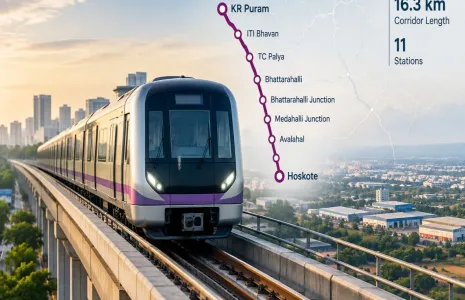
The Bangalore Metro Rail Corporation Limited (BMRCL) has announced an increase in train frequency on Namma Metro’s Yellow Line from 1 November 2025, in a move aimed at providing smoother, faster, and more reliable travel for daily commuters across the city.

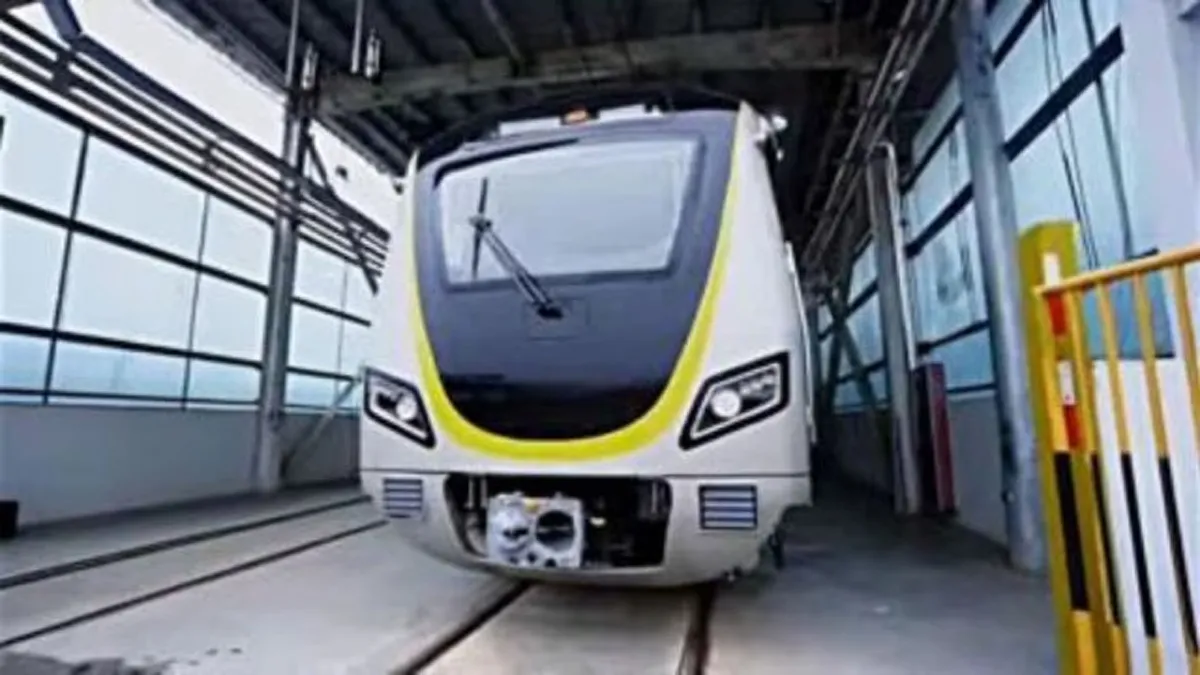
The schedule enhancement follows the introduction of a fifth metro train on the Yellow Line, which arrived at the Hebbagodi Depot on 30 September 2025. After completing mandatory testing and service trials, the train will now be inducted into commercial service to coincide with the 70th Karnataka Rajyotsava celebrations.

In a statement, BMRCL said: “On the occasion of the 70th Karnataka Rajyotsava celebrations, the Bangalore Metro Rail Corporation Limited is pleased to announce that the fifth metro train on the Yellow Line will be inducted into commercial service from 1 November 2025.”

With this addition, train frequency during peak hours will improve to every 15 minutes, compared to the current 19-minute interval, ensuring shorter waiting times and increased convenience for passengers. BMRCL confirmed that the first and last train timings from both terminals — R.V. Road and Bommasandra — will remain unchanged.

Earlier this month, Dr J. Ravishankar, Managing Director of BMRCL, along with directors and senior officials, inspected the new trainset and held meetings to expedite its commercial rollout.

The latest induction follows the introduction of the fourth trainset on the Yellow Line on 10 September 2025, which had reduced intervals from 25 minutes to 19 minutes. With the fifth train now operational, service frequency is set to reach its best level since the line’s launch.

BMRCL stated that the improved train frequency is part of its continued efforts to enhance urban mobility, reduce congestion, and provide efficient mass transit options for Bengaluru’s growing commuter base.

The Bangalore Metro Rail Corporation Limited (BMRCL) has announced an increase in train frequency on Namma Metro’s Yellow Line from 1 November 2025, in a move aimed at providing smoother, faster, and more reliable travel for daily commuters across the city. The schedule enhancement follows the introduction of a fifth metro train on the Yellow Line, which arrived at the Hebbagodi Depot on 30 September 2025. After completing mandatory testing and service trials, the train will now be inducted into commercial service to coincide with the 70th Karnataka Rajyotsava celebrations. In a statement, BMRCL said: “On the occasion of the 70th Karnataka Rajyotsava celebrations, the Bangalore Metro Rail Corporation Limited is pleased to announce that the fifth metro train on the Yellow Line will be inducted into commercial service from 1 November 2025.” With this addition, train frequency during peak hours will improve to every 15 minutes, compared to the current 19-minute interval, ensuring shorter waiting times and increased convenience for passengers. BMRCL confirmed that the first and last train timings from both terminals — R.V. Road and Bommasandra — will remain unchanged. Earlier this month, Dr J. Ravishankar, Managing Director of BMRCL, along with directors and senior officials, inspected the new trainset and held meetings to expedite its commercial rollout. The latest induction follows the introduction of the fourth trainset on the Yellow Line on 10 September 2025, which had reduced intervals from 25 minutes to 19 minutes. With the fifth train now operational, service frequency is set to reach its best level since the line’s launch. BMRCL stated that the improved train frequency is part of its continued efforts to enhance urban mobility, reduce congestion, and provide efficient mass transit options for Bengaluru’s growing commuter base.

Next Story
Infrastructure Urban

CM Inaugurates Rs 3.7 Billion Vilholi Water Treatment Plant in Nashik

Chief Minister Devendra Fadnavis inaugurated the Nashik Municipal Corporation’s 274 MLD Vilholi Water Treatment Plant and the upgraded Mukane water supply scheme, a Rs 3.7 billion project designed to provide a reliable and sustainable water supply to more than 55 lakh residents. The system will also cater to over 1 crore visitors expected during the 2027 Simhastha Kumbh Mela.Funded partly through Rs 2 billion Green Sustainable Bonds, the project strengthens Nashik’s long-term water security, ensures year-round availability, and enhances the city’s preparedness for peak tourist inflow. It..

Next Story
Infrastructure Urban

Indian Speciality Chemical Industry Poised for Strong Global Growth

The International Center for Biosaline Agriculture (ICBA), in partnership with Al Rostamani Group, has inaugurated three major facilities at its Dubai headquarters: a Training and Knowledge Transfer Building, a Plant Tissue Culture Laboratory, and an Integrated Agri-Aquaculture System. The launch took place in the presence of H.E. Dr. Amna bint Abdullah Al Dahak, Minister of Climate Change and Environment, marking a significant step forward in strengthening the UAE’s agricultural innovation ecosystem.Fully funded by Al Rostamani Group, the new facilities reinforce ICBA’s role as a leading ..

Next Story
Infrastructure Energy

Mooreast to Explore Up to 500 MW RE Projects in Timor-Leste

Mooreast Holdings, listed on the Singapore Exchange Catalist, announced that it will begin feasibility studies this month for the development of up to 500 megawatts (MW) of large-scale renewable energy (RE) projects in Timor-Leste.The studies follow a Letter of Intent (LOI) signed between Mooreast and the Secretario de Estado de Electricidade Agua e Saneamento (SEEAS), the secretariat for Electricity, Water and Sanitation under Timor-Leste’s Ministry of Public Works. Under the LOI, Mooreast will explore the development of 300–500 MW of floating renewable energy over the next five to ten ye..

Advertisement

Subscribe to Our Newsletter

Get daily newsletters around different themes from Construction world.

STAY CONNECTED

Advertisement

Advertisement

Advertisement