Final Cross-Passage Completed in East-West Metro's Subsidence Zone
RAILWAYS & METRO RAIL

Final Cross-Passage Completed in East-West Metro's Subsidence Zone

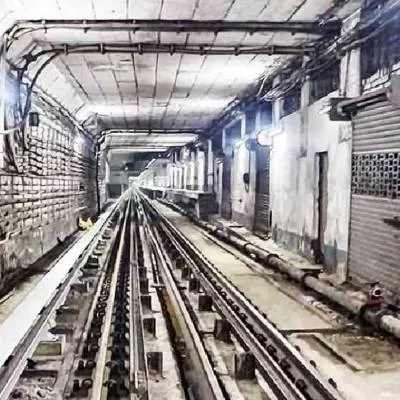
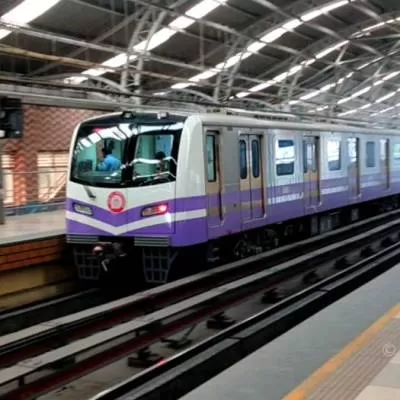
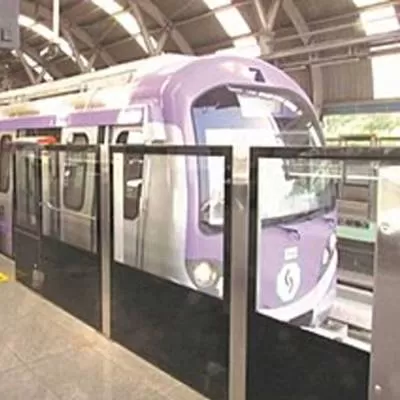
The final cross-passage in the East-West Metro's Esplanade-to-Sealdah subsidence zone has been successfully completed, paving the way to link the two disjointed sections of the Green Line. With the construction of cross-passages on this section now finished, the work on the Esplanade-Sealdah stretch is expected to wrap up soon. Following this, the two currently operational sections "one between Sector V and Sealdah and the other between Howrah Maidan and Esplanade" will be connected, allowing services on the entire 16.6km corridor to commence.

"We made sure there was no ground settlement and damage to the buildings in the vicinity," an engineer involved in the project stated. Contractors ITD-ITD Cementation and the Kolkata Metro Rail Corporation (KMRC) had to proceed cautiously, taking a month to complete the last of the cross-passages, 5B, in the cave-in zone due to the need for heightened alertness and vigilance.

On April 18, water seepage was detected at two spots during micro-tunnelling to build a cross-passage below Hind on Ganesh Chandra Avenue, prompting an immediate halt to construction. Expensive chemical and cement grouting were carried out over three days, and micro-tunnelling resumed on April 22. As a precaution, a high-rise at 1A, Subodh Mullick Square was evacuated for a week starting April 22.

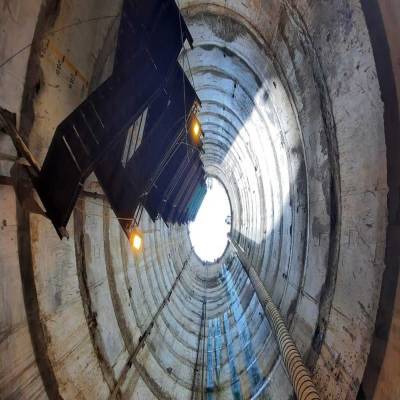
Cross-passages, small tunnels built at intervals of 250m on underground metro lines, allow passengers to cross from one main tunnel to another during emergencies, such as a fire. Although these smaller tunnels are crucial for safety in an underground metro corridor, KMRC had to abandon three of the eight originally planned cross-passages in the Esplanade-Sealdah section after the subsidence incident on October 14, 2022. The East-West Metro project between Esplanade and Sealdah has experienced three such incidents from 2019 to 2022.

Over the past month, alongside micro-tunnelling, the construction team also concretized small tunnel rings to create these smaller tunnels connecting the larger twin tunnels. The original site for cross-passage 5B under Nirmal Chunder Street proved to be as porous as three proposed sites beyond this area. After several months of grouting failed to stabilize the soil, the location was shifted to a more stable ground condition below the cinema. However, this new site also required extensive chemical and concrete grouting.

On April 16, hi-tech micro-tunnelling using the New Austrian Tunnel Method (NATM) commenced. "In less than four days, water seepage was detected at two spots and the work was stopped. A high-rise with a weak foundation was evacuated. From April 22, we worked slowly, lest there was subsidence. Thankfully, there was none," the engineer added.

The final cross-passage in the East-West Metro's Esplanade-to-Sealdah subsidence zone has been successfully completed, paving the way to link the two disjointed sections of the Green Line. With the construction of cross-passages on this section now finished, the work on the Esplanade-Sealdah stretch is expected to wrap up soon. Following this, the two currently operational sections one between Sector V and Sealdah and the other between Howrah Maidan and Esplanade will be connected, allowing services on the entire 16.6km corridor to commence. We made sure there was no ground settlement and damage to the buildings in the vicinity, an engineer involved in the project stated. Contractors ITD-ITD Cementation and the Kolkata Metro Rail Corporation (KMRC) had to proceed cautiously, taking a month to complete the last of the cross-passages, 5B, in the cave-in zone due to the need for heightened alertness and vigilance. On April 18, water seepage was detected at two spots during micro-tunnelling to build a cross-passage below Hind on Ganesh Chandra Avenue, prompting an immediate halt to construction. Expensive chemical and cement grouting were carried out over three days, and micro-tunnelling resumed on April 22. As a precaution, a high-rise at 1A, Subodh Mullick Square was evacuated for a week starting April 22. Cross-passages, small tunnels built at intervals of 250m on underground metro lines, allow passengers to cross from one main tunnel to another during emergencies, such as a fire. Although these smaller tunnels are crucial for safety in an underground metro corridor, KMRC had to abandon three of the eight originally planned cross-passages in the Esplanade-Sealdah section after the subsidence incident on October 14, 2022. The East-West Metro project between Esplanade and Sealdah has experienced three such incidents from 2019 to 2022. Over the past month, alongside micro-tunnelling, the construction team also concretized small tunnel rings to create these smaller tunnels connecting the larger twin tunnels. The original site for cross-passage 5B under Nirmal Chunder Street proved to be as porous as three proposed sites beyond this area. After several months of grouting failed to stabilize the soil, the location was shifted to a more stable ground condition below the cinema. However, this new site also required extensive chemical and concrete grouting. On April 16, hi-tech micro-tunnelling using the New Austrian Tunnel Method (NATM) commenced. In less than four days, water seepage was detected at two spots and the work was stopped. A high-rise with a weak foundation was evacuated. From April 22, we worked slowly, lest there was subsidence. Thankfully, there was none, the engineer added.

Next Story
Infrastructure Transport

MMRDA advances 250 m on Orange Gate–Marine Drive tunnel

The Mumbai Metropolitan Region Development Authority (MMRDA) has completed 250 m of underground tunnelling for the Orange Gate–Marine Drive Urban Road Tunnel using India’s largest slurry shield tunnel boring machine (TBM) deployed for an urban road project.The project involves twin tunnels extending over 7 km beneath critical transport corridors, including Central Railway, Western Railway and Metro Line 3. The work requires high-precision engineering to navigate densely developed urban infrastructure.Once completed, the tunnel is expected to reduce travel time between Orange Gate and Marin..

Next Story
Infrastructure Urban

Hindustan Zinc Pays Rs 188.46 Billion in FY26

Hindustan Zinc contributed Rs 188.46 billion to the public exchequer in FY 2025-26, according to its 9th Tax Transparency Report. The contribution, equivalent to 46 per cent of the company’s revenue, included direct and indirect taxes, government royalties, dividends to the Government of India, withholding taxes and other statutory levies.The company’s five-year cumulative contribution to the exchequer stood at Rs 915.72 billion. In FY26, Hindustan Zinc reported revenue of Rs 408.44 billion, EBITDA of Rs 221.62 billion and profit after tax of Rs 138.32 billion. It also achieved its highest..

Next Story
Infrastructure Urban

World of Concrete India 2026 Opens in Mumbai

Informa Markets in India will host the 12th edition of World of Concrete India 2026 from 3–5 June 2026 at the Bombay Exhibition Centre, Mumbai. The specialised B2B exhibition will bring together manufacturers, suppliers, contractors, developers, architects, consultants, infrastructure companies, project leaders and government stakeholders.The event is expected to feature over 350 brands and more than 18,000 trade professionals. It will cover concrete and cement, dry mortar, precast technologies, formwork, construction chemicals, industrial and commercial flooring, scaffolding, safety solutio..

Advertisement

Subscribe to Our Newsletter

Get daily newsletters around different themes from Construction world.

STAY CONNECTED

Advertisement

Advertisement

Advertisement

-->