Haryana Weighs Underground Option for Gurgaon Metro Phase 2
RAILWAYS & METRO RAIL

Haryana Weighs Underground Option for Gurgaon Metro Phase 2

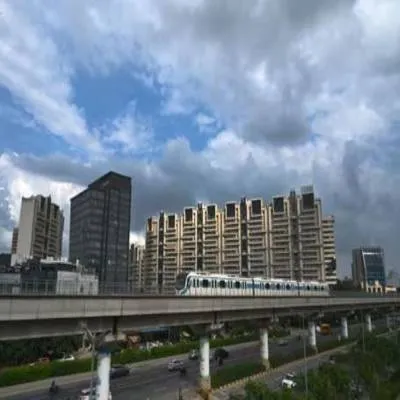
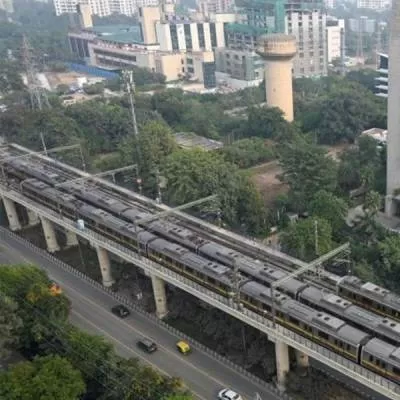
The Haryana government is assessing whether to modify the Sector 9–Cyber City stretch of Gurgaon Metro Phase 2 from an elevated alignment to an underground one — a move that could nearly double project costs and delay completion by up to three years.

According to a report prepared by the Gurgaon Metro Rail Limited (GMRL), which is implementing the project, the current cost of building an elevated metro is estimated at Rs 3.3–3.5 billion per kilometre, whereas constructing it underground would raise costs to Rs 6–6.5 billion per kilometre. In addition to the higher expense, the redesign would also lead to delays owing to fresh approvals, new tenders, and revised engineering plans.

GMRL is set to submit its findings to the state government, which will make the final decision on the alignment.

The idea to shift the line underground was proposed by Haryana Minister Rao Narbir Singh, who discussed it with Union Minister Manohar Lal Khattar, citing that the area is densely populated with narrow roads. He noted that underground metros are a global standard in busy urban areas and would help preserve space for future flyovers and surface infrastructure. However, he also acknowledged the need for a careful cost–benefit analysis before committing to the change.

Urban transport expert Professor Pradip Kumar Sarkar cautioned that revising the design now would require restarting land acquisition, clearances, and planning processes, delaying the project by at least one to two years.

Local sentiment is divided — while some residents favour the underground route to reduce traffic disruption during construction, others argue that further delays are unacceptable, as Gurgaon has already waited years for metro expansion to ease congestion.

The Gurgaon Metro Phase 2 project, once completed, will provide direct connectivity between Sector 9, Palam Vihar, Udyog Vihar, and Cyber City, significantly improving urban mobility in the region.

The Haryana government is assessing whether to modify the Sector 9–Cyber City stretch of Gurgaon Metro Phase 2 from an elevated alignment to an underground one — a move that could nearly double project costs and delay completion by up to three years. According to a report prepared by the Gurgaon Metro Rail Limited (GMRL), which is implementing the project, the current cost of building an elevated metro is estimated at Rs 3.3–3.5 billion per kilometre, whereas constructing it underground would raise costs to Rs 6–6.5 billion per kilometre. In addition to the higher expense, the redesign would also lead to delays owing to fresh approvals, new tenders, and revised engineering plans. GMRL is set to submit its findings to the state government, which will make the final decision on the alignment. The idea to shift the line underground was proposed by Haryana Minister Rao Narbir Singh, who discussed it with Union Minister Manohar Lal Khattar, citing that the area is densely populated with narrow roads. He noted that underground metros are a global standard in busy urban areas and would help preserve space for future flyovers and surface infrastructure. However, he also acknowledged the need for a careful cost–benefit analysis before committing to the change. Urban transport expert Professor Pradip Kumar Sarkar cautioned that revising the design now would require restarting land acquisition, clearances, and planning processes, delaying the project by at least one to two years. Local sentiment is divided — while some residents favour the underground route to reduce traffic disruption during construction, others argue that further delays are unacceptable, as Gurgaon has already waited years for metro expansion to ease congestion. The Gurgaon Metro Phase 2 project, once completed, will provide direct connectivity between Sector 9, Palam Vihar, Udyog Vihar, and Cyber City, significantly improving urban mobility in the region.

Next Story
Infrastructure Energy

Coal Ministry Simplifies Disposal of Washery Rejects

The Ministry of Coal has recently simplified the process for disposal of coal washery rejects to enhance ease of doing business and ensure faster utilisation, while maintaining environmental safeguards. The move aligns with the government’s Atmanirbhar Bharat vision and ongoing reform agenda in the coal sector. Under the existing policy issued on 27 May 2021, washery rejects were disposed of through a three-tier priority system. The first priority allows their use for energy extraction, in line with Solid Waste Management Rules, 2016, applicable to waste with calorific value above 1,500 kca..

Next Story
Infrastructure Urban

India, Oman Sign CEPA to Boost Trade and Services Ties

India and Oman have recently signed a Comprehensive Economic Partnership Agreement (CEPA), marking a major milestone in India’s strategic engagement with the Gulf region. The agreement was signed in the presence of Narendra Modi and Sultan Haitham bin Tarik, by Piyush Goyal and Qais bin Mohammed Al Yousef. The CEPA provides unprecedented market access for Indian goods, with Oman offering zero-duty access on 98.08 per cent of its tariff lines, covering 99.38 per cent of India’s exports by value. Major labour-intensive sectors such as textiles, leather, footwear, gems and jewellery, enginee..

Next Story
Technology

TTDF Backs 136 Telecom R&D Projects Worth Rs 5.42 Bn

The Telecom Technology Development Fund (TTDF) Scheme has recently approved 136 projects worth Rs 5.42 billion to strengthen indigenous telecom innovation across India, the government informed Parliament. The scheme focuses on bridging the digital divide by enabling development and manufacturing of advanced telecom technologies for rural and remote areas. In a written reply to the Rajya Sabha, Minister of State for Communications and Rural Development Pemmasani Chandra Sekhar said the TTDF Scheme, launched on 1 October 2022, supports IITs, NITs, MSMEs, start-ups and research institutions work..

Advertisement

Subscribe to Our Newsletter

Get daily newsletters around different themes from Construction world.

STAY CONNECTED

Advertisement

Advertisement

Advertisement

Advertisement

Open In App