Kochi Metro Pink Line To Add 20 Million Riders Monthly
RAILWAYS & METRO RAIL

Kochi Metro Pink Line To Add 20 Million Riders Monthly

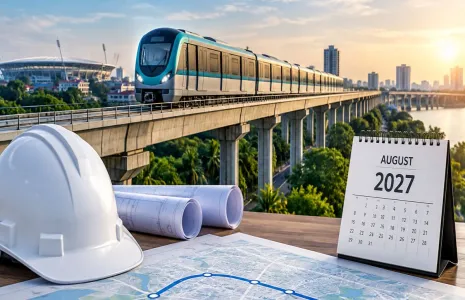
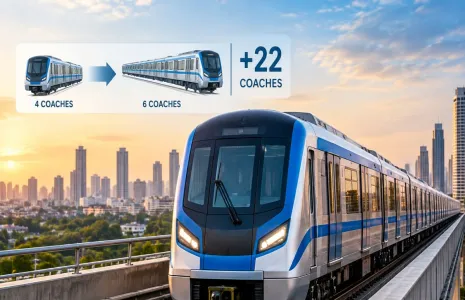
The upcoming 11.2-kilometre Pink Line of the Kochi Metro, stretching from JLN Stadium in Kaloor to Infopark in Kakkanad, is expected to transform urban travel patterns in the city. Scheduled to open next year, the new corridor is projected to attract an additional 20 million commuters per month, significantly reducing reliance on private vehicles, according to Kochi Metro Rail Ltd (KMRL) estimates.

At present, Kochi Metro’s Phase 1 corridor, spanning 28.125 kilometres from Aluva to Tripunithura, serves an average of 30 million commuters monthly, with a record ridership of 3.41 million in August 2025. “After the commissioning of the entire Pink Line, we expect monthly ridership to rise to around 50 million,” said a KMRL spokesperson.

KMRL aims to open the first five stations up to Padamugal by June 2026, with the entire Phase 2 corridor targeted for completion by December 2026. “It is too early to confirm ridership figures for the first stretch. The final decision on whether Infopark trains will terminate at JLN or continue to other destinations such as Tripunithura will depend on future traffic studies,” the official added.

A detailed passenger traffic analysis will soon determine whether to extend the Infopark services beyond the JLN Stadium interchange station on the Blue Line. Potential extensions include key interchange stations such as Maharaja’s, Kadavanthra, Vyttila, and Tripunithura.

Work on the Infopark corridor has accelerated, with KMRL targeting a June 30, 2026 deadline. However, two major engineering challenges remain — crossing NH 66 at the Palarivattom flyover and constructing an elevated track over the Aluva–Tripunithura Metro line near Kurishupally. The proposed Edappally–Aroor elevated highway, planned at a height of 32 metres above the flyover and metro viaduct, will require close coordination between the National Highways Authority of India (NHAI) and KMRL.

The Kurishupally crossover, where one metro track passes above another, is expected to become an architectural highlight. The Infopark-bound line will rise above the existing Phase 1 track, while the returning line will run parallel on the opposite side, avoiding the need for an additional overpass.

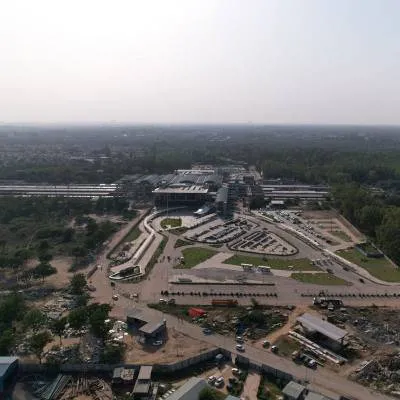
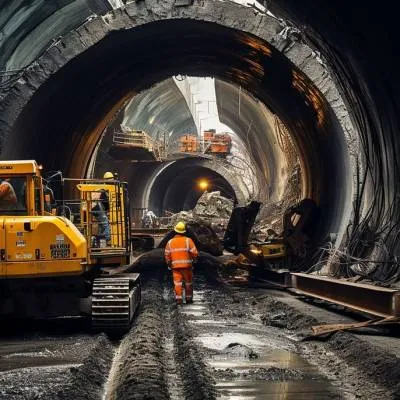
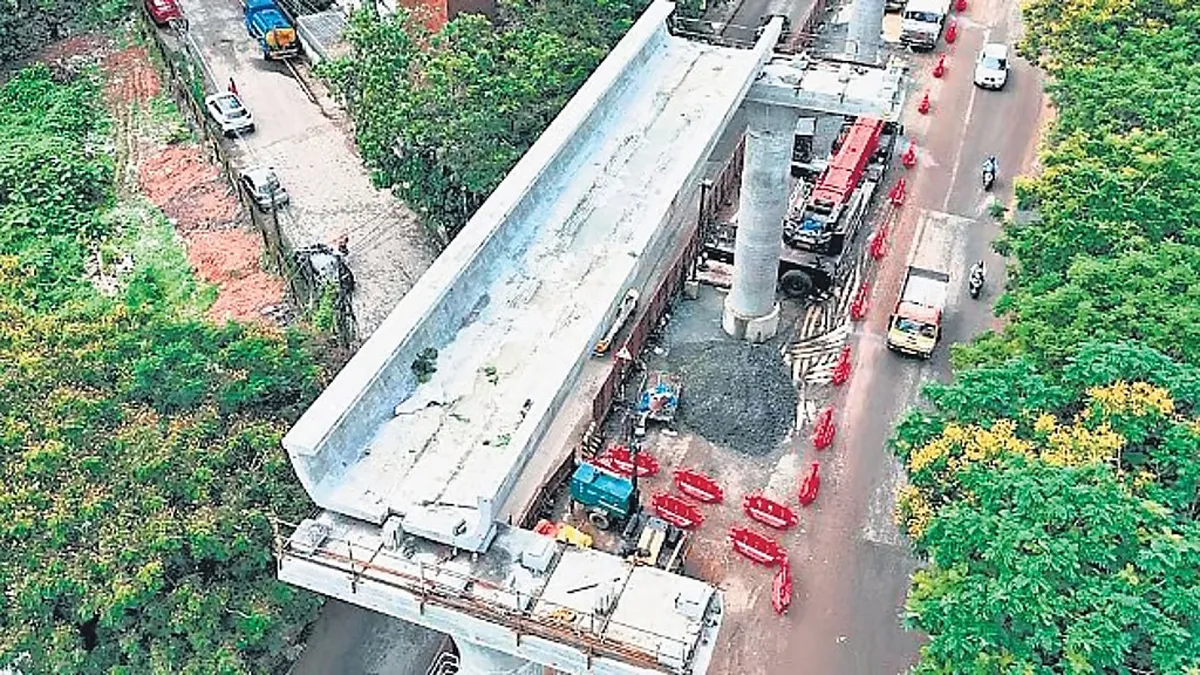
Civil work on Phase 2 has made substantial headway. The first U-girder was installed over the pillars on the Infopark Expressway on 24 October, marking the transition from piling to viaduct construction. So far, 65 pillars and over 1,000 piles for the viaduct and stations have been completed. At the casting yard, work has been completed on 100 U-girders, 72 A-girders, and 100 pier caps.

Tender progress:

Awarded: Construction of viaducts, stations, entry/exit gates

Under evaluation: Architecture and track work

Floated: Traction work (bids under review)

Pending: Telecom and signalling (to be invited within six weeks)

Once operational, the Pink Line will not only strengthen connectivity to Kochi’s IT and business hub of Kakkanad but also mark a major step toward sustainable, high-capacity urban transport in Kerala’s commercial capital.

The upcoming 11.2-kilometre Pink Line of the Kochi Metro, stretching from JLN Stadium in Kaloor to Infopark in Kakkanad, is expected to transform urban travel patterns in the city. Scheduled to open next year, the new corridor is projected to attract an additional 20 million commuters per month, significantly reducing reliance on private vehicles, according to Kochi Metro Rail Ltd (KMRL) estimates. At present, Kochi Metro’s Phase 1 corridor, spanning 28.125 kilometres from Aluva to Tripunithura, serves an average of 30 million commuters monthly, with a record ridership of 3.41 million in August 2025. “After the commissioning of the entire Pink Line, we expect monthly ridership to rise to around 50 million,” said a KMRL spokesperson. KMRL aims to open the first five stations up to Padamugal by June 2026, with the entire Phase 2 corridor targeted for completion by December 2026. “It is too early to confirm ridership figures for the first stretch. The final decision on whether Infopark trains will terminate at JLN or continue to other destinations such as Tripunithura will depend on future traffic studies,” the official added. A detailed passenger traffic analysis will soon determine whether to extend the Infopark services beyond the JLN Stadium interchange station on the Blue Line. Potential extensions include key interchange stations such as Maharaja’s, Kadavanthra, Vyttila, and Tripunithura. Work on the Infopark corridor has accelerated, with KMRL targeting a June 30, 2026 deadline. However, two major engineering challenges remain — crossing NH 66 at the Palarivattom flyover and constructing an elevated track over the Aluva–Tripunithura Metro line near Kurishupally. The proposed Edappally–Aroor elevated highway, planned at a height of 32 metres above the flyover and metro viaduct, will require close coordination between the National Highways Authority of India (NHAI) and KMRL. The Kurishupally crossover, where one metro track passes above another, is expected to become an architectural highlight. The Infopark-bound line will rise above the existing Phase 1 track, while the returning line will run parallel on the opposite side, avoiding the need for an additional overpass. Civil work on Phase 2 has made substantial headway. The first U-girder was installed over the pillars on the Infopark Expressway on 24 October, marking the transition from piling to viaduct construction. So far, 65 pillars and over 1,000 piles for the viaduct and stations have been completed. At the casting yard, work has been completed on 100 U-girders, 72 A-girders, and 100 pier caps. Tender progress: Awarded: Construction of viaducts, stations, entry/exit gates Under evaluation: Architecture and track work Floated: Traction work (bids under review) Pending: Telecom and signalling (to be invited within six weeks) Once operational, the Pink Line will not only strengthen connectivity to Kochi’s IT and business hub of Kakkanad but also mark a major step toward sustainable, high-capacity urban transport in Kerala’s commercial capital.

Related Stories

Gold Stories

Next Story
Infrastructure Urban

KONE Opens India's First Digital Experience Centre in Pune

KONE, a global elevator and escalator manufacturer, has inaugurated its first Digital Experience Centre (DEC) in India, located in Pune. The facility aims to showcase how artificial intelligence (AI), connectivity and data-driven technologies can enhance customer experiences and improve building operations.The centre was inaugurated by Jussi Herlin, Executive Vice Chair, KONE Corporation; Philippe Delorme, President and CEO, KONE; and Nandan Nilekani, Co-founder and Chairman of the Board, Infosys.Designed as an interactive customer environment, the facility demonstrates digital solutions cover..

Next Story
Infrastructure Urban

CII GreenCo Launches Circularity Guidelines for Indian Industry

The Confederation of Indian Industry (CII) GreenCo Council has launched the CII GreenCo Circularity Guidelines – Pilot Version at the 17th CII GreenCo Waste & Resource Management Summit 2026 in Chennai. The initiative aims to strengthen resource efficiency, waste reduction and circular economy practices across Indian manufacturing and process industries.The guidelines introduce a structured framework with circularity indices covering raw materials, consumables, packaging and other resource inputs. These indicators will help industries assess existing practices, identify opportunities to ..

Next Story
Infrastructure Energy

Global Electronics Association Launches IPC-1783-CO2E Standard

The Global Electronics Association has introduced IPC-1783-CO2E, a new international standard aimed at improving consistency, transparency and comparability in product carbon footprint reporting across the electronics manufacturing industry.The standard, titled International Standard for Data Collection and Reporting of CO2 Equivalent (CO2e) Emissions for the Electronics Manufacturing Supply Chain, provides industry-specific guidance for collecting, estimating and reporting carbon emissions data.With increasing regulatory requirements and customer expectations, electronics manufacturers face c..

Advertisement

Subscribe to Our Newsletter

Get daily newsletters around different themes from Construction world.

STAY CONNECTED

Advertisement

SPECIAL OFFER
QR Code