Maharashtra Approves Rs. 1.8 bn for Pune Metro Expansion
RAILWAYS & METRO RAIL

Maharashtra Approves Rs. 1.8 bn for Pune Metro Expansion

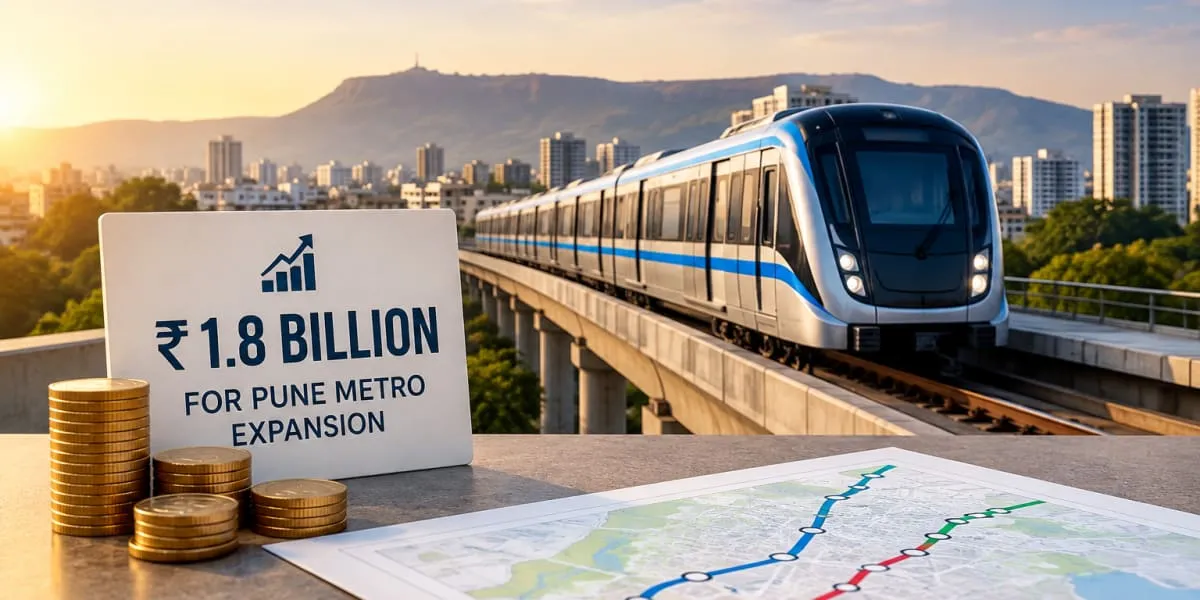
The Maharashtra government has approved fresh funding of Rs. 1.8 bn for three Pune Metro expansion corridors during the 2026-27 financial year. The allocation covers the Swargate-Katraj, Vanaz-Chandni Chowk and Ramwadi-Wagholi extensions, which are intended to improve connectivity across Pune and Pimpri-Chinchwad.

The Swargate-Katraj corridor will receive Rs. 1 bn as equity and Rs. 800 mn as an interest-free subordinate loan. Maharashtra Metro Rail Corporation (Maha Metro) is developing the fully underground corridor, which has an approved project cost of Rs. 29.55 bn. The state has committed total equity of Rs. 3.98 bn towards the corridor, with the latest release taking equity disbursement to Rs. 2 bn.

The state has sanctioned a total subordinate loan of Rs. 3.22 bn for Swargate-Katraj. The latest release takes the amount disbursed so far to Rs. 1.6 bn. Under the government directives, Maha Metro will repay the loan in a single instalment after clearing the main project loan. The funds will be released in phases for priority works, and interest may become applicable if specified conditions arise later.

A further Rs. 200 mn has been approved as equity for the Vanaz-Chandni Chowk and Ramwadi-Wagholi extensions of the existing Vanaz-Ramwadi corridor. The two routes together cover 12.75 km and include 13 stations, serving areas such as Chandni Chowk, Kothrud, Kharadi and Wagholi. Their revised combined project cost is Rs. 36.26 bn, while the state’s total equity commitment is Rs. 4.8 bn. The latest release takes equity disbursement to Rs. 800 mn.

The government has directed Maha Metro to maintain separate accounts for funds received from the Central government, Maharashtra government and Pune Municipal Corporation. The arrangement is intended to provide a distinct record of funding for each project. The latest approval does not change the opening schedules, which will depend on construction progress, further releases and other approvals.

The Maharashtra government has approved fresh funding of Rs. 1.8 bn for three Pune Metro expansion corridors during the 2026-27 financial year. The allocation covers the Swargate-Katraj, Vanaz-Chandni Chowk and Ramwadi-Wagholi extensions, which are intended to improve connectivity across Pune and Pimpri-Chinchwad. The Swargate-Katraj corridor will receive Rs. 1 bn as equity and Rs. 800 mn as an interest-free subordinate loan. Maharashtra Metro Rail Corporation (Maha Metro) is developing the fully underground corridor, which has an approved project cost of Rs. 29.55 bn. The state has committed total equity of Rs. 3.98 bn towards the corridor, with the latest release taking equity disbursement to Rs. 2 bn. The state has sanctioned a total subordinate loan of Rs. 3.22 bn for Swargate-Katraj. The latest release takes the amount disbursed so far to Rs. 1.6 bn. Under the government directives, Maha Metro will repay the loan in a single instalment after clearing the main project loan. The funds will be released in phases for priority works, and interest may become applicable if specified conditions arise later. A further Rs. 200 mn has been approved as equity for the Vanaz-Chandni Chowk and Ramwadi-Wagholi extensions of the existing Vanaz-Ramwadi corridor. The two routes together cover 12.75 km and include 13 stations, serving areas such as Chandni Chowk, Kothrud, Kharadi and Wagholi. Their revised combined project cost is Rs. 36.26 bn, while the state’s total equity commitment is Rs. 4.8 bn. The latest release takes equity disbursement to Rs. 800 mn. The government has directed Maha Metro to maintain separate accounts for funds received from the Central government, Maharashtra government and Pune Municipal Corporation. The arrangement is intended to provide a distinct record of funding for each project. The latest approval does not change the opening schedules, which will depend on construction progress, further releases and other approvals.

Related Stories

Gold Stories
Next Story
Real Estate

Born Smart or Built Smart?

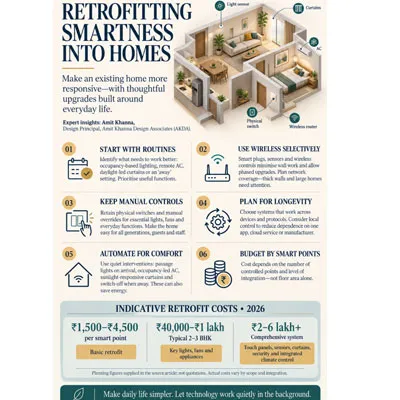
In residential projects where the homeowner has a clear requirement for extensive automation, the smart-home brief should influence the design from the outset. CW explores exactly how such mandates influence design-development. QUICK BYTESIntegrate smart technology with architecture, interiors and MEP from the outset.Let residents’ needs and routines guide automation.Integrate sensors, wiring and controls without compromising design.Build flexible infrastructure for evolving technologies.Smart systems should be simple, reliable and easy to use.Existing homes can be retrofitted with mini..
Next Story
Technology

Move Less, Build More

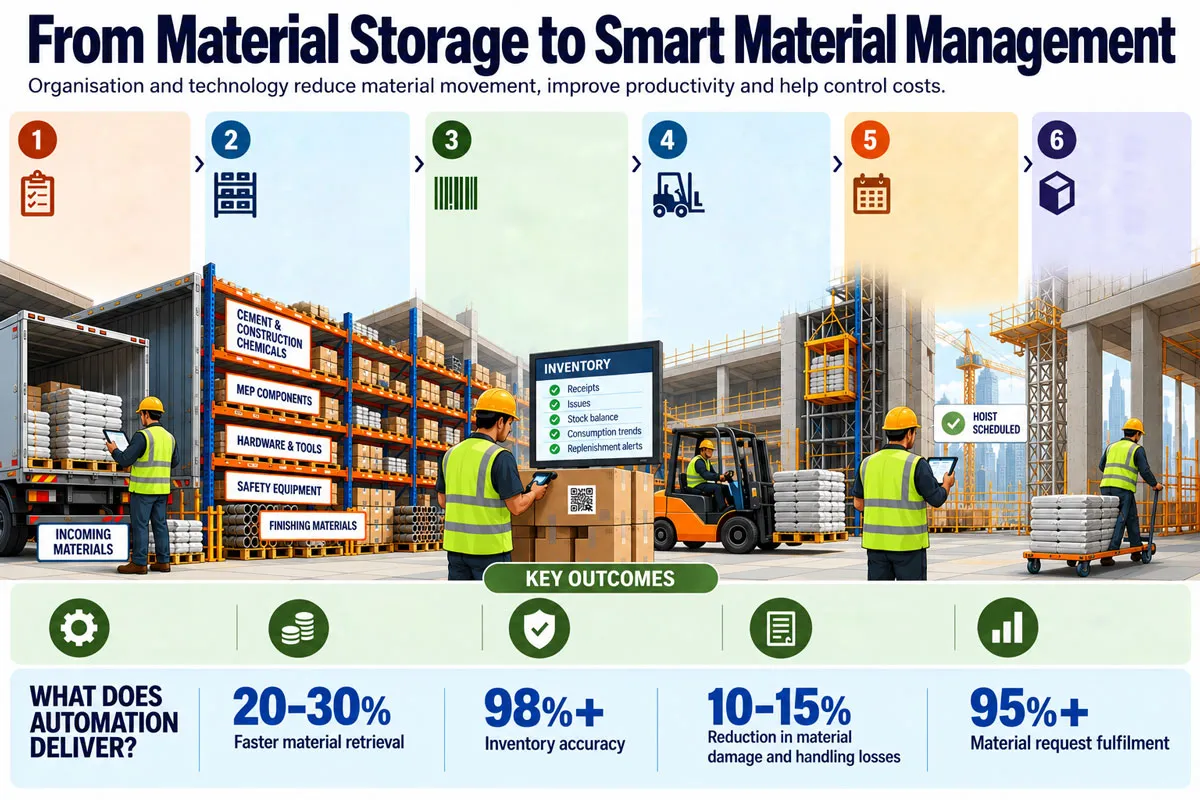
On high-rise sites in Mumbai, until a few years ago, the common material handling solution was manpower and the repeated relocation of material until it finally reached the floor where it was to be installed.Cut to today. “Now, we are adopting automation in material handling, not to replace people but to reduce unnecessary movement, improve planning, and use people and equipment more efficiently,” says Raahul Maroo, Founder & Managing Director, Tat:vm Builders and Developers.To read the full article Click Here ..

Next Story
Infrastructure Urban

Law and Order

In modern economies, construction projects serve as a catalyst for economic growth and national development. In India, the construction industry plays a vital role in infrastructure development, urbanisation and employment generation. However, these projects involve significant financial, contractual, legal, environmental and safety risks, necessitating an effective legal framework to regulate their execution.The India perspectiveConstruction projects are governed by various legal and regulatory requirements relating to land acquisition, planning permissions, labour welfare, environmental clea..

Advertisement

Subscribe to Our Newsletter

Get daily newsletters around different themes from Construction world.

STAY CONNECTED

Advertisement

SPECIAL OFFER
QR Code