Panel appraises R-Infra's 74% Metro-1 stake at Rs 40 billion
RAILWAYS & METRO RAIL

Panel appraises R-Infra's 74% Metro-1 stake at Rs 40 billion

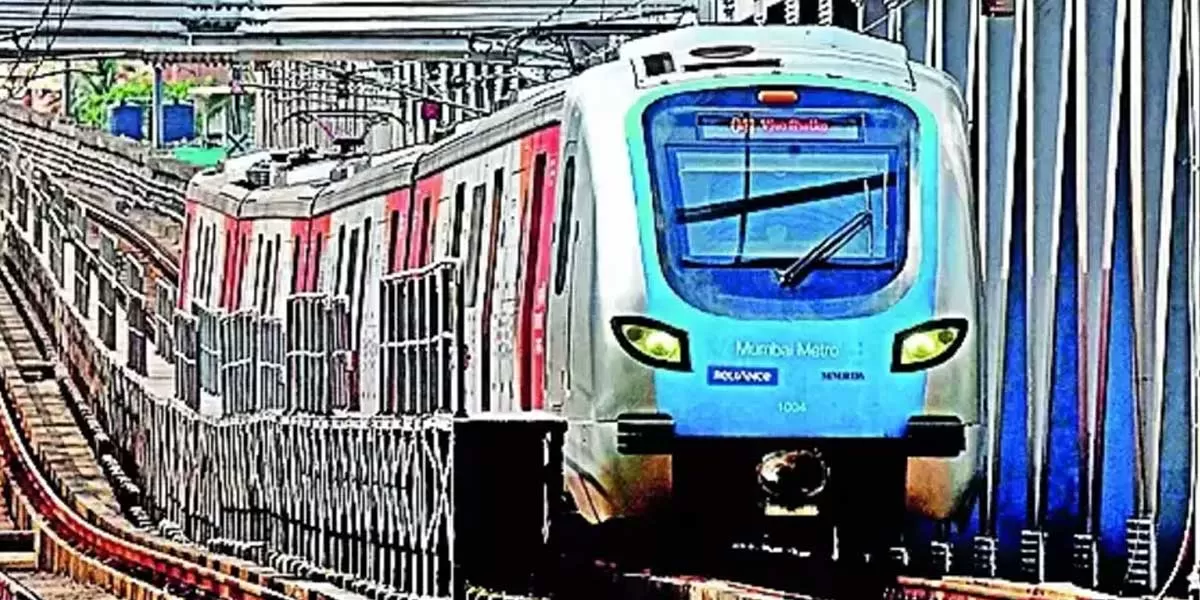
An internal study group, led by former chief secretary Johny Joseph, has reportedly assessed the value of the 74% stake owned by Reliance Infrastructure (R-Infra) in the Metro-1 corridor at Rs 40 billion. The study group has presented its valuation report to the Mumbai Metropolitan Region Development Authority (MMRDA). The decision on whether MMRDA will acquire R-Infra's stake needs to be presented before the Maharashtra cabinet. The acquisition process has been prolonged for years, with disagreements persisting between the government and the company regarding the valuation.

The Metro-1 line, spanning 11.4 km and connecting Versova-Andheri-Ghatkopar, facilitates connectivity between the Eastern and Western suburbs to the Western and Central railway. Executed through a public-private partnership, it is managed by a special purpose vehicle (SPV) called Mumbai Metro One (MMOPL). MMRDA holds a 26% stake in the SPV, while Anil Ambani's R-Infra holds the remaining 74%.

Sources reveal that the study group utilized the discounted cash flow model and considered the report from the financial advisory firm, KROLL, to arrive at the valuation. The concession agreement between MMRDA and MMOPL was signed in 2007. However, negotiations regarding R-Infra's stake sale in MMOPL, initiated in 2020 due to pandemic-induced losses, have made little progress since then.

MMRDA, responsible for implementing the 337-km Metro network in the Mumbai Metropolitan Region, oversees the Metro-1 project, which has incurred losses since its operational commencement in 2014. Despite being the oldest line in the city, MMOPL faced challenges in raising fares. In 2019, the second fare fixation committee rejected MMOPL's proposal to increase fares and suggested exploring non-fare revenue generation. Additionally, MMOPL is engaged in arbitration concerning cost escalation during the Metro-1 construction. While MMOPL claims a construction cost of Rs 40.26 billion, MMRDA asserts the original contract's cost as Rs 23.56 billion. The ridership on Metro-1 has consistently remained high, except during the Covid-related shutdown, carrying 4.6 lakh commuters on weekdays with 408 daily trips.

An internal study group, led by former chief secretary Johny Joseph, has reportedly assessed the value of the 74% stake owned by Reliance Infrastructure (R-Infra) in the Metro-1 corridor at Rs 40 billion. The study group has presented its valuation report to the Mumbai Metropolitan Region Development Authority (MMRDA). The decision on whether MMRDA will acquire R-Infra's stake needs to be presented before the Maharashtra cabinet. The acquisition process has been prolonged for years, with disagreements persisting between the government and the company regarding the valuation. The Metro-1 line, spanning 11.4 km and connecting Versova-Andheri-Ghatkopar, facilitates connectivity between the Eastern and Western suburbs to the Western and Central railway. Executed through a public-private partnership, it is managed by a special purpose vehicle (SPV) called Mumbai Metro One (MMOPL). MMRDA holds a 26% stake in the SPV, while Anil Ambani's R-Infra holds the remaining 74%. Sources reveal that the study group utilized the discounted cash flow model and considered the report from the financial advisory firm, KROLL, to arrive at the valuation. The concession agreement between MMRDA and MMOPL was signed in 2007. However, negotiations regarding R-Infra's stake sale in MMOPL, initiated in 2020 due to pandemic-induced losses, have made little progress since then. MMRDA, responsible for implementing the 337-km Metro network in the Mumbai Metropolitan Region, oversees the Metro-1 project, which has incurred losses since its operational commencement in 2014. Despite being the oldest line in the city, MMOPL faced challenges in raising fares. In 2019, the second fare fixation committee rejected MMOPL's proposal to increase fares and suggested exploring non-fare revenue generation. Additionally, MMOPL is engaged in arbitration concerning cost escalation during the Metro-1 construction. While MMOPL claims a construction cost of Rs 40.26 billion, MMRDA asserts the original contract's cost as Rs 23.56 billion. The ridership on Metro-1 has consistently remained high, except during the Covid-related shutdown, carrying 4.6 lakh commuters on weekdays with 408 daily trips.

Next Story
Infrastructure Transport

Tunnelling Begins for Thane, Borivali twin tunnel project

Tunnelling work has commenced for the 11.84-km Thane–Borivali Twin Tunnel, set to be India’s longest urban road tunnel, marking a key milestone in Mumbai’s infrastructure development.As per a post shared by Mumbai Metropolitan Region Development Authority on social media platform X, the tunnel boring machine (TBM) ‘Nayak’—the country’s largest single-shield hard rock TBM for an urban tunnel—was launched by Devendra Fadnavis on Tuesday. The event was attended by Eknath Shinde and Sunetra Pawar, among other dignitaries. A second TBM, ‘Arjuna’, is expected to be launched so..

Next Story
Infrastructure Transport

Large Format Store Planned At M G Road Metro Station

M G Road station in Bengaluru is set to host the city’s first large-format commercial and experience space, with planning led by Bangalore Metro Rail Corporation Limited. BMRCL has invited proposals to develop and operate a central business district destination at the Purple?Pink Line interchange. The plan positions the station as a commercial hub designed to serve a broad commuter base across the city. The proposal is part of a broader effort to activate transit nodes commercially. Tender documents set a minimum monthly rental of Rs 0.944 million (mn), inclusive of GST, for the large-format..

Next Story
Infrastructure Energy

Government Cancels Auction Of Eleven Critical Mineral Blocks

The government has cancelled the auction of 11 critical and strategic mineral blocks after receiving a poor investor response and failing to attract a sufficient number of qualified bidders. The decision represents a setback to plans to ramp up domestic exploration and production of critical minerals amid global supply chain disruptions and rising demand for materials used in clean energy and advanced technologies. The mines ministry issued an annulment notice setting out the reasons for the cancellations. The annulment notice indicated that the auction process for five mineral blocks was canc..

Advertisement

Subscribe to Our Newsletter

Get daily newsletters around different themes from Construction world.

STAY CONNECTED

Advertisement

Advertisement

Advertisement