Patna Joins India’s Metro Map With Blue Line Launch
RAILWAYS & METRO RAIL

Patna Joins India’s Metro Map With Blue Line Launch

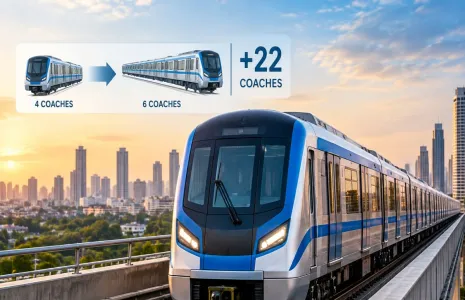
Patna, the capital of Bihar, officially joined India’s growing list of metro cities as Chief Minister Nitish Kumar inaugurated the first phase of the Patna Metro Rail on Monday. The inaugural section of the Blue Line runs from the Inter-State Bus Terminal (ISBT) to Bhoothnath, covering three key stations — Patliputra ISBT, Zero Mile, and Bhoothnath.
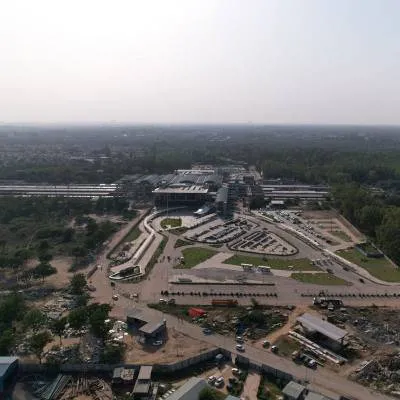
The inaugural ceremony was held at the Patliputra Bus Depot, attended by Deputy Chief Ministers Samrat Choudhary and Vijay Kumar Sinha. Passenger services are set to commence from Tuesday.
For now, commuters will be able to travel along a 4.3-kilometre stretch between ISBT, Zero Mile, and Bhoothnath stations. The minimum fare for a single-station journey is Rs 15, while a full-route ride will cost Rs 30. Services will operate daily from 8 a.m. to 10 p.m., with 40 to 42 trips scheduled along the corridor.
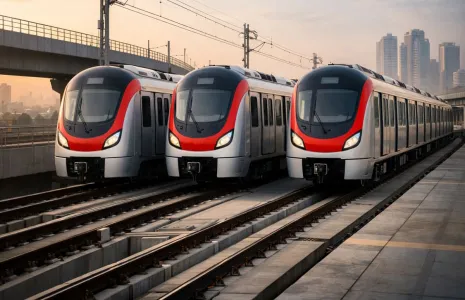
Each three-coach train can accommodate up to 900 passengers, with 300 people per coach, ensuring efficient travel even during rush hours. Initially, trains will run at 20-minute intervals.
Adding a cultural touch, the metro coaches feature motifs inspired by Bihar’s traditional Madhubani art, symbolising the state’s heritage and craftsmanship. With the launch, Patna becomes the 24th Indian city to operate a metro rail system.
The Patna Metro is widely regarded as Nitish Kumar’s dream project, first envisioned over a decade ago. The plan was approved by the state cabinet on 11 June 2013, and the Union government granted clearance in June 2014, paving the way for a five-phase development. Prime Minister Narendra Modi laid the foundation stone on 17 February 2019, and the Patna Metro Rail Corporation Limited (PMRCL) was formally established the following day.
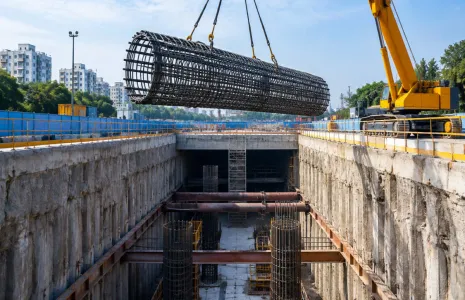
The Delhi Metro Rail Corporation (DMRC) serves as the project consultant, while Larsen & Toubro (L&T) was awarded the construction contract for Phase 1, Corridor 2, in January 2022.
The total estimated cost of the Patna Metro project stands at Rs 139.26 billion, supported jointly by the Bihar government, the Central government, and the Japan International Cooperation Agency (JICA).
Once fully operational, the Patna Metro is expected to revolutionise urban mobility, reduce congestion on the city’s roads, and provide a sustainable and efficient public transport solution for residents and visitors alike. 

Patna, the capital of Bihar, officially joined India’s growing list of metro cities as Chief Minister Nitish Kumar inaugurated the first phase of the Patna Metro Rail on Monday. The inaugural section of the Blue Line runs from the Inter-State Bus Terminal (ISBT) to Bhoothnath, covering three key stations — Patliputra ISBT, Zero Mile, and Bhoothnath.The inaugural ceremony was held at the Patliputra Bus Depot, attended by Deputy Chief Ministers Samrat Choudhary and Vijay Kumar Sinha. Passenger services are set to commence from Tuesday.For now, commuters will be able to travel along a 4.3-kilometre stretch between ISBT, Zero Mile, and Bhoothnath stations. The minimum fare for a single-station journey is Rs 15, while a full-route ride will cost Rs 30. Services will operate daily from 8 a.m. to 10 p.m., with 40 to 42 trips scheduled along the corridor.Each three-coach train can accommodate up to 900 passengers, with 300 people per coach, ensuring efficient travel even during rush hours. Initially, trains will run at 20-minute intervals.Adding a cultural touch, the metro coaches feature motifs inspired by Bihar’s traditional Madhubani art, symbolising the state’s heritage and craftsmanship. With the launch, Patna becomes the 24th Indian city to operate a metro rail system.The Patna Metro is widely regarded as Nitish Kumar’s dream project, first envisioned over a decade ago. The plan was approved by the state cabinet on 11 June 2013, and the Union government granted clearance in June 2014, paving the way for a five-phase development. Prime Minister Narendra Modi laid the foundation stone on 17 February 2019, and the Patna Metro Rail Corporation Limited (PMRCL) was formally established the following day.The Delhi Metro Rail Corporation (DMRC) serves as the project consultant, while Larsen & Toubro (L&T) was awarded the construction contract for Phase 1, Corridor 2, in January 2022.The total estimated cost of the Patna Metro project stands at Rs 139.26 billion, supported jointly by the Bihar government, the Central government, and the Japan International Cooperation Agency (JICA).Once fully operational, the Patna Metro is expected to revolutionise urban mobility, reduce congestion on the city’s roads, and provide a sustainable and efficient public transport solution for residents and visitors alike. 

Related Stories

Gold Stories

Next Story
Infrastructure Urban

KONE Opens India's First Digital Experience Centre in Pune

KONE, a global elevator and escalator manufacturer, has inaugurated its first Digital Experience Centre (DEC) in India, located in Pune. The facility aims to showcase how artificial intelligence (AI), connectivity and data-driven technologies can enhance customer experiences and improve building operations.The centre was inaugurated by Jussi Herlin, Executive Vice Chair, KONE Corporation; Philippe Delorme, President and CEO, KONE; and Nandan Nilekani, Co-founder and Chairman of the Board, Infosys.Designed as an interactive customer environment, the facility demonstrates digital solutions cover..

Next Story
Infrastructure Urban

CII GreenCo Launches Circularity Guidelines for Indian Industry

The Confederation of Indian Industry (CII) GreenCo Council has launched the CII GreenCo Circularity Guidelines – Pilot Version at the 17th CII GreenCo Waste & Resource Management Summit 2026 in Chennai. The initiative aims to strengthen resource efficiency, waste reduction and circular economy practices across Indian manufacturing and process industries.The guidelines introduce a structured framework with circularity indices covering raw materials, consumables, packaging and other resource inputs. These indicators will help industries assess existing practices, identify opportunities to ..

Next Story
Infrastructure Energy

Global Electronics Association Launches IPC-1783-CO2E Standard

The Global Electronics Association has introduced IPC-1783-CO2E, a new international standard aimed at improving consistency, transparency and comparability in product carbon footprint reporting across the electronics manufacturing industry.The standard, titled International Standard for Data Collection and Reporting of CO2 Equivalent (CO2e) Emissions for the Electronics Manufacturing Supply Chain, provides industry-specific guidance for collecting, estimating and reporting carbon emissions data.With increasing regulatory requirements and customer expectations, electronics manufacturers face c..

Advertisement

Subscribe to Our Newsletter

Get daily newsletters around different themes from Construction world.

STAY CONNECTED

Advertisement

SPECIAL OFFER
QR Code