




APSEZ Unveils First Steel Slag Road at Private Port
PORTS & SHIPPING

APSEZ Unveils First Steel Slag Road at Private Port

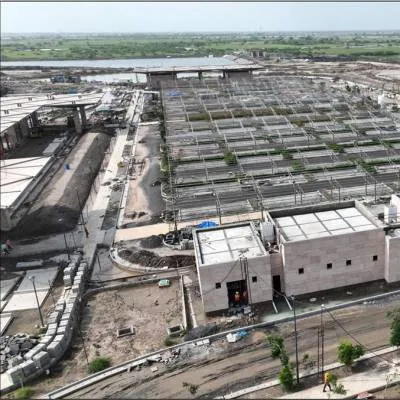
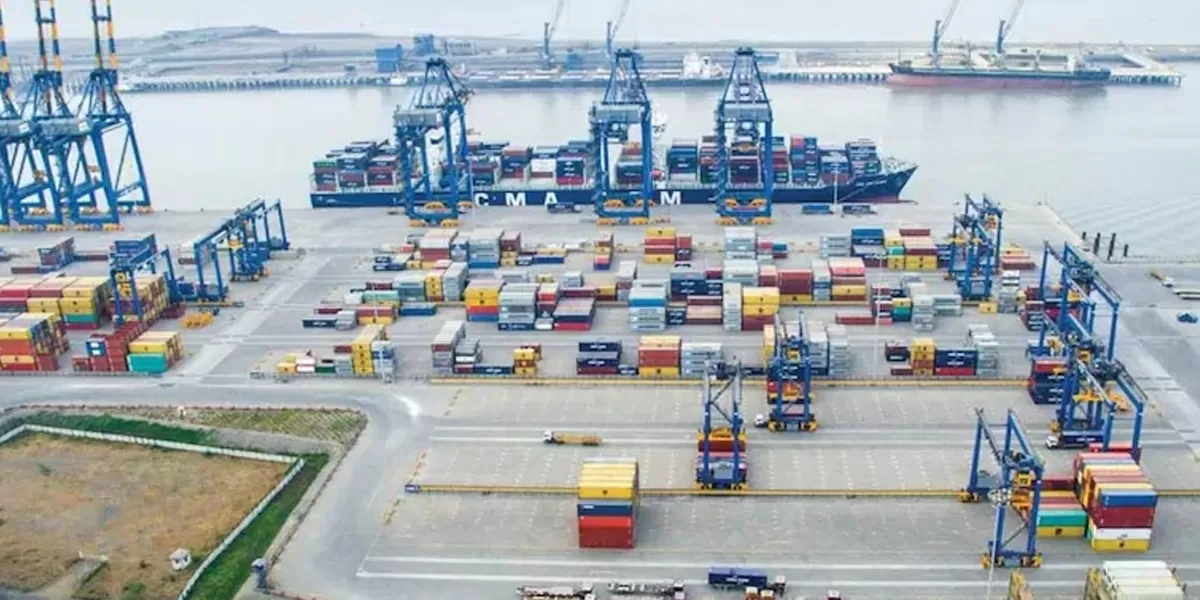
Adani Ports and Special Economic Zone Ltd (APSEZ) has inaugurated the world’s first steel slag road within a private port, setting a global milestone in sustainable infrastructure. The 1.1-kilometre road, located at Hazira Port in Surat, connects the Multi-Purpose Berth (MPB-1) to the coal yard and plays a vital role in internal cargo movement.

While this is India’s third steel slag road, it is the first globally at any private port. The road has been built using processed steel slag aggregates—an industrial by-product from steel manufacturing—transforming waste into robust, long-lasting infrastructure. This aligns with India’s circular economy goals, offering higher load-bearing capacity, increased durability, and lower construction costs and carbon emissions.

The project forms part of Phase II of the Bulk and General Cargo Terminal (BGCT) expansion and was developed jointly by APSEZ, the Council of Scientific and Industrial Research – Central Road Research Institute (CSIR-CRRI), and the Union Ministry of Science and Technology. CSIR-CRRI engineered a flexible pavement design specifically for port logistics.

The inauguration was attended by key scientific and industry leaders, including Vijay Kumar Saraswat (Member, NITI Aayog), N. Kalaiselvi (Director-General, CSIR), and Manoranjan Parida (Director, CSIR-CRRI). Satish Pandey, Senior Principal Scientist and inventor of the steel slag road technology, and Anand Marathe, COO of Adani Hazira Port Ltd., also participated.

APSEZ stated that this initiative reflects its leadership in transforming India’s logistics sector by integrating innovation, sustainability, and industrial ecology. The project contributes to the government’s Waste to Wealth mission and is expected to inspire similar green infrastructure developments across the country.

Adani Ports and Special Economic Zone Ltd (APSEZ) has inaugurated the world’s first steel slag road within a private port, setting a global milestone in sustainable infrastructure. The 1.1-kilometre road, located at Hazira Port in Surat, connects the Multi-Purpose Berth (MPB-1) to the coal yard and plays a vital role in internal cargo movement.While this is India’s third steel slag road, it is the first globally at any private port. The road has been built using processed steel slag aggregates—an industrial by-product from steel manufacturing—transforming waste into robust, long-lasting infrastructure. This aligns with India’s circular economy goals, offering higher load-bearing capacity, increased durability, and lower construction costs and carbon emissions.The project forms part of Phase II of the Bulk and General Cargo Terminal (BGCT) expansion and was developed jointly by APSEZ, the Council of Scientific and Industrial Research – Central Road Research Institute (CSIR-CRRI), and the Union Ministry of Science and Technology. CSIR-CRRI engineered a flexible pavement design specifically for port logistics.The inauguration was attended by key scientific and industry leaders, including Vijay Kumar Saraswat (Member, NITI Aayog), N. Kalaiselvi (Director-General, CSIR), and Manoranjan Parida (Director, CSIR-CRRI). Satish Pandey, Senior Principal Scientist and inventor of the steel slag road technology, and Anand Marathe, COO of Adani Hazira Port Ltd., also participated.APSEZ stated that this initiative reflects its leadership in transforming India’s logistics sector by integrating innovation, sustainability, and industrial ecology. The project contributes to the government’s Waste to Wealth mission and is expected to inspire similar green infrastructure developments across the country.

Next Story
Infrastructure Urban

India Expands Semiconductor Training To 500 Institutions

Under the Chips to Startups programme of the India Semiconductor Mission, the Union minister responsible for Railways, Information and Broadcasting, and Electronics and IT reported notable progress in talent development. He indicated that over the past four years substantial steps have been taken towards a 10-year target of training 85,000 engineers in semiconductor design. World-class EDA tools have been deployed in 315 academic institutions across the country to provide students with practical exposure to chip design. These EDA tools are supported by leading global firms and are accessible t..

Next Story
Infrastructure Urban

Delhi Institutions Support India Semiconductor Mission

The Government of India has prioritised talent development through training, upskilling and workforce development under the Chips to Startups initiative of the India Semiconductor Mission, with officials noting progress in four years towards a 10-year target of training 85,000 engineers in semiconductor design. Electronic design automation tools provided by Synopsys, Cadence, Siemens, Renesas, Ansys and AMD have been deployed in 315 academic institutions, enabling students to gain practical chip design experience. Chips have been fabricated and tested at the Semiconductor Laboratory, Mohali, a..

Next Story
Infrastructure Urban

NHA Announces Winners Of NHCX Hackathon At IIT Hyderabad

The National Health Authority (NHA) has concluded the NHCX Hackathon under the Ayushman Bharat Digital Mission (ABDM) to stimulate innovation around the National Health Claims Exchange (NHCX). The winning teams presented their solutions at the NHCX Innovation Meet held at IIT Hyderabad during a two-day event in March 2026 that also served as the hackathon grand finale. The hackathon itself ran from 22 to 28 February 2026 and aimed to accelerate paperless, transparent claims processing across India. The event was organised with a range of ecosystem partners, including the Insurance Regulatory a..

Advertisement

Subscribe to Our Newsletter

Get daily newsletters around different themes from Construction world.

STAY CONNECTED

Advertisement

Advertisement

Advertisement