India’s second multi modal terminal inaugurated
PORTS & SHIPPING

India’s second multi modal terminal inaugurated

Prime Minister Narendra Modi recently inaugurated India’s second riverine multi modal terminal built at Sahibganj in Jharkhand. Built at Rs 2.90 billion in about two years, the foundation stone of IWAI’s Sahibganj multimodal terminal was laid in April 2017. This is the second of the three multi modal terminals being constructed on river Ganga under Jal Marg Vikas Project (JMVP).

The multi-modal terminal at Sahibganj will open up industries of Jharkhand and Bihar to the global market and provide Indo-Nepal cargo connectivity through waterways route. It will play an important role in transportation of domestic coal from the local mines in Rajmahal area to various thermal power plants located along NW-1.

The multi-modal terminal will also help create direct employment of about 600 people and indirect employment of about 3,000 people in the region. The convergence of Road-Rail-River Transport at Sahibganj through the new multi-modal terminal will connect this part of the hinterland to Kolkata, Haldia and further to the Bay of Bengal. Also, Sahibganj will get connected to North-East States through Bangladesh by river-sea route. It The capacity of the terminal is 30 lakh tonne per annum. It will grow to 54.8 lakh tonne per annum after an investment of Rs 3.76 billion for capacity enhancement in Phase-II under PPP mode. The development in Phase-II will be entirely made by the private concessionaire. Further, a freight village is also proposed on 335 acre in contiguity with the terminal.

Salient features of the Sahibganj Multi Modal Terminal:

  • Second Multi-Modal Terminal on National Waterway -1 (river Ganga)
  • Cost of Phase-I of MMT: Rs 2.90 billion
  • Start date of the project: November 10, 2016
  • Completion date of the project: September, 2019
  • Jetty: Length 270 m x Width 25 m with berthing and mooring facility
  • 1 mobile harbour crane.

The MMTs are being built as part of the Jal Marg Vikas Project that aims to develop the stretch of River Ganga between Varanasi to Haldia for navigation of large vessels up to 1,500-2,000 tonnes weight, by maintaining a drought of 2-3 m in this stretch of the river and setting up other systems required for safe navigation. The objective is to promote inland waterways as a cheaper and more environment friendly means of transport, especially for cargo movement. Inland Waterways Authority of India (IWAI) is the project implementing agency.

Prime Minister Narendra Modi recently inaugurated India’s second riverine multi modal terminal built at Sahibganj in Jharkhand. Built at Rs 2.90 billion in about two years, the foundation stone of IWAI’s Sahibganj multimodal terminal was laid in April 2017. This is the second of the three multi modal terminals being constructed on river Ganga under Jal Marg Vikas Project (JMVP). The multi-modal terminal at Sahibganj will open up industries of Jharkhand and Bihar to the global market and provide Indo-Nepal cargo connectivity through waterways route. It will play an important role in transportation of domestic coal from the local mines in Rajmahal area to various thermal power plants located along NW-1. The multi-modal terminal will also help create direct employment of about 600 people and indirect employment of about 3,000 people in the region. The convergence of Road-Rail-River Transport at Sahibganj through the new multi-modal terminal will connect this part of the hinterland to Kolkata, Haldia and further to the Bay of Bengal. Also, Sahibganj will get connected to North-East States through Bangladesh by river-sea route. It The capacity of the terminal is 30 lakh tonne per annum. It will grow to 54.8 lakh tonne per annum after an investment of Rs 3.76 billion for capacity enhancement in Phase-II under PPP mode. The development in Phase-II will be entirely made by the private concessionaire. Further, a freight village is also proposed on 335 acre in contiguity with the terminal. Salient features of the Sahibganj Multi Modal Terminal: Second Multi-Modal Terminal on National Waterway -1 (river Ganga) Cost of Phase-I of MMT: Rs 2.90 billion Start date of the project: November 10, 2016 Completion date of the project: September, 2019 Jetty: Length 270 m x Width 25 m with berthing and mooring facility 1 mobile harbour crane. The MMTs are being built as part of the Jal Marg Vikas Project that aims to develop the stretch of River Ganga between Varanasi to Haldia for navigation of large vessels up to 1,500-2,000 tonnes weight, by maintaining a drought of 2-3 m in this stretch of the river and setting up other systems required for safe navigation. The objective is to promote inland waterways as a cheaper and more environment friendly means of transport, especially for cargo movement. Inland Waterways Authority of India (IWAI) is the project implementing agency.

Related Stories

Gold Stories
Next Story
Real Estate

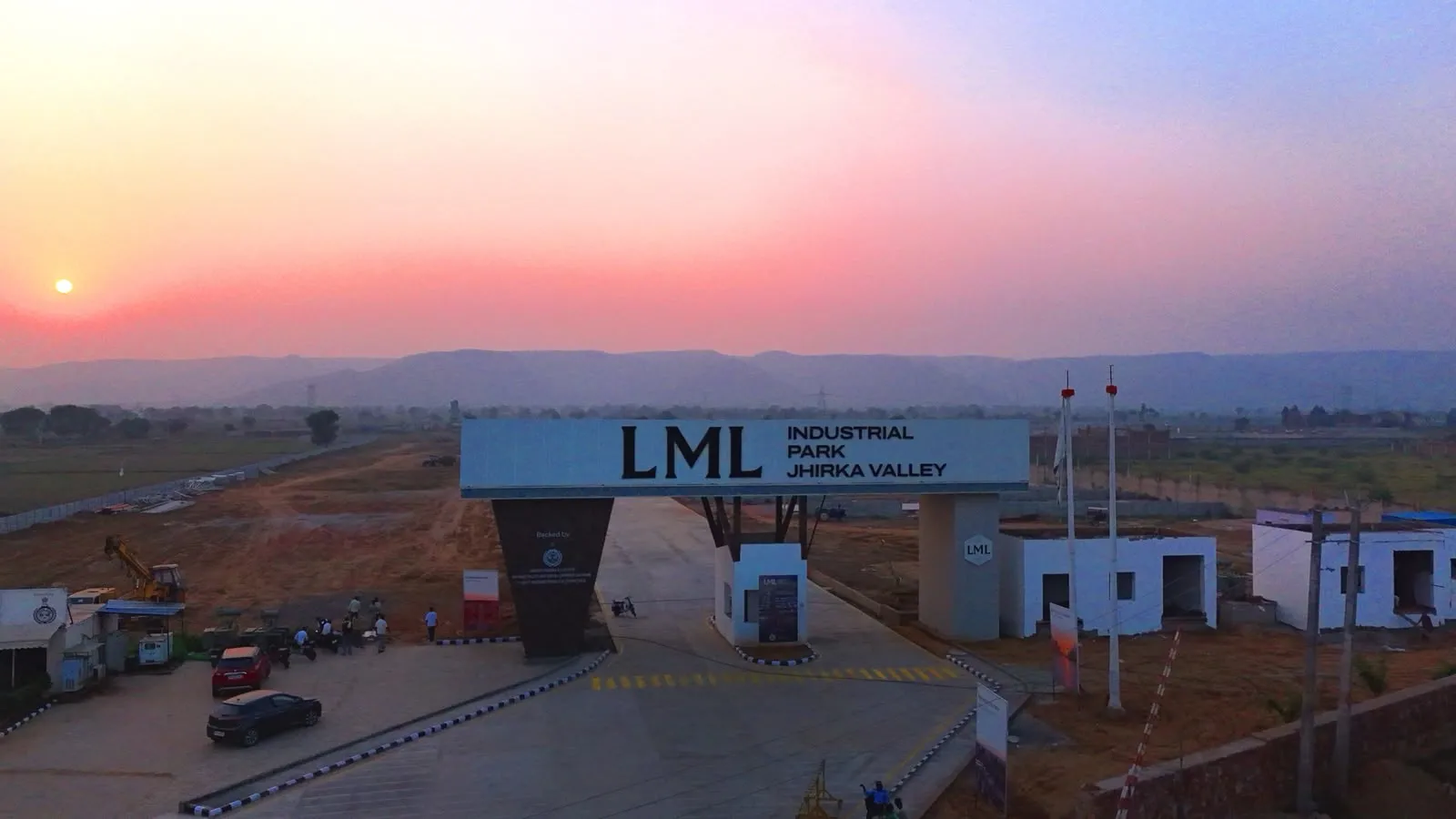
LML Realty Sells Out Jhirka Valley Industrial Park in Haryana

LML Realty, the real estate arm of LML Group, recently announced the complete sell-out of its Jhirka Valley Industrial Park in Haryana, with over 1.17 million sq ft of industrial space acquired by more than 50 companies. With utilities and internal infrastructure in place, the company has commenced plot handovers, enabling buyers to begin construction and establish their operations.The industrial park has attracted companies across diverse sectors, including chemicals, metals and alloys, textiles, electrical equipment, energy, logistics, construction, polymers and engineering. Key buyers inclu..

Next Story
Real Estate

WSB Real Estate Partners Exits Six Housing Investments

WSB Real Estate Partners recently announced the successful exit of six residential investments across Bengaluru, Mumbai Metropolitan Region (MMR) and National Capital Region (NCR), delivering an average internal rate of return (IRR) of 19–21 per cent and an overall investment return of 1.4 times.The real estate-focused investment firm invested approximately Rs 7 billion across six mid-affordable housing projects over the past four years. All six investments were fully repaid between April and November 2026, several months ahead of their original investment tenures.WSB collaborated with sever..

Next Story
Infrastructure Transport

Aluminium Industry Seeks Policy Support for Rs 4 Trillion Investment

The Aluminium Association of India (AAI) has recently urged the government to introduce supportive policy measures to safeguard the sector’s proposed Rs 4 trillion investment pipeline. The association highlighted the need for a predictable policy framework to strengthen domestic manufacturing, expand production capacity and reduce import dependence.AAI submitted its recommendations for the Union Budget 2027-28 to the Ministries of Finance, Commerce and Industry, and Mines, along with the Department for Promotion of Industry and Internal Trade (DPIIT).India’s aluminium demand is projected t..

Advertisement

Subscribe to Our Newsletter

Get daily newsletters around different themes from Construction world.

STAY CONNECTED

Advertisement

SPECIAL OFFER
QR Code