Modi govt to develop 23 river systems for cargo, passenger transport
PORTS & SHIPPING

Modi govt to develop 23 river systems for cargo, passenger transport

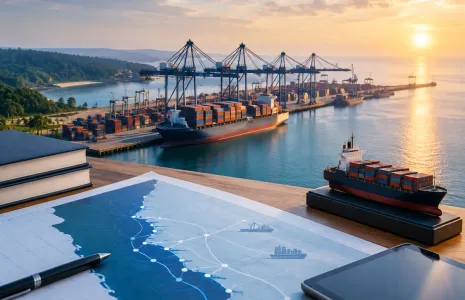
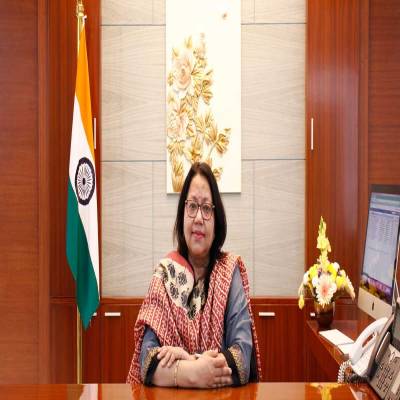
The government plans to build 23 river systems for freight and passenger vessel transit, with the goal of increasing the use of inland waterways as a cheaper means of transportation, according to Union Minister for Ports, Shipping, and Waterways Sarbananda Sonowal. The minister did not mention all 23 river systems but said that the government's focus is on growing the flow through river systems which is a greener means of transport and affordable compared to trains and trucks.

"Till now, we have 111 national waterways out of which we have discovered 23 river systems that are navigable," he stated. Under the National Waterways Act, 111 waterways have been designated as National Waterways (NWs) to promote inland water mobility in the country.

The minister stated that India's river systems have a lot of commercial potential and advised investors to invest for significant returns and explore this segment's untapped potential. He noted the MV Ganga Vilas, the world's longest river cruise, which finished its 50-day journey in Dibrugarh on Tuesday with German and Swiss tourists on board.

On January 13th, Prime Minister Narendra Modi launched the MV Ganga Vilas luxury cruise on the world's longest river excursion from Varanasi to Dibrugarh.

According to Sanjay Bandopadhyaya, head of the Inland Waterways Authority of India, India plans to invest 35,000 crore by 2047 to build a network of waterways (IWAI). The plan to be implemented over the next 25 years will include developing waterways and jetties to improve the navigable capacity of Indian rivers.

According to the minister, much development would take place along the Brahmaputra River, creating a great number of jobs for the people. Construction of a multi-modal cargo terminal in Dibrugarh will begin by the end of 2023. Little jetties would be built along the Ganga as part of the government's 'Arth Ganga' plan to energise economic activity along river banks across Uttar Pradesh, Bihar, Jharkhand, and West Bengal.

Farmers' logistics costs for moving local food will be reduced as a result of this. Bulk goods such as coal, fly ash, and iron ore are proven to be more affordable and cost-effective for transportation via inland water transport (IWT), which is a more environmentally friendly and less polluting form of transportation than rail and road. The waterways minister also cited an example how waterways will bring down the logistics costs and also benefit the environment.

Also Read
Vedanta meets its three-year debt-reduction commitment
GAIL to supply natural gas to Tata Steel Mining ltd

The government plans to build 23 river systems for freight and passenger vessel transit, with the goal of increasing the use of inland waterways as a cheaper means of transportation, according to Union Minister for Ports, Shipping, and Waterways Sarbananda Sonowal. The minister did not mention all 23 river systems but said that the government's focus is on growing the flow through river systems which is a greener means of transport and affordable compared to trains and trucks. Till now, we have 111 national waterways out of which we have discovered 23 river systems that are navigable, he stated. Under the National Waterways Act, 111 waterways have been designated as National Waterways (NWs) to promote inland water mobility in the country. The minister stated that India's river systems have a lot of commercial potential and advised investors to invest for significant returns and explore this segment's untapped potential. He noted the MV Ganga Vilas, the world's longest river cruise, which finished its 50-day journey in Dibrugarh on Tuesday with German and Swiss tourists on board. On January 13th, Prime Minister Narendra Modi launched the MV Ganga Vilas luxury cruise on the world's longest river excursion from Varanasi to Dibrugarh. According to Sanjay Bandopadhyaya, head of the Inland Waterways Authority of India, India plans to invest 35,000 crore by 2047 to build a network of waterways (IWAI). The plan to be implemented over the next 25 years will include developing waterways and jetties to improve the navigable capacity of Indian rivers. According to the minister, much development would take place along the Brahmaputra River, creating a great number of jobs for the people. Construction of a multi-modal cargo terminal in Dibrugarh will begin by the end of 2023. Little jetties would be built along the Ganga as part of the government's 'Arth Ganga' plan to energise economic activity along river banks across Uttar Pradesh, Bihar, Jharkhand, and West Bengal. Farmers' logistics costs for moving local food will be reduced as a result of this. Bulk goods such as coal, fly ash, and iron ore are proven to be more affordable and cost-effective for transportation via inland water transport (IWT), which is a more environmentally friendly and less polluting form of transportation than rail and road. The waterways minister also cited an example how waterways will bring down the logistics costs and also benefit the environment. Also Read Vedanta meets its three-year debt-reduction commitment GAIL to supply natural gas to Tata Steel Mining ltd

Next Story
Infrastructure Urban

TBO Tek Q2 Profit Climbs 12%, Revenue Surges 26% YoY

TBO Tek Limited one of the world’s largest travel distribution platforms, reported a solid performance for Q2 FY26 with a 26 per cent year-on-year increase in revenue to Rs 5.68 billion, reflecting broad-based growth and improving profitability.The company recorded a Gross Transaction Value (GTV) of Rs 8,901 crore, up 12 per cent YoY, driven by strong performance across Europe, MEA, and APAC regions. Adjusted EBITDA before acquisition-related costs stood at Rs 1.04 billion, up 16 per cent YoY, translating into an 18.32 per cent margin compared to 16.56 per cent in Q1 FY26. Profit after tax r..

Next Story
Infrastructure Energy

Northern Graphite, Rain Carbon Secure R&D Grant for Greener Battery Materials

Northern Graphite Corporation and Rain Carbon Canada Inc, a subsidiary of Rain Carbon Inc, have jointly received up to C$860,000 (€530,000) in funding under the Canada–Germany Collaborative Industrial Research and Development Programme to develop sustainable battery anode materials.The two-year, C$2.2 million project aims to transform natural graphite processing by-products into high-performance, battery-grade anode material (BAM). Supported by the National Research Council of Canada Industrial Research Assistance Programme (NRC IRAP) and Germany’s Federal Ministry for Economic Affairs a..

Next Story
Infrastructure Urban

Antony Waste Q2 Revenue Jumps 16%; Subsidiary Wins Rs 3,200 Cr WtE Projects

Antony Waste Handling Cell Limited (AWHCL), a leading player in India’s municipal solid waste management sector, announced a 16 per cent year-on-year increase in total operating revenue to Rs 2.33 billion for Q2 FY26. The growth was driven by higher waste volumes, escalated contracts, and strong operational execution.EBITDA rose 18 per cent to Rs 570 million, with margins steady at 21.6 per cent, while profit after tax stood at Rs 173 million, up 13 per cent YoY. Revenue from Municipal Solid Waste Collection and Transportation (MSW C&T) reached Rs 1.605 billion, and MSW Processing re..

Advertisement

Subscribe to Our Newsletter

Get daily newsletters around different themes from Construction world.

STAY CONNECTED

Advertisement

Advertisement

Advertisement