EyeROV Wins TDF Fund, Partners with DRDO for Advanced Underwater Drone
DEFENSE

EyeROV Wins TDF Fund, Partners with DRDO for Advanced Underwater Drone

EyeROV, India's pioneering commercial underwater drone technology company, has secured funding under the Technology Development Fund (TDF) scheme to develop a long-range Remotely Operated Vehicle (ROV) for underwater object detection and neutralization. This development comes as EyeROV signs a significant agreement with the Defence Research and Development Organization (DRDO).

The agreement was exchanged by Directorate of Technology Development Fund (DTDF) Director and Scientist 'G' Nidhi Bansal and EyeROV Cofounder Kannappa Palaniappan at the Naval Science and Technological Laboratory (NSTL) in Visakhapatnam, Andhra Pradesh.

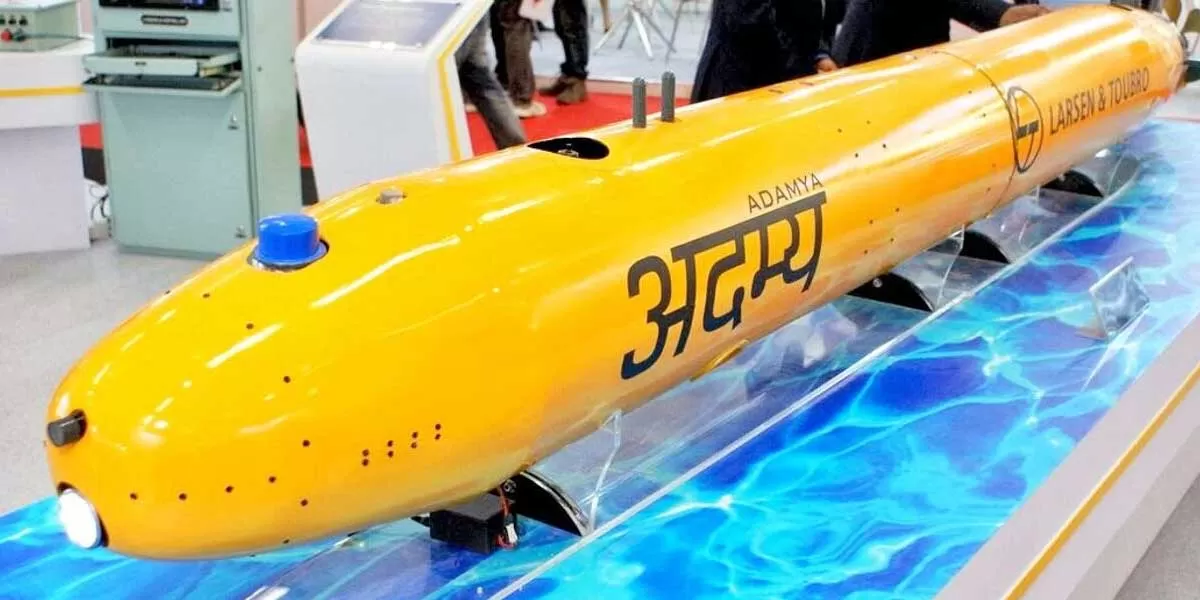
The funding will enable EyeROV to create an underwater drone capable of deep-sea searches for lost objects and neutralizing potentially hazardous items. This innovative system is expected to revolutionize underwater inspection and security, extending the range and capabilities of current technology.

The DTDF, operating under DRDO and aligned with the "Make in India" initiative, has been instrumental in supporting over 75 projects of national importance, particularly those from startups and SMEs. The TDF scheme's focus on fostering innovation aligns with the broader goal of achieving self-reliance through the Atmanirbhar Bharat initiative.

Palaniappan highlighted the significance of this contract for EyeROV, founded in 2017, stating that the TDF fund will bring revolutionary changes to underwater drone technology. "We feel proud to be associated with the country's defense sector," he added.

EyeROV, co-founded by college mates Johns T Mathai and Palaniappan, operates from the Kerala Technology Innovation Zone in Kalamassery. The company has made significant strides in providing safer and more efficient inspections using robotics and artificial intelligence. Their flagship vehicle, EyeROV TUNA, is already in use by DRDO labs, the Indian Coast Guard, and CSIR-SERC, among others.

EyeROV's portfolio also includes the EyeROV iBOAT Alpha, an unmanned surface vehicle that autonomously navigates water bodies, collecting critical data. This environmentally friendly innovation further solidifies EyeROV's position as a leader in the underwater robotics sector.

The agreement ceremony was attended by NSTL Director Dr. Abraham Varughese and top officials from DRDO-NSTL, underscoring the importance of this collaboration in advancing India's defense technology capabilities.

EyeROV, India's pioneering commercial underwater drone technology company, has secured funding under the Technology Development Fund (TDF) scheme to develop a long-range Remotely Operated Vehicle (ROV) for underwater object detection and neutralization. This development comes as EyeROV signs a significant agreement with the Defence Research and Development Organization (DRDO). The agreement was exchanged by Directorate of Technology Development Fund (DTDF) Director and Scientist 'G' Nidhi Bansal and EyeROV Cofounder Kannappa Palaniappan at the Naval Science and Technological Laboratory (NSTL) in Visakhapatnam, Andhra Pradesh. The funding will enable EyeROV to create an underwater drone capable of deep-sea searches for lost objects and neutralizing potentially hazardous items. This innovative system is expected to revolutionize underwater inspection and security, extending the range and capabilities of current technology. The DTDF, operating under DRDO and aligned with the Make in India initiative, has been instrumental in supporting over 75 projects of national importance, particularly those from startups and SMEs. The TDF scheme's focus on fostering innovation aligns with the broader goal of achieving self-reliance through the Atmanirbhar Bharat initiative. Palaniappan highlighted the significance of this contract for EyeROV, founded in 2017, stating that the TDF fund will bring revolutionary changes to underwater drone technology. We feel proud to be associated with the country's defense sector, he added. EyeROV, co-founded by college mates Johns T Mathai and Palaniappan, operates from the Kerala Technology Innovation Zone in Kalamassery. The company has made significant strides in providing safer and more efficient inspections using robotics and artificial intelligence. Their flagship vehicle, EyeROV TUNA, is already in use by DRDO labs, the Indian Coast Guard, and CSIR-SERC, among others. EyeROV's portfolio also includes the EyeROV iBOAT Alpha, an unmanned surface vehicle that autonomously navigates water bodies, collecting critical data. This environmentally friendly innovation further solidifies EyeROV's position as a leader in the underwater robotics sector. The agreement ceremony was attended by NSTL Director Dr. Abraham Varughese and top officials from DRDO-NSTL, underscoring the importance of this collaboration in advancing India's defense technology capabilities.

Related Stories

Next Story
Infrastructure Urban

KONE Opens India's First Digital Experience Centre in Pune

KONE, a global elevator and escalator manufacturer, has inaugurated its first Digital Experience Centre (DEC) in India, located in Pune. The facility aims to showcase how artificial intelligence (AI), connectivity and data-driven technologies can enhance customer experiences and improve building operations.The centre was inaugurated by Jussi Herlin, Executive Vice Chair, KONE Corporation; Philippe Delorme, President and CEO, KONE; and Nandan Nilekani, Co-founder and Chairman of the Board, Infosys.Designed as an interactive customer environment, the facility demonstrates digital solutions cover..

Next Story
Infrastructure Urban

CII GreenCo Launches Circularity Guidelines for Indian Industry

The Confederation of Indian Industry (CII) GreenCo Council has launched the CII GreenCo Circularity Guidelines – Pilot Version at the 17th CII GreenCo Waste & Resource Management Summit 2026 in Chennai. The initiative aims to strengthen resource efficiency, waste reduction and circular economy practices across Indian manufacturing and process industries.The guidelines introduce a structured framework with circularity indices covering raw materials, consumables, packaging and other resource inputs. These indicators will help industries assess existing practices, identify opportunities to ..

Next Story
Infrastructure Energy

Global Electronics Association Launches IPC-1783-CO2E Standard

The Global Electronics Association has introduced IPC-1783-CO2E, a new international standard aimed at improving consistency, transparency and comparability in product carbon footprint reporting across the electronics manufacturing industry.The standard, titled International Standard for Data Collection and Reporting of CO2 Equivalent (CO2e) Emissions for the Electronics Manufacturing Supply Chain, provides industry-specific guidance for collecting, estimating and reporting carbon emissions data.With increasing regulatory requirements and customer expectations, electronics manufacturers face c..

Advertisement

Subscribe to Our Newsletter

Get daily newsletters around different themes from Construction world.

STAY CONNECTED

Advertisement

SPECIAL OFFER
QR Code