+
CS Dulloo Reviews Rs 72.15 Bn Smart City Projects in Jammu, Srinagar
SMART CITIES

CS Dulloo Reviews Rs 72.15 Bn Smart City Projects in Jammu, Srinagar

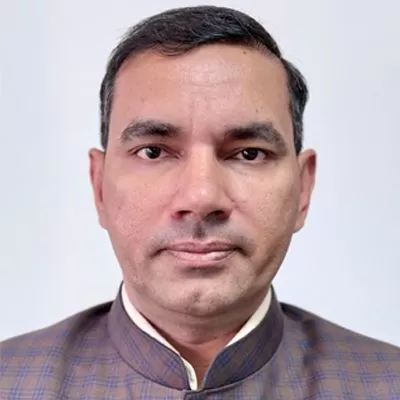
The Chief Secretary of Jammu and Kashmir, Atal Dulloo, conducted a review of the implementation of flagship urban development schemes across the Union Territory today. During the review, he oversaw projects valued at over Rs 72 billion under the Smart Cities Mission in Srinagar and Jammu, as well as several ongoing schemes such as AMRUT 2.0, PMAY-Urban, and SBM 2.0. The review meeting, which was held in Jammu, focused on the performance of the Housing and Urban Development Department (H&UDD) and covered various urban infrastructure and reform-based programmes.

Officials provided updates, informing that 161 projects worth Rs 36.34 billion are currently being implemented in Srinagar, while 127 projects with a total cost of Rs 35.81 billion are in progress in Jammu. The Srinagar Smart City projects include heritage restoration, mobility enhancement, public infrastructure, and riverfront development. Ongoing works valued at Rs 2.03 billion include the Traditional Souq Market and Craft Centre at Batamaloo, along with the Jhelum Waterfront Development Phase-2. In Jammu, Rs 5.29 billion worth of work is being carried out on projects such as the Tawi Riverfront Development and an oceanarium at Bagh-e-Bahu.

Under the PM eBus Sewa scheme, approval has been granted for 100 AC eBuses for both Jammu and Srinagar. The Government of India has committed full funding for behind-the-meter infrastructure and up to Rs 200 million for depots. DPRs for depot infrastructure and substations in both cities have been approved by the Central Steering Committee.

The meeting also addressed the progress of PMAY-Urban. Under the BLC vertical, 27,439 houses have been completed, with an expenditure of Rs 4.96 billion, including Rs 400 million in central assistance that was released during February–March 2025. J&K has signed a Memorandum of Agreement with MoHUA to extend PMAY-U 2.0 to all 78 urban local bodies. A digital survey app and verification committees are being employed to identify and confirm eligible houseless beneficiaries. Under the BLC and AHP components, beneficiaries will receive Rs 2.25 lakh from the Centre and Rs 0.25 lakh from the Union Territory.

News source: Kashmir Life

The Chief Secretary of Jammu and Kashmir, Atal Dulloo, conducted a review of the implementation of flagship urban development schemes across the Union Territory today. During the review, he oversaw projects valued at over Rs 72 billion under the Smart Cities Mission in Srinagar and Jammu, as well as several ongoing schemes such as AMRUT 2.0, PMAY-Urban, and SBM 2.0. The review meeting, which was held in Jammu, focused on the performance of the Housing and Urban Development Department (H&UDD) and covered various urban infrastructure and reform-based programmes. Officials provided updates, informing that 161 projects worth Rs 36.34 billion are currently being implemented in Srinagar, while 127 projects with a total cost of Rs 35.81 billion are in progress in Jammu. The Srinagar Smart City projects include heritage restoration, mobility enhancement, public infrastructure, and riverfront development. Ongoing works valued at Rs 2.03 billion include the Traditional Souq Market and Craft Centre at Batamaloo, along with the Jhelum Waterfront Development Phase-2. In Jammu, Rs 5.29 billion worth of work is being carried out on projects such as the Tawi Riverfront Development and an oceanarium at Bagh-e-Bahu. Under the PM eBus Sewa scheme, approval has been granted for 100 AC eBuses for both Jammu and Srinagar. The Government of India has committed full funding for behind-the-meter infrastructure and up to Rs 200 million for depots. DPRs for depot infrastructure and substations in both cities have been approved by the Central Steering Committee. The meeting also addressed the progress of PMAY-Urban. Under the BLC vertical, 27,439 houses have been completed, with an expenditure of Rs 4.96 billion, including Rs 400 million in central assistance that was released during February–March 2025. J&K has signed a Memorandum of Agreement with MoHUA to extend PMAY-U 2.0 to all 78 urban local bodies. A digital survey app and verification committees are being employed to identify and confirm eligible houseless beneficiaries. Under the BLC and AHP components, beneficiaries will receive Rs 2.25 lakh from the Centre and Rs 0.25 lakh from the Union Territory. News source: Kashmir Life

Related Stories

Gold Stories

Next Story
Infrastructure Urban

KONE Opens India's First Digital Experience Centre in Pune

KONE, a global elevator and escalator manufacturer, has inaugurated its first Digital Experience Centre (DEC) in India, located in Pune. The facility aims to showcase how artificial intelligence (AI), connectivity and data-driven technologies can enhance customer experiences and improve building operations.The centre was inaugurated by Jussi Herlin, Executive Vice Chair, KONE Corporation; Philippe Delorme, President and CEO, KONE; and Nandan Nilekani, Co-founder and Chairman of the Board, Infosys.Designed as an interactive customer environment, the facility demonstrates digital solutions cover..

Next Story
Infrastructure Urban

CII GreenCo Launches Circularity Guidelines for Indian Industry

The Confederation of Indian Industry (CII) GreenCo Council has launched the CII GreenCo Circularity Guidelines – Pilot Version at the 17th CII GreenCo Waste & Resource Management Summit 2026 in Chennai. The initiative aims to strengthen resource efficiency, waste reduction and circular economy practices across Indian manufacturing and process industries.The guidelines introduce a structured framework with circularity indices covering raw materials, consumables, packaging and other resource inputs. These indicators will help industries assess existing practices, identify opportunities to ..

Next Story
Infrastructure Energy

Global Electronics Association Launches IPC-1783-CO2E Standard

The Global Electronics Association has introduced IPC-1783-CO2E, a new international standard aimed at improving consistency, transparency and comparability in product carbon footprint reporting across the electronics manufacturing industry.The standard, titled International Standard for Data Collection and Reporting of CO2 Equivalent (CO2e) Emissions for the Electronics Manufacturing Supply Chain, provides industry-specific guidance for collecting, estimating and reporting carbon emissions data.With increasing regulatory requirements and customer expectations, electronics manufacturers face c..

Advertisement

Subscribe to Our Newsletter

Get daily newsletters around different themes from Construction world.

STAY CONNECTED

Advertisement

SPECIAL OFFER
QR Code