+
Work delay: Thiruvananthapuram's Integrated Command and Control Centre
SMART CITIES

Work delay: Thiruvananthapuram's Integrated Command and Control Centre

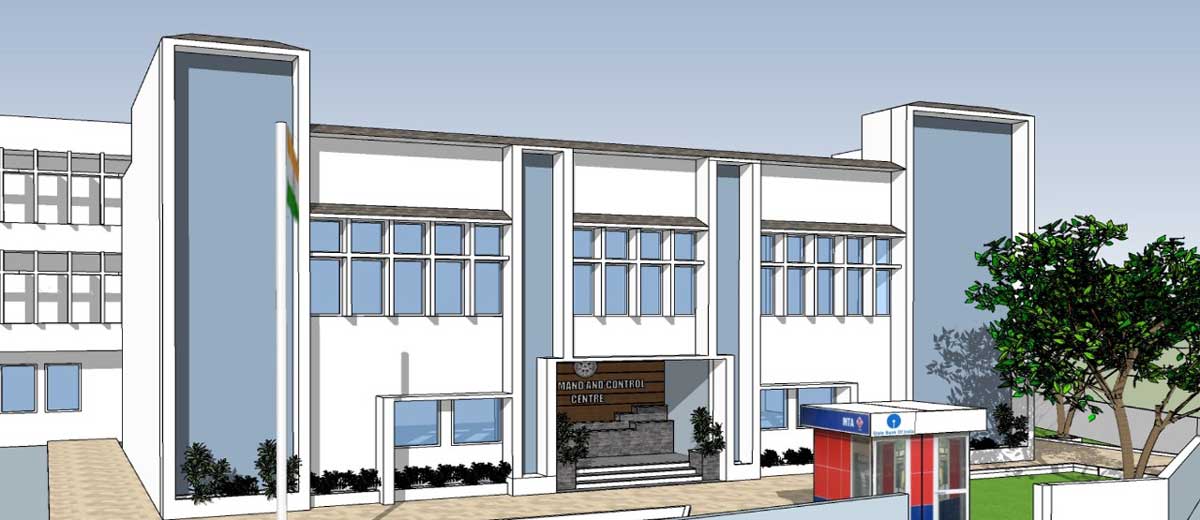
The construction of the Integrated Command and Control Centre (ICCC) in Thiruvananthapuram, as part of the Smart City scheme, is facing delays. Currently being built on the premises of the city corporation office, the project is only 30 per cent complete, and it is estimated to take an additional six months for full completion.

The Smart City Thiruvananthapuram (SCTL), responsible for overseeing the project, had initially set a deadline of April 2023. However, the project experienced setbacks when the first contractor withdrew, leading to the need for re-tendering. As a result, the ICCC is currently operating from a temporary facility at the district collectorate in Kudappanakunnu.

The new ICCC facility will be a two-storey building with a seismic design to ensure resilience against natural disasters. It will be an extension of the existing corporate office. According to SCTL, the first phase of the building will be completed within three months, with the second phase requiring an additional three months.

S Krishnakumar, General Manager (Operations) at SCTL, stated that the full-fledged operations of the ICCC would be achieved in six months, but the first phase would be operational by August, equipped with a fully functional dashboard. The second phase will involve the installation of equipment and other necessary components.

The ICCC will feature a video wall room, a war room, a help desk, work areas, and meeting rooms. The construction covers a total area of 858.45 square meters. The ICCC aims to integrate various systems for real-time monitoring and improve service delivery efficiency. With a project cost of Rs 940 million, it will serve as a central point of action during emergencies, facilitating coordinated efforts among different agencies, including the police, civil supplies, revenue, health, and fire services. The ground floor will accommodate the Corporation Janaseva Kendra, while the first floor will be exclusively dedicated to the ICCC.

There has been controversy surrounding the construction of the new building due to alleged encroachment on the footpath along the Rama Rao Lamp Road towards Museum-Palayam Road. This issue has been raised by Anilkumar Pandala, former project head and managing director of the Thiruvananthapuram City Road Improvement Project (TCRIP), as it contradicts the recommended width of four meters for footpaths according to studies conducted in 2003. The matter remains unresolved.

The construction of the Integrated Command and Control Centre (ICCC) in Thiruvananthapuram, as part of the Smart City scheme, is facing delays. Currently being built on the premises of the city corporation office, the project is only 30 per cent complete, and it is estimated to take an additional six months for full completion. The Smart City Thiruvananthapuram (SCTL), responsible for overseeing the project, had initially set a deadline of April 2023. However, the project experienced setbacks when the first contractor withdrew, leading to the need for re-tendering. As a result, the ICCC is currently operating from a temporary facility at the district collectorate in Kudappanakunnu. The new ICCC facility will be a two-storey building with a seismic design to ensure resilience against natural disasters. It will be an extension of the existing corporate office. According to SCTL, the first phase of the building will be completed within three months, with the second phase requiring an additional three months. S Krishnakumar, General Manager (Operations) at SCTL, stated that the full-fledged operations of the ICCC would be achieved in six months, but the first phase would be operational by August, equipped with a fully functional dashboard. The second phase will involve the installation of equipment and other necessary components. The ICCC will feature a video wall room, a war room, a help desk, work areas, and meeting rooms. The construction covers a total area of 858.45 square meters. The ICCC aims to integrate various systems for real-time monitoring and improve service delivery efficiency. With a project cost of Rs 940 million, it will serve as a central point of action during emergencies, facilitating coordinated efforts among different agencies, including the police, civil supplies, revenue, health, and fire services. The ground floor will accommodate the Corporation Janaseva Kendra, while the first floor will be exclusively dedicated to the ICCC. There has been controversy surrounding the construction of the new building due to alleged encroachment on the footpath along the Rama Rao Lamp Road towards Museum-Palayam Road. This issue has been raised by Anilkumar Pandala, former project head and managing director of the Thiruvananthapuram City Road Improvement Project (TCRIP), as it contradicts the recommended width of four meters for footpaths according to studies conducted in 2003. The matter remains unresolved.

Related Stories

Gold Stories

Next Story
Infrastructure Urban

KONE Opens India's First Digital Experience Centre in Pune

KONE, a global elevator and escalator manufacturer, has inaugurated its first Digital Experience Centre (DEC) in India, located in Pune. The facility aims to showcase how artificial intelligence (AI), connectivity and data-driven technologies can enhance customer experiences and improve building operations.The centre was inaugurated by Jussi Herlin, Executive Vice Chair, KONE Corporation; Philippe Delorme, President and CEO, KONE; and Nandan Nilekani, Co-founder and Chairman of the Board, Infosys.Designed as an interactive customer environment, the facility demonstrates digital solutions cover..

Next Story
Infrastructure Urban

CII GreenCo Launches Circularity Guidelines for Indian Industry

The Confederation of Indian Industry (CII) GreenCo Council has launched the CII GreenCo Circularity Guidelines – Pilot Version at the 17th CII GreenCo Waste & Resource Management Summit 2026 in Chennai. The initiative aims to strengthen resource efficiency, waste reduction and circular economy practices across Indian manufacturing and process industries.The guidelines introduce a structured framework with circularity indices covering raw materials, consumables, packaging and other resource inputs. These indicators will help industries assess existing practices, identify opportunities to ..

Next Story
Infrastructure Energy

Global Electronics Association Launches IPC-1783-CO2E Standard

The Global Electronics Association has introduced IPC-1783-CO2E, a new international standard aimed at improving consistency, transparency and comparability in product carbon footprint reporting across the electronics manufacturing industry.The standard, titled International Standard for Data Collection and Reporting of CO2 Equivalent (CO2e) Emissions for the Electronics Manufacturing Supply Chain, provides industry-specific guidance for collecting, estimating and reporting carbon emissions data.With increasing regulatory requirements and customer expectations, electronics manufacturers face c..

Advertisement

Subscribe to Our Newsletter

Get daily newsletters around different themes from Construction world.

STAY CONNECTED

Advertisement

SPECIAL OFFER
QR Code